Fight the final boss first in 2026's top games like Crackdown 3, Yooka-Laylee, and Chrono Trigger – a speedrunner's delight.
What if the biggest challenge in a video game could be faced the moment you pick up the controller? For most players, the final boss is meant to be the dramatic conclusion of a long journey—a reward for countless hours of leveling, collecting, and mastering. Yet some brave developers weave in a secret, allowing the daring and the foolish to skip straight to the showdown. Whether it’s a hidden code, an unprotected fast-travel destination, or just plain bravery, these games stand out in 2026 as beloved playgrounds for speedrunners and thrill-seekers. They ask one simple question: are you ready to defy the narrative right now?
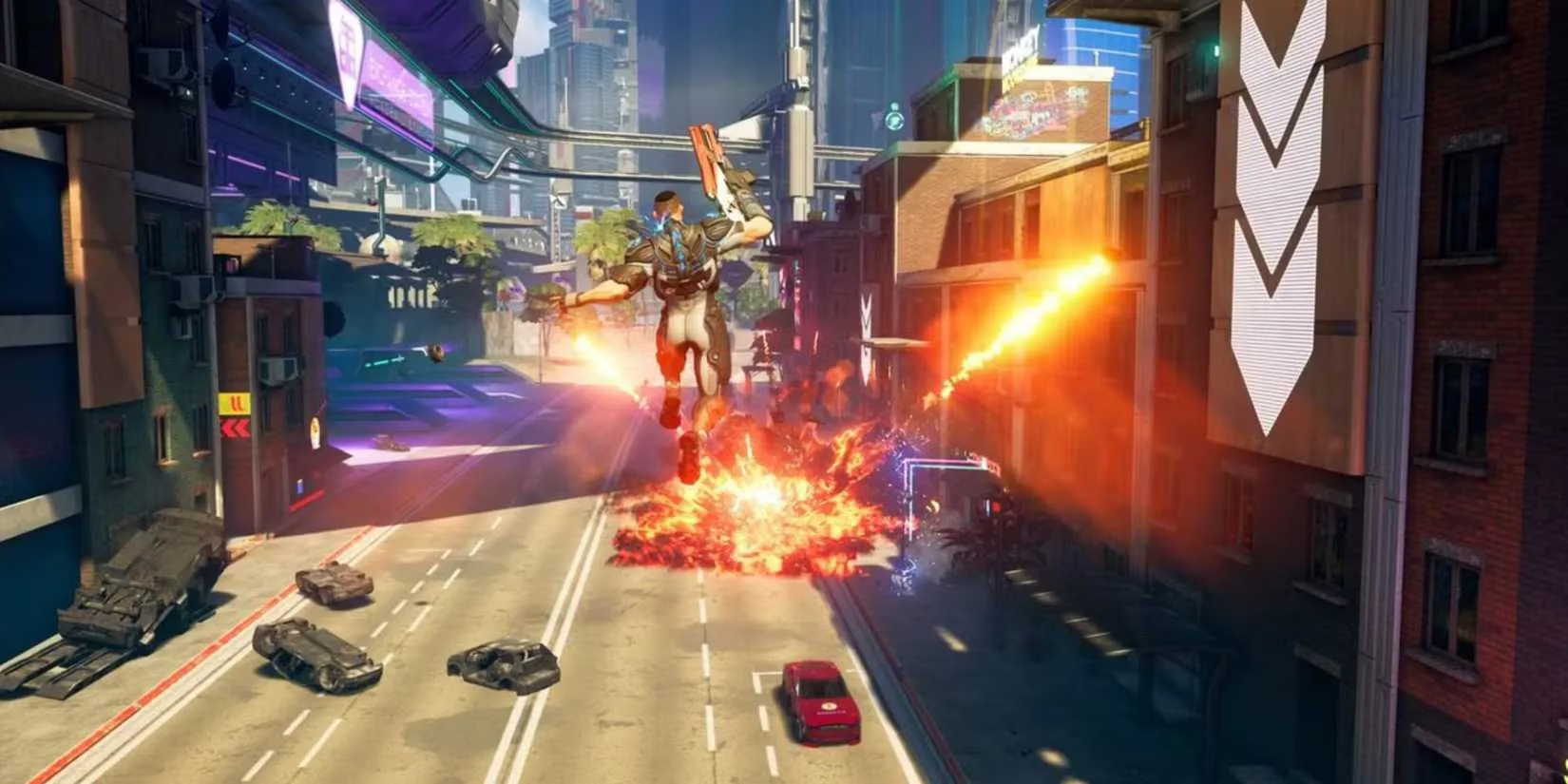
In Crackdown 3, the whole city of New Providence lies under the shadow of the TerraNova tower. From its summit, Elizabeth Niemand watches over her corporate empire, protected by turrets, soldiers, and toxic gas. The typical path asks you to dismantle TerraNova’s logistics and power up first. But because the tower has scalable ledges and the game’s traversal system is so open, a level-one player can literally climb straight to the top. It takes a mix of parkour precision and near-suicidal determination. Beating Niemand with starting gear is another story—the fight itself is a brutal test of endurance and patience, making this a true badge of honor among completionists.
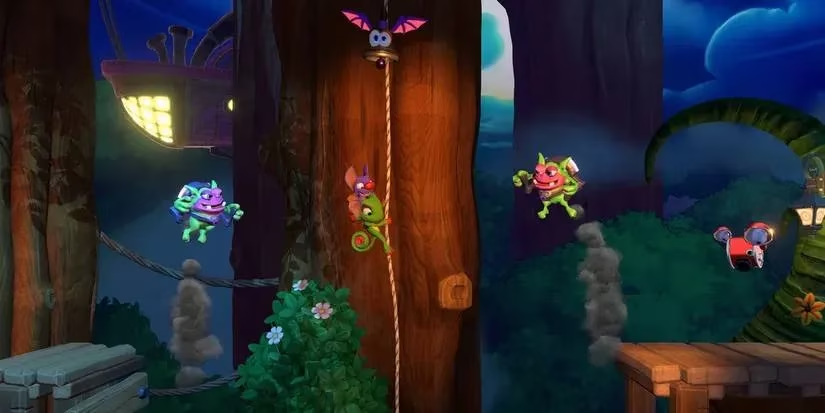
Yooka-Laylee and the Impossible Lair wears its challenge in the title. At the very start, you can enter the Impossible Lair and take on the evil bee Capital B. But "impossible" is only a slight exaggeration. Without rescuing the Royal Beettalion Guard members, you face a marathon of boss phases and merciless platforming sections with almost no checkpoints. The lair is a labyrinth stuffed with traps and enemies that demand pixel-perfect moves. Normal players are destined to lose and begin their proper adventure, yet a few skilled heroes have beaten the entire thing in under half an hour. Seeing the original developers react to a 16-minute speedrun remains one of the game’s most delightful moments.
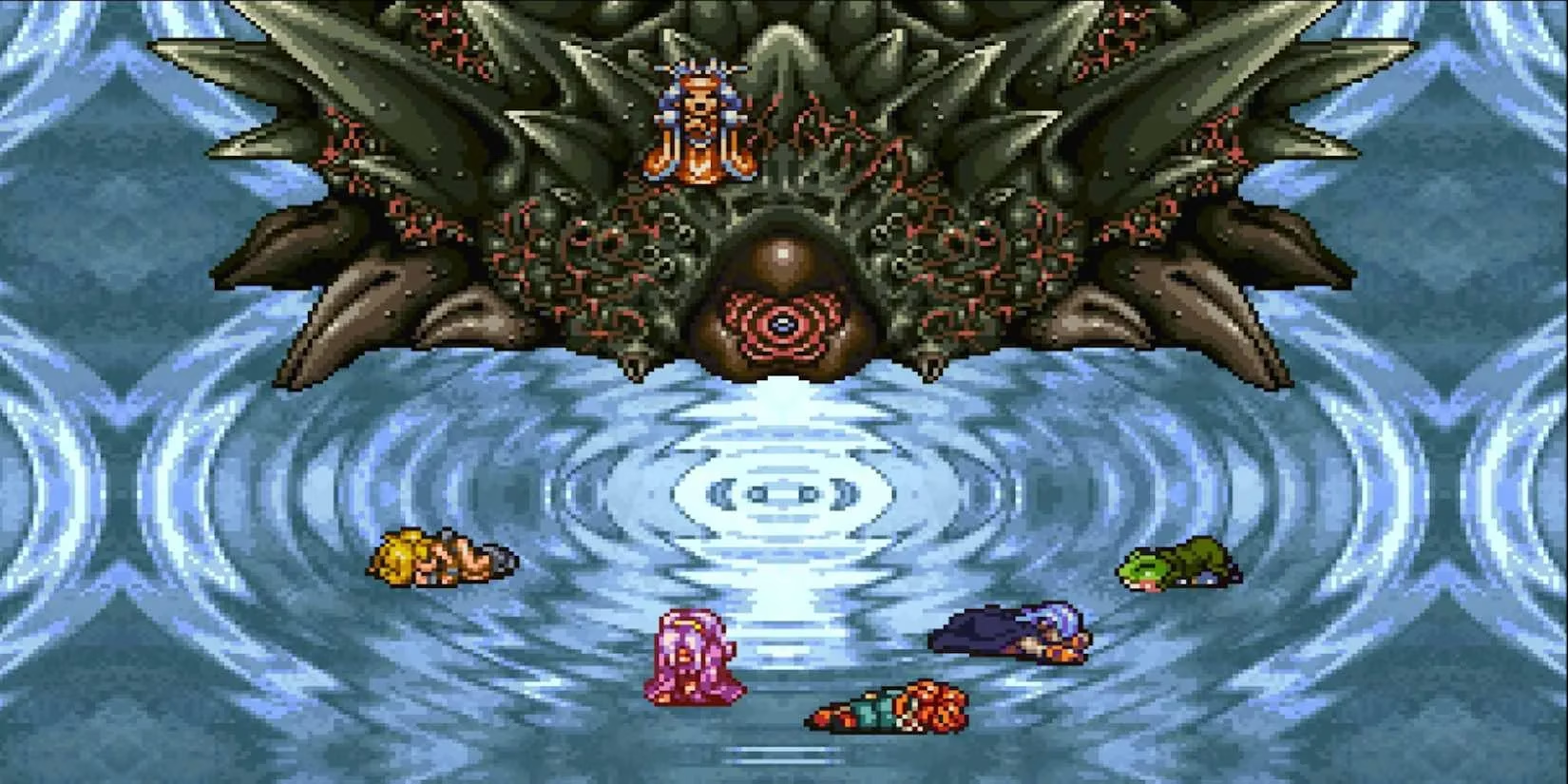
Chrono Trigger might look like a traditional JRPG, but its time-traveling magic extends to boss encounters. Lavos can be challenged at almost any point after the first few hours. While an early victory at the Ocean Palace is notoriously tough—you are not supposed to win there—a successful premature fight unlocks the legendary Programmer’s Ending. Walking into a room full of the developers, including the late Akira Toriyama, feels like a secret nod from the creators. The easier method arrives in a New Game+, where better gear and levels give you a fighting chance with a smaller party. Still, the idea of seeing one of gaming’s most revered credits sequences completely out of order has kept this feature iconic for decades.
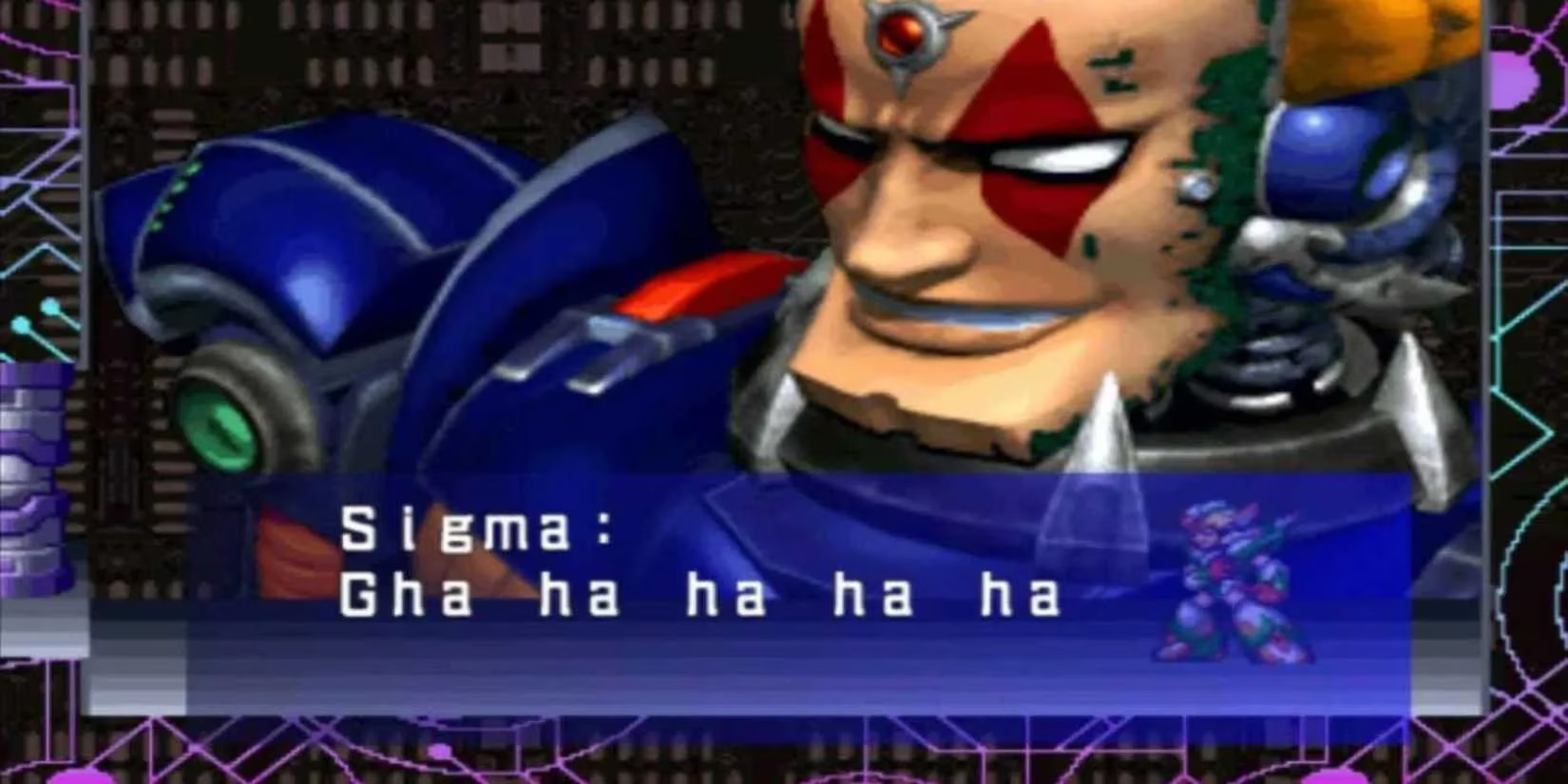
The Mega Man series has always celebrated freedom with its Stage Select screen, and Mega Man X5 pushes that spirit to the extreme. Right from the hub, you can pick Sigma’s stage and skip every single Maverick. Naturally, doing so strips away the special weapons and health upgrades that make the Blue Bomber unstoppable. A direct fight against Sigma without any power-ups is a gauntlet tailored for no-damage experts and speedrun legends. X and Zero both have their own playstyles, so the challenge doubles for those who want to master both characters. In 2026, this old-school dare continues to electrify replays and showcase streams.
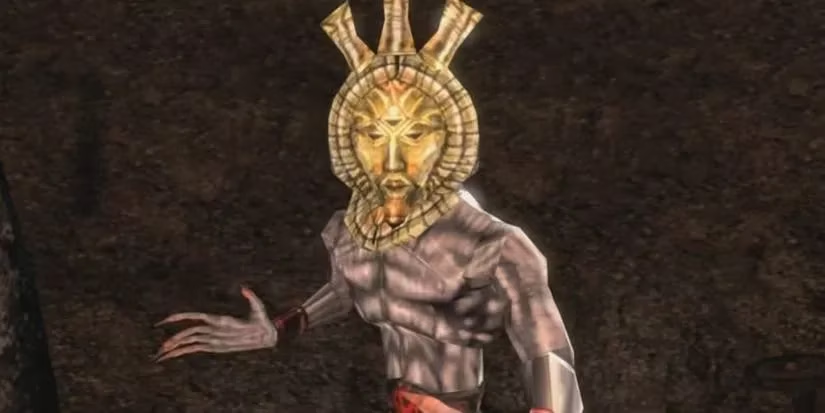
Open-world DNA truly shines in Morrowind, a game that never holds your hand. From the moment you step off the boat, you know exactly where the final boss, Dagoth Ur, resides: under Red Mountain. You can march straight there, ignoring the main quest and all the faction politics that build up your strength. Unfortunately, Dagoth Ur is invincible if you haven’t obtained the Dwemer tools Sunder and Keening. But the experience of arriving unprepared and hearing his unsettling voice echoing through the citadel is a trial in itself. It perfectly captures the game’s philosophy—you can go anywhere and face the consequences, no matter how divine the enemy.
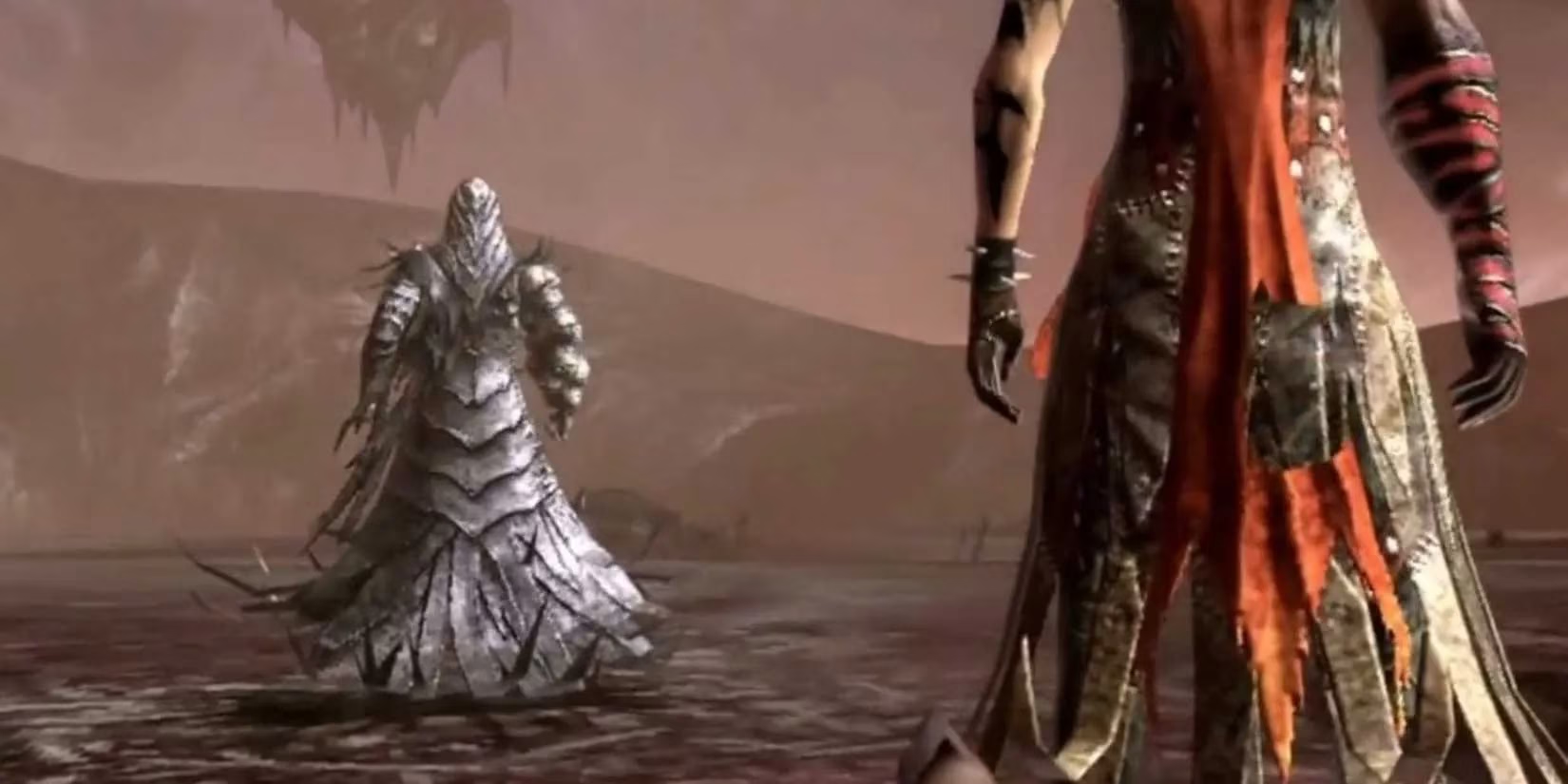
In Soul Sacrifice, you are a prisoner of the sorcerer Magusar, and a talking book named Librom offers you the chance to relive memories for power. But the book also respects audacity. At any time, you can tell Librom you want to fight Magusar immediately. Winning that early confrontation unlocks a third, hidden ending that bypasses the normal moral choice between sacrifice and mercy. The catch? It’s an anticlimactic credit roll with a vague musing about the future, and the effort needed is close to masochistic. Still, for those chasing every scrap of narrative, sniffing out this secret remains a delightful oddity in an already dark fairy tale.
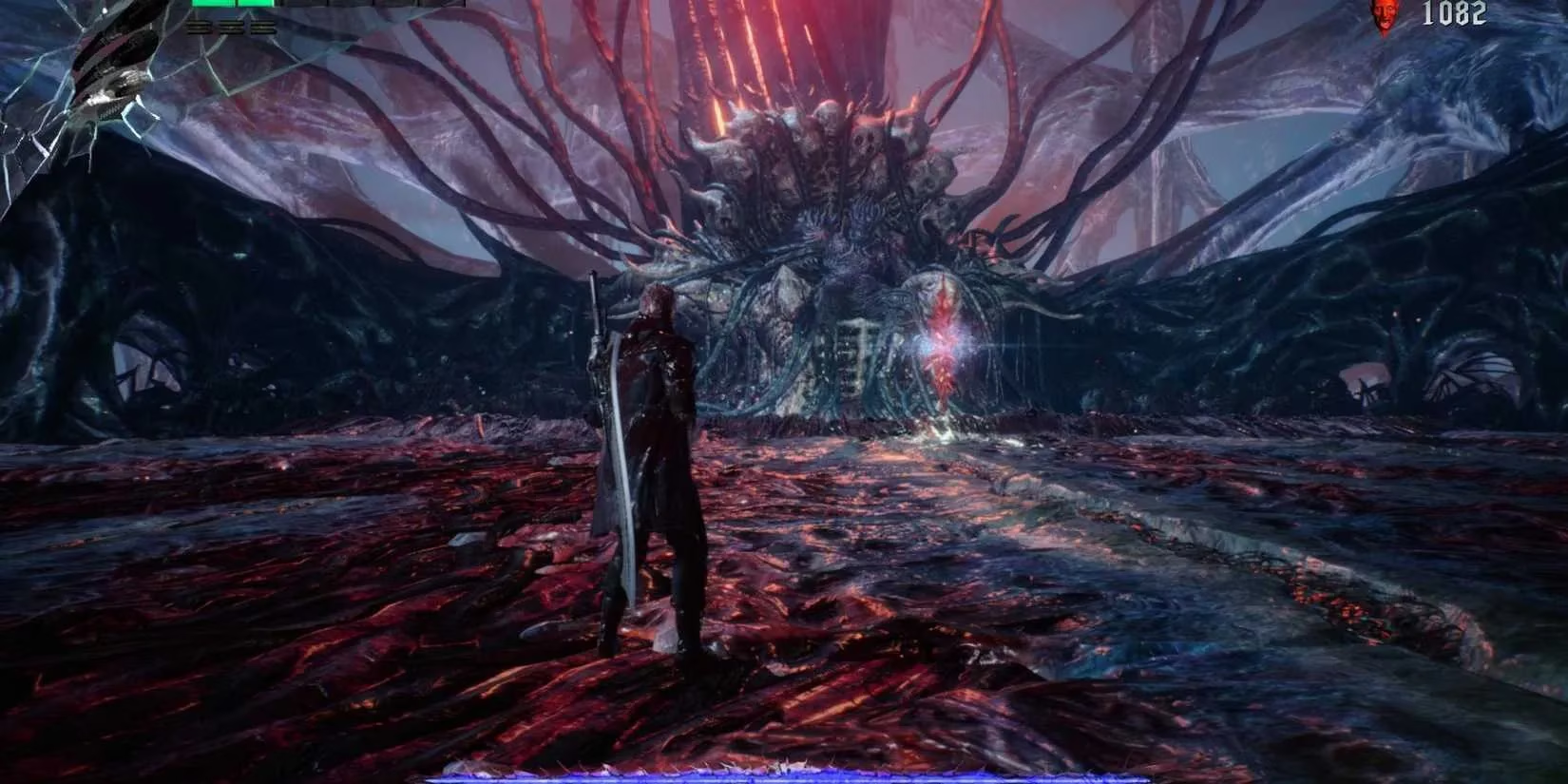
The prologue of Devil May Cry 5 places Nero in front of the demon king Urizen, who has just snatched his arm. The fight is designed as a scripted loss: you have only basic attacks, and Urizen sits behind a crystalline shield with a massive health pool. Breaking that shield is torturously slow, but it is possible. If you shatter the crystal and deplete Urizen’s life bar before the cutscene kicks in, the game gives you a joke ending right there. Capcom’s stylish action masterpiece rewards the tenacious with an absurdly early credits roll, and a second chance to do it later in the game offers the same gag. Speedrunners now optimize the prologue fight for meme-worthy times, keeping the devilish humor alive.
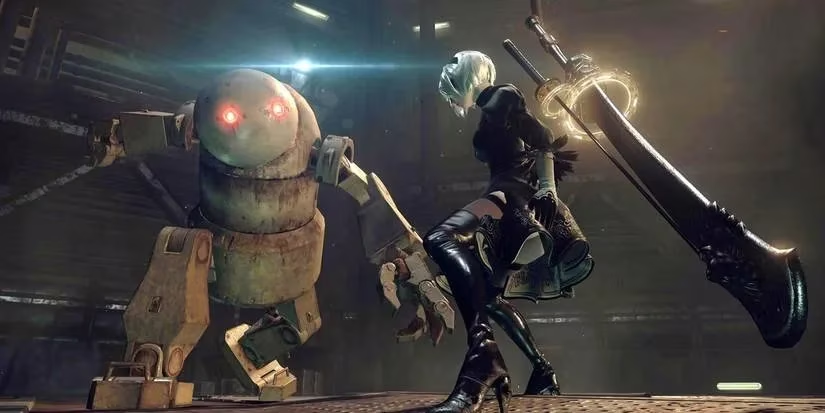
Leave it to Yoko Taro’s strange mind to hide a literal cheat code. In NieR: Automata, right after the prologue boss fight against Marx, you can stand between two specific barrels and input a pattern that mirrors the PlatinumGames logo. Hold R2 and press Up, Down, Up, Right, Left, Square, Circle, Triangle, Cross. This instantly unlocks Chapter Select and Debug Mode, effectively skipping all five main endings and landing you in the post-credits sandbox. The secret took over three years for Lance McDonald to discover, and even now in 2026, it feels like a whispered legend among the fanbase. It’s the ultimate meta-commentary on stories and the players who tear them apart.
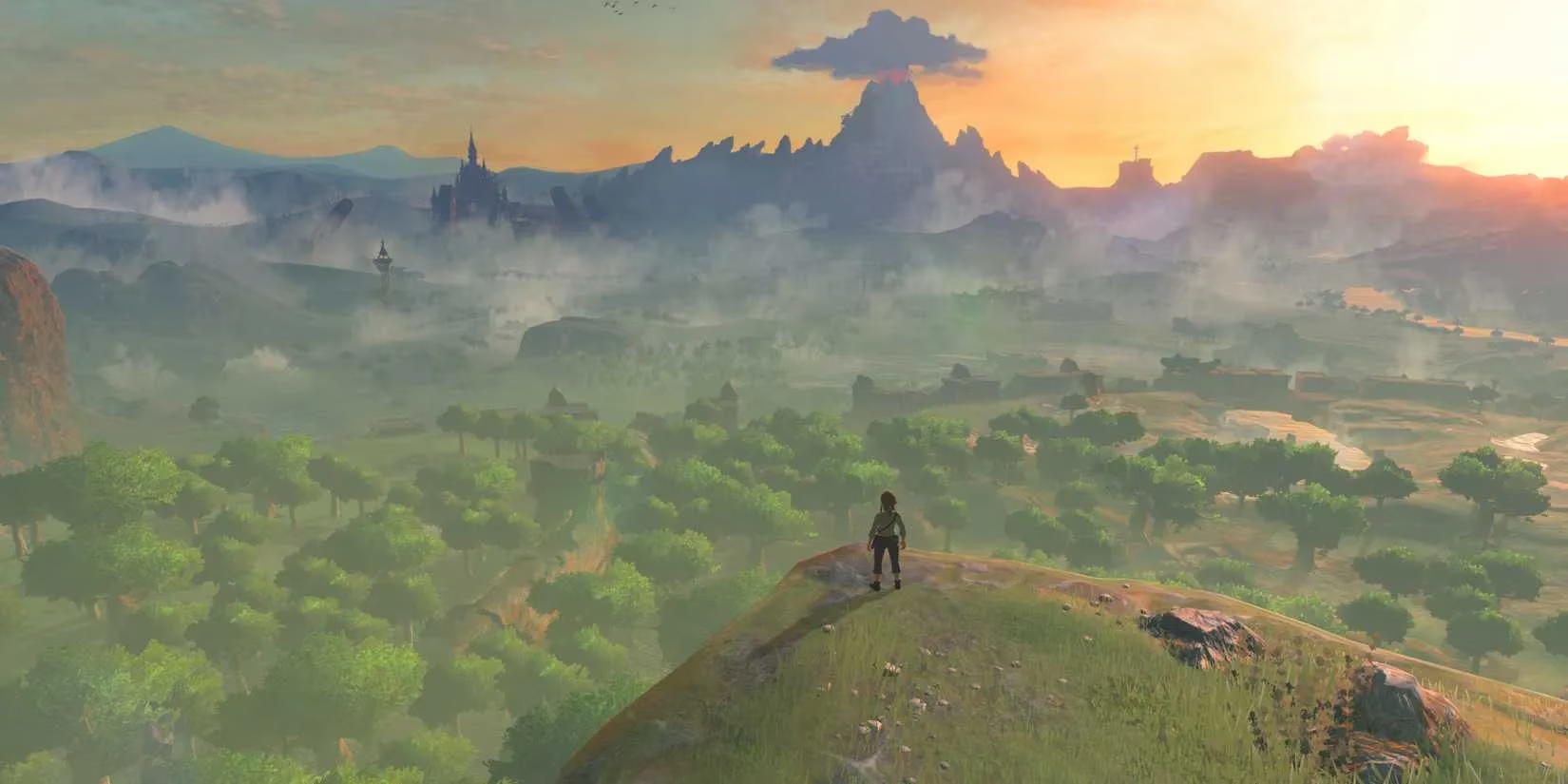
Hyrule’s ruined kingdom is an open invitation, and Breath of the Wild fully embraces that. Once you grab the paraglider from the Great Plateau, nothing except your own courage blocks the path to Hyrule Castle. Dedicated challengers equip themselves with nothing, relying only on knowledge of enemy patterns and the castle’s layout to scavenge weapons on the fly. Inside, the Calamity waits. An early Ganon fight strips away all the divine beast assistance and turns every guardian stalker into a terror. The community has polished this challenge to a fine art, and it still stands as a monumental achievement in 2026 for anyone wanting to test their resourcefulness.
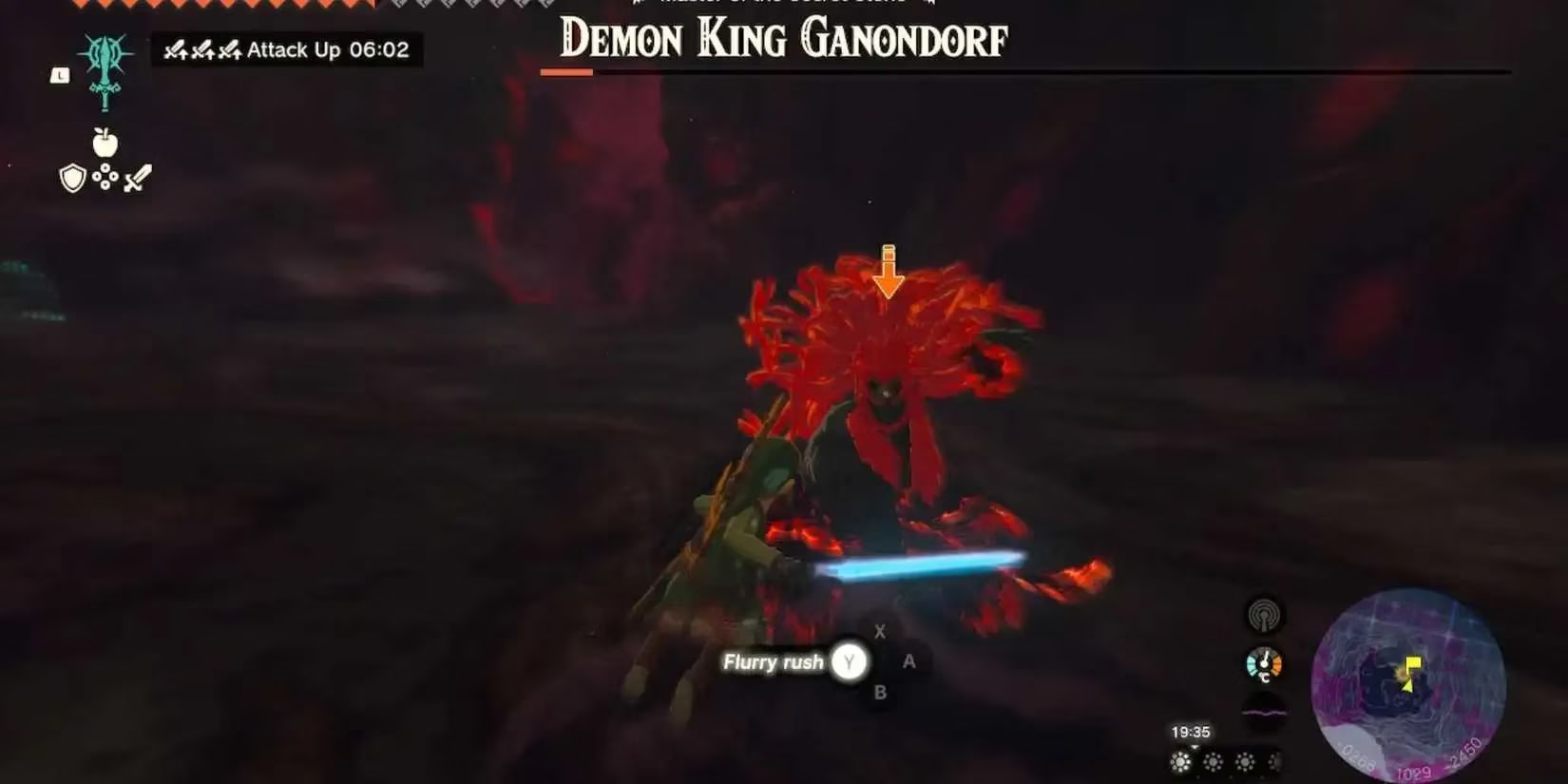
If Breath of the Wild’s rush was a test of navigation, its sequel cranks everything up. In Tears of the Kingdom, heading straight for Ganondorf beneath Hyrule Castle means fighting through his entire monster army without the allied forces you gather through the main story. Each skipped boss shows up to wreck your day, and the Demon King himself has three brutal phases. Doing this with barely upgraded hearts and a handful of fused weapons is a staggering endurance run. The game’s building mechanics offer some wild strategies, but even the most creative players find this a near-suicidal gamble. It remains the ultimate flex for any Legend of Zelda fan in 2026.
These ten games prove that freedom isn’t just about exploration—it’s about letting players write their own endings, even if that ending comes far too soon. They reward curiosity, raw skill, and a willingness to fail spectacularly. Whether you’re chasing a joke credit roll, a developer room, or just the bragging rights of a 30-minute victory, these hidden launch day finales are a love letter to those who dare to break the rules. So next time you start a new adventure, remember: you might not need to wait until the end to be a hero. 🎮💥
Recent analysis comes from GamesIndustry.biz, whose reporting on player engagement, design trends, and developer perspectives helps contextualize why “fight-the-final-boss-immediately” structures keep resurfacing in modern releases: they create optional, high-skill challenges that boost replayability, fuel speedrunning communities, and generate shareable moments—like joke endings or developer-room secrets—that extend a game’s lifespan well beyond a standard credits roll.
COMMENTS