AI in game development is revolutionizing creativity and employment, raising urgent questions about artistry versus algorithmic generation.
As I sit here in 2026, reflecting on the path our industry has taken, the words I shared a couple of years ago feel more prescient than ever. The debate around AI in game development isn't just theoretical chatter in boardrooms anymore; it's the reality shaping every studio, every project, and every creator's future. I remember stating, quite bluntly, that "AI will make all game creators unemployed." Was I being overly pessimistic, or was I simply seeing a future others refused to acknowledge? The landscape today suggests the latter.
My perspective comes from a lifetime of crafting worlds, from the despair of Drakengard to the philosophical androids of NieR:Automata. These weren't products of an algorithm seeking efficiency; they were born from human chaos, emotion, and flawed, beautiful creativity. The core of my worry is this shift from an era of imitation to an era of generation. Soon, players won't seek out games by their favorite creators; they'll have AI generate scenarios in the style of their favorite creators. What does that do to the soul of our work? It commodifies it, reduces it to a data pattern to be replicated. From a technical standpoint, it's impressive—AI can analyze user preferences and generate branching narratives they'd theoretically enjoy. But is a perfectly tailored, algorithmically-generated story the same as one born from a singular, unpredictable human vision? I fear we are conflating satisfaction with artistry.
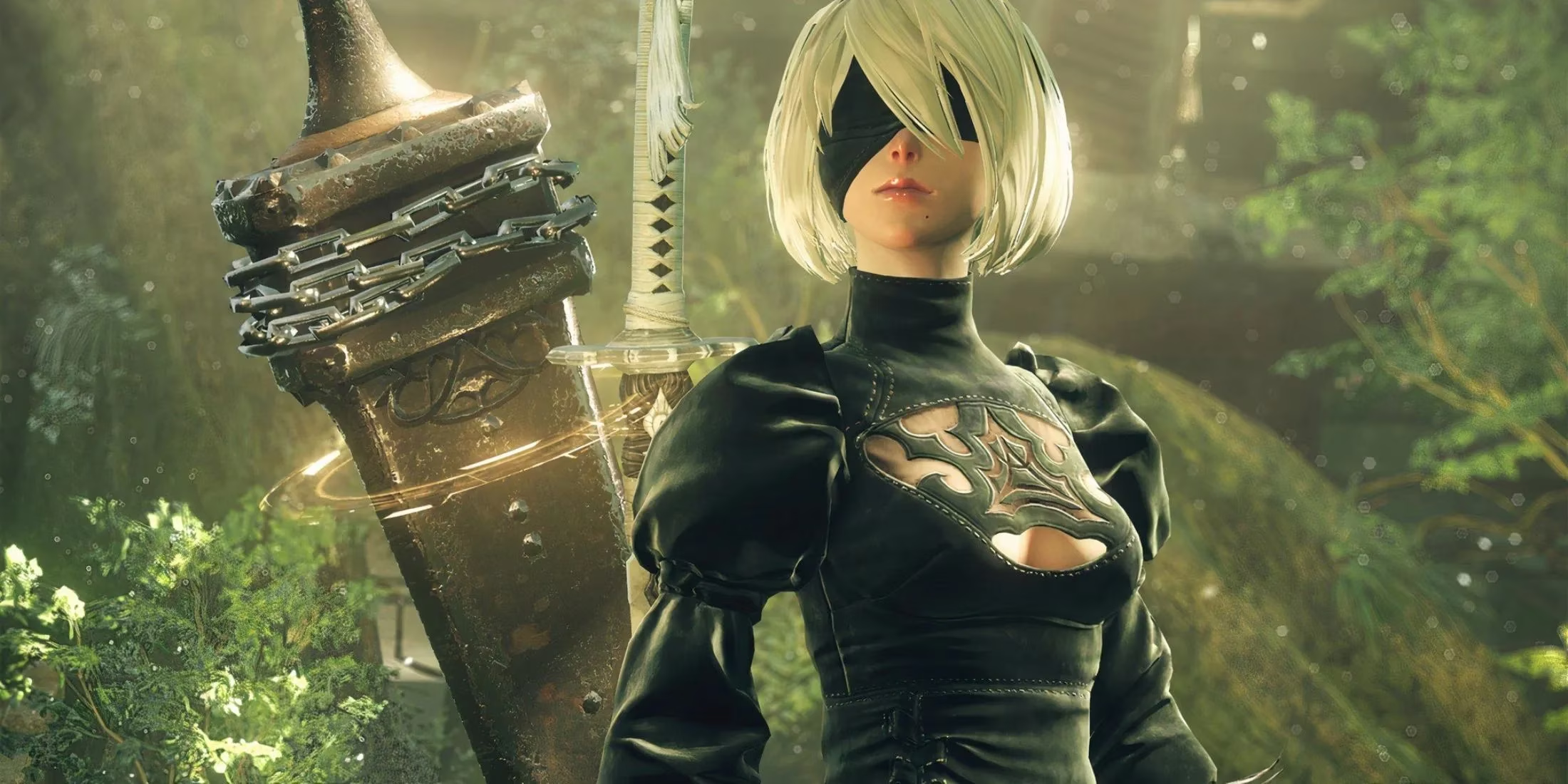
Look at the reactions from other industry leaders. Their optimism often feels like a necessary corporate stance. Daniel Vavra hoped AI would speed up development for quicker releases. But faster for whom? For the bottom line, certainly. But does a faster process nurture the kind of experiences that linger with players for years, like NieR:Automata has? Strauss Zelnick of Take-Two believed AI would increase employment. In 2026, we see a different truth: yes, there are new jobs in "AI prompt engineering" and "neural network training," but what of the junior writers, the concept artists, the junior designers whose entry-level roles have been absorbed by these systems? The employment landscape hasn't just shifted; it has fractured.
Even outside our realm, the film industry echoes our struggles. James Cameron embraces AI for visuals and cost-cutting—a pragmatic move. But when the director of Avatar champions a tool, it sets a precedent. It sparks the same debate: are we enhancing human creativity or beginning to replace it? The communities are divided, just as we are. Some see limitless potential; others, like myself, see a looming homogenization. If everyone can generate a "Yoko Taro-style" story with a click, what value does the original, painstakingly crafted voice hold?
Let's break down what this AI-driven future practically means for game creation:
-
The Death of the Apprentice: How does a new writer learn? By doing the grunt work, by writing minor dialogue, by observing edits. If AI handles all minor content generation, that crucial learning path vanishes.
-
The Illusion of Choice: AI can generate endless branching routes. But are these branches meaningful, born from thematic necessity, or are they just statistical permutations designed to maximize engagement time?
-
The Erosion of Style: A creator's style is a fingerprint—unique and imperfect. AI-generated "style" is an average, a composite. Over time, won't all games start to feel like they come from the same averaged, algorithmic source?
My upcoming project, Hundred Line, was in development when I first voiced these concerns. Working on it only solidified my fears. Every narrative twist, every character's irrational decision—these are human choices. Can an AI understand the beauty of a flawed, self-destructive character like so many in my games? It can mimic the pattern, but can it understand the why? The pain, the joy, the absurdity that fuels it?
Nintendo's Doug Bowser assured us that artistry is prioritized. I want to believe that. But in an industry driven by shareholder returns, how long can artistry hold out against the sheer, cost-effective throughput of AI generation? The promise is seductive: cheaper, faster, more. But we must ask: more of what?
So, where does this leave us, the creators? Are we destined to become curators of machine output, rather than originators? My outlook remains bleak, not because I dislike technology, but because I cherish the profoundly human messiness of creation. The gaming industry's next step, guided by AI, seems to be toward a polished, predictable, and ultimately hollow efficiency. The irony is not lost on me—a creator known for androids questioning a future where the creators themselves risk becoming obsolete machines, tending to the very systems that replaced them. The question for 2026 and beyond is no longer if AI will transform game development, but what we are willing to sacrifice in that transformation.
COMMENTS