Discover the single, glaring flaw holding back legendary RPGs like The Witcher 3's weak combat and Starfield's empty exploration, from achieving true perfection.
As a professional gamer who's sunk thousands of hours into virtual worlds, I've come to accept a hard truth: even my all-time favorite RPGs aren't perfect. In today's hyper-critical gaming landscape, it's easy to tear apart any title for its smallest missteps—and I'm just as guilty. The beauty of role-playing games lies in their sprawling ambition, but that same scale often exposes their most noticeable cracks. Let's dive deep into some legendary titles and examine the single, glaring issue that holds each back from true perfection, like a masterfully painted canvas with one stubborn, out-of-place brushstroke.
10. The Witcher 3: Wild Hunt - The Combat Is Weak
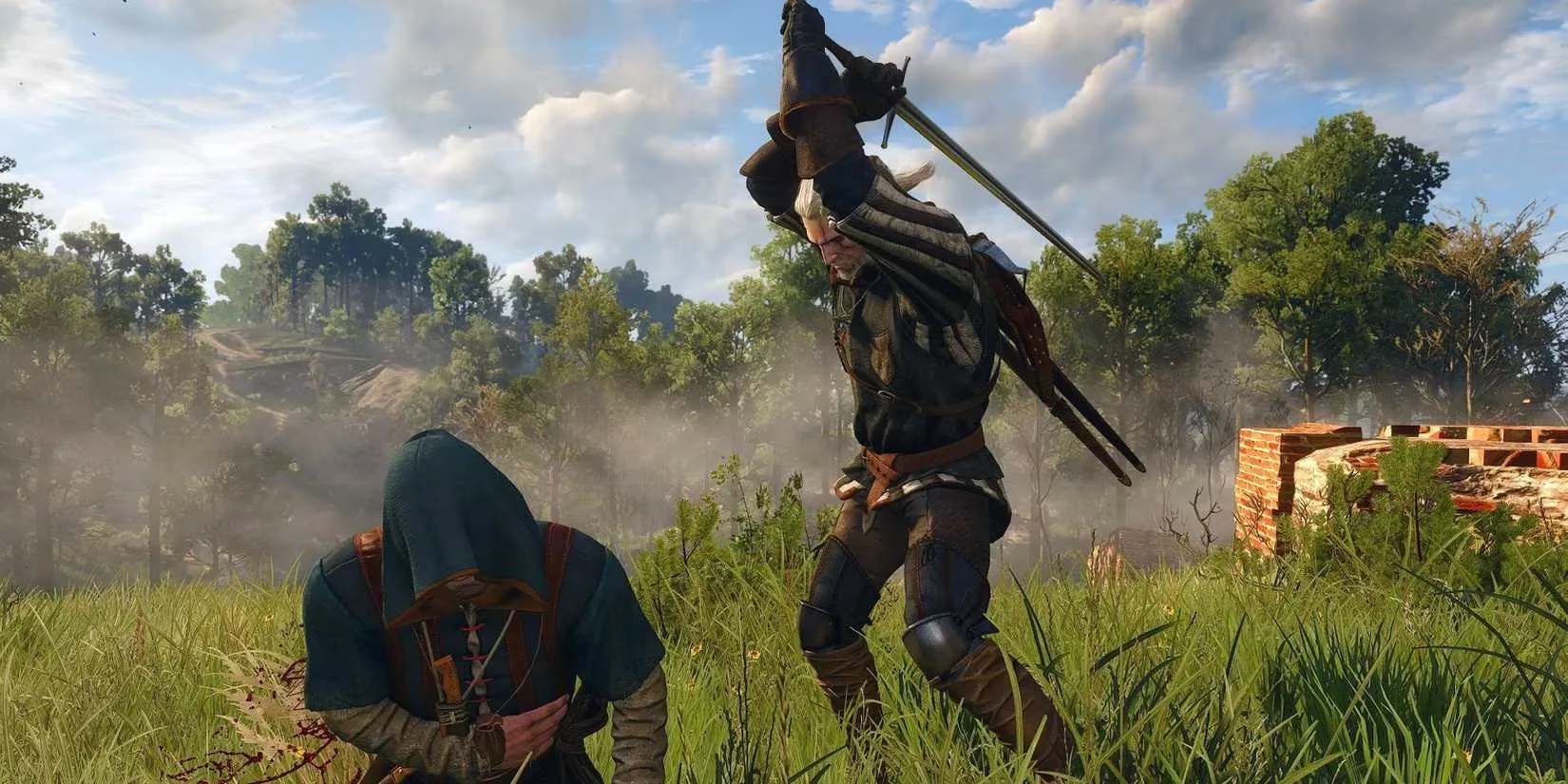
Let's start with a titan. The Witcher 3 is, without hyperbole, one of the greatest narrative achievements in gaming history. Its world-building is as rich and layered as a centuries-old tapestry, and the characters feel more real than some people I know. Yet, for all its glory, the combat system remains its Achilles' heel. 🗡️
Here’s the core problem: there's no meaningful progression. The swordplay you experience in White Orchard is virtually identical to what you're doing 80 hours later in Toussaint. You get marginal upgrades to your Signs, and only two new sword attacks in the entire base game. It becomes a repetitive dance, as predictable as a metronome's tick. For a game where combat is such a frequent activity, this lack of evolution is a significant flaw. I can't play vanilla anymore; I need the W3EE mod to inject any sense of growth or variety into the fights.
9. Starfield - The Emptiness of Procedural Generation
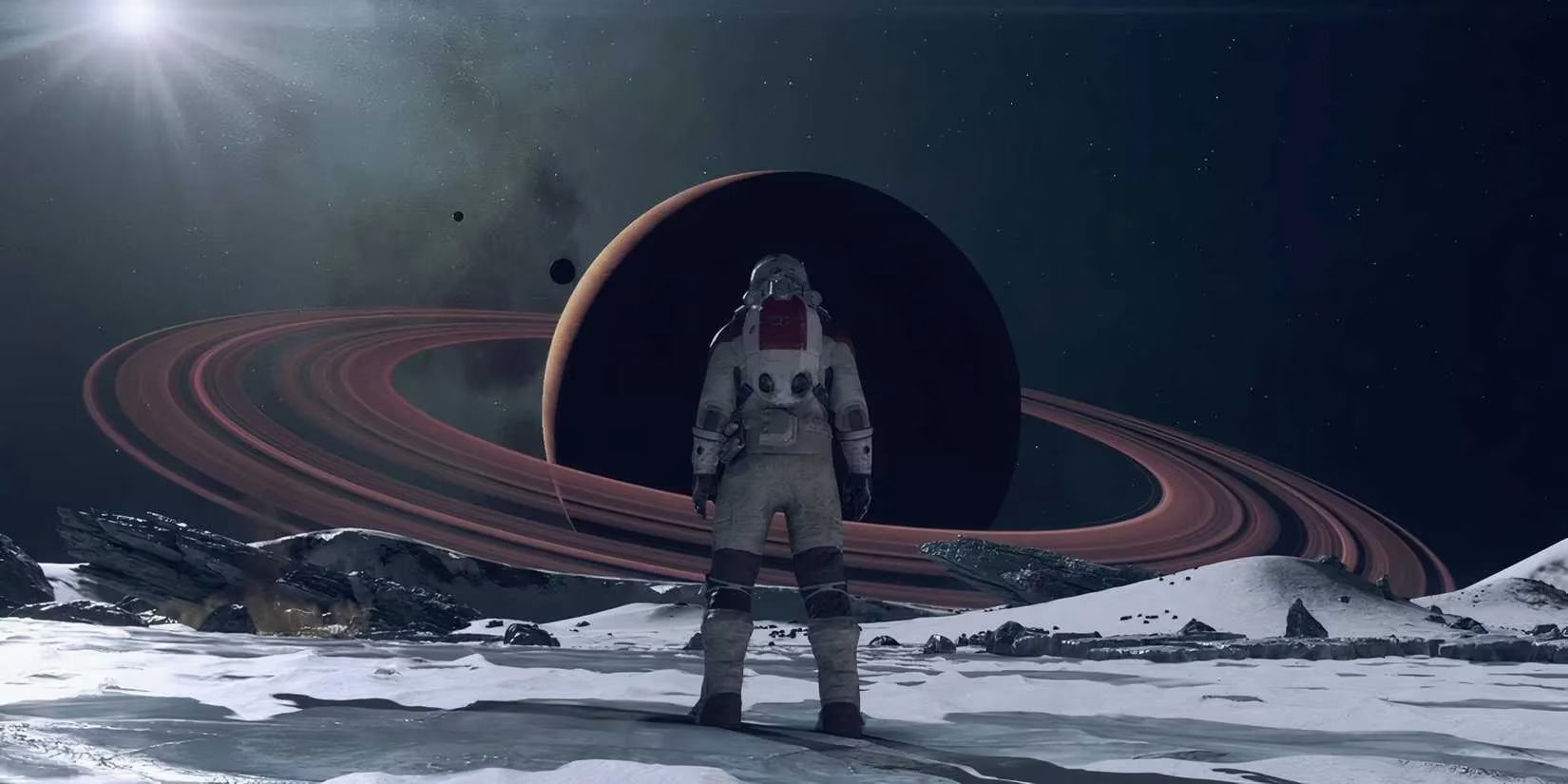
Starfield promised the cosmos, and in many ways, it delivered—stellar ship combat, engaging faction quests, and that classic Bethesda charm. But its one critical failure undermines its entire premise: exploration.
The procedural generation that populates its hundreds of planets is its greatest weakness. At first, it's novel. Soon, however, you see the same cryo labs, the same mining outposts, the same geological formations repeated ad infinitum. The magic of wondering "What's over that hill?" evaporates, leaving exploration feeling as hollow and transactional as scanning a barcode. For a space sim, this is a fatal flaw. The combat and quests are great, but they can't compensate for a universe that feels so curiously empty and copy-pasted.
8. Cyberpunk 2077 - The Phantom Antagonist
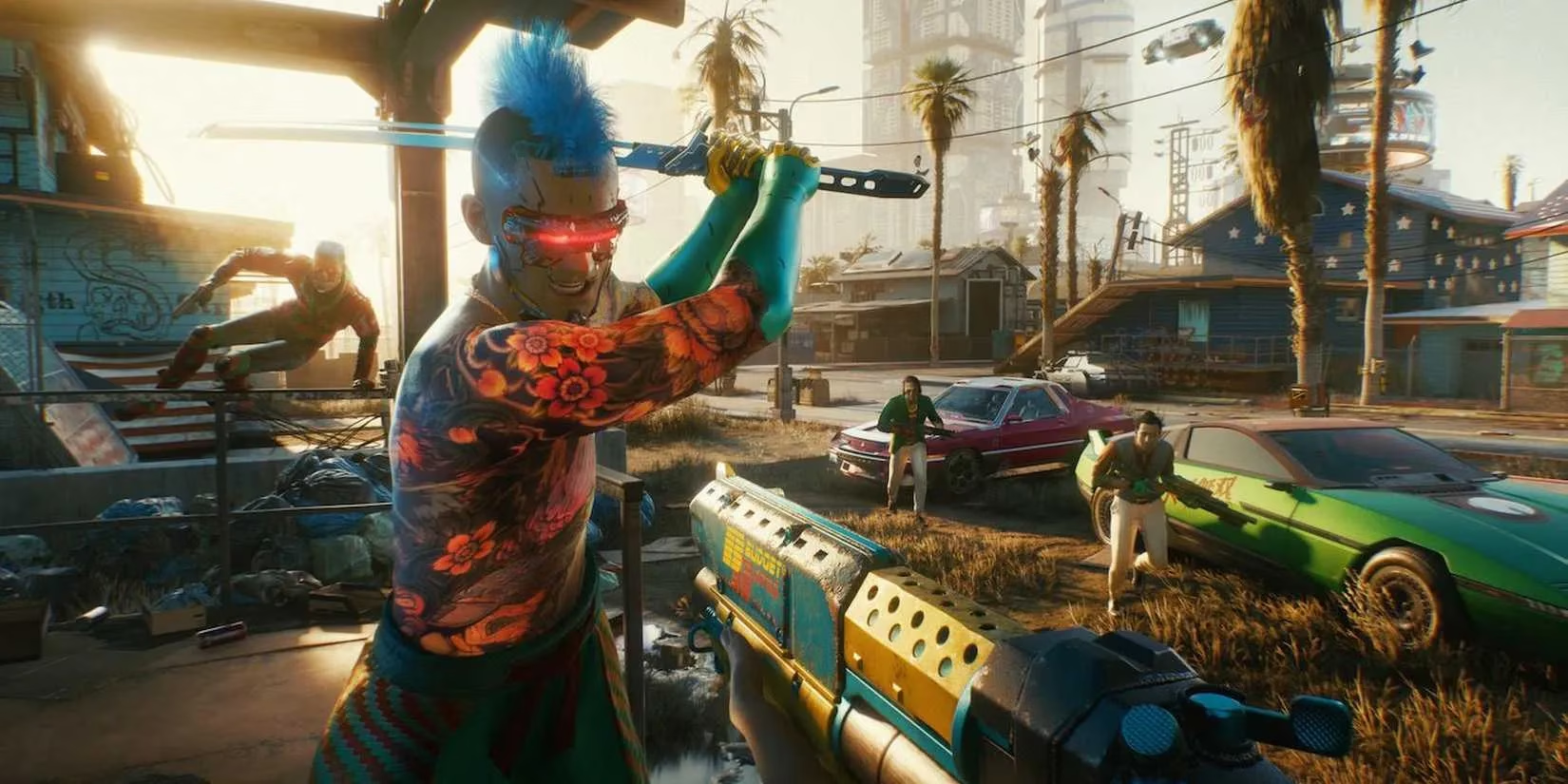
Night City is a character in itself—a dazzling, dangerous beast of a metropolis. Cyberpunk 2077's comeback story is legendary, offering incredible graphics, explosive combat, and meaningful choices. Yet, for all its strengths, it lacks a compelling central villain. 😈
The game points to Yorinobu Arasaka early on, but he's a ghost, a figure lurking in the background with no real presence or personal connection to V. This leaves the narrative without a driving antagonistic force. The game seems to realize this too late, awkwardly shoving Adam Smasher into the final boss role with little buildup. Phantom Liberty's Solomon Reed showed how it should be done—a complex, present foil. The main plot's lack of a true nemesis is like a stage play with a phenomenal set and cast, but no one to play the crucial role of the antagonist.
7. Deus Ex: Mankind Divided - The Abrupt, Unsatisfying End
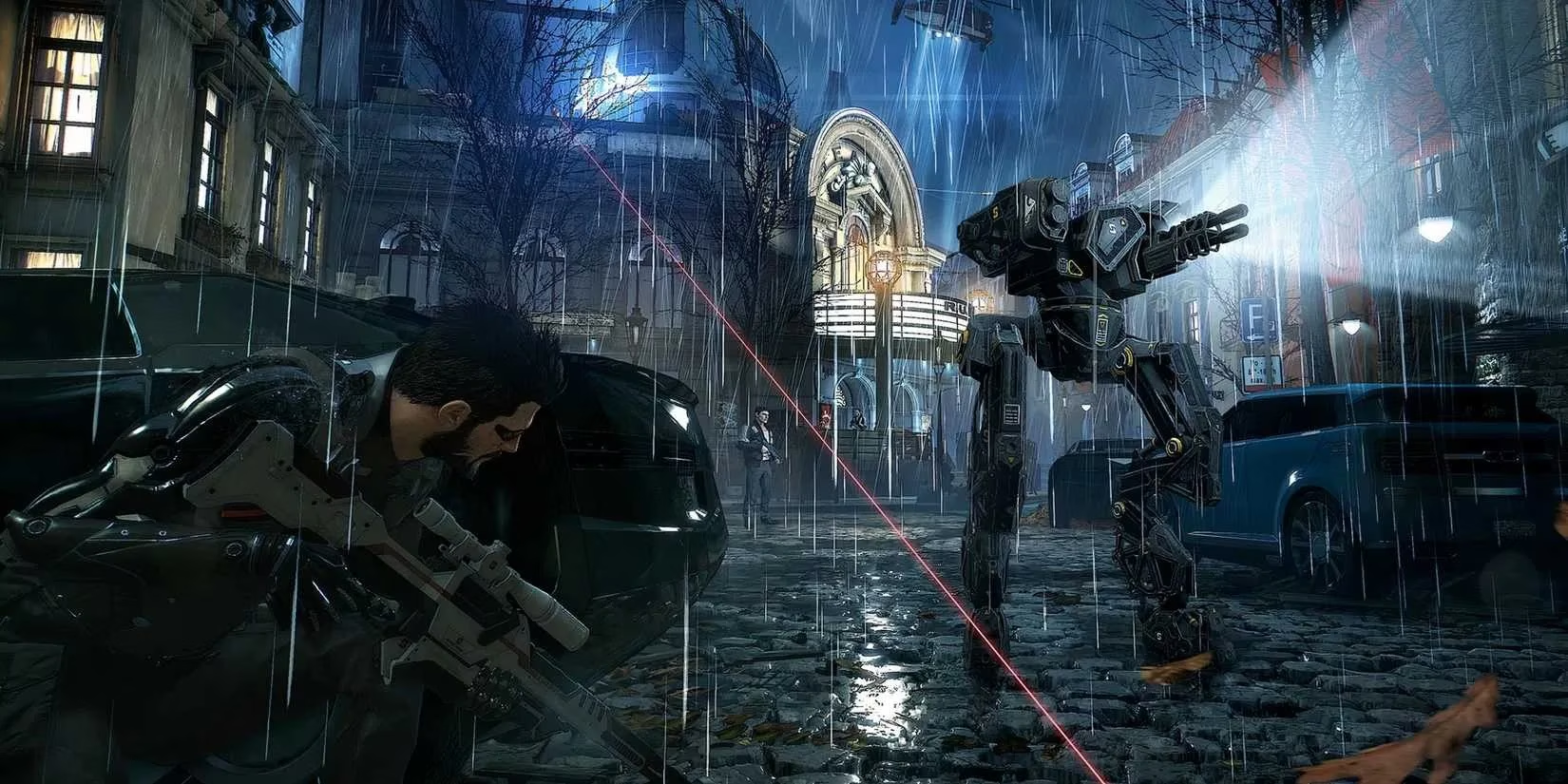
This game is a masterpiece of immersive sim design from start to... well, that's the problem. It doesn't really have a finish. Deus Ex: Mankind Divided builds a fantastically complex world of aug discrimination and corporate conspiracy. The gameplay—the combat, the stealth, the player agency—is sublime.
Then, you reach the final mission. It feels like a mid-season finale, not a series conclusion. The credits roll, and dozens of plot threads are left dangling, severed as if by a careless guillotine. The prevailing theory is that development was cut short, and it shows. It's a heartbreaking flaw because it renders the experience incomplete, a breathtaking symphony that ends right before the final, triumphant movement.
6. Elden Ring - The Tyranny of Upgrade Materials
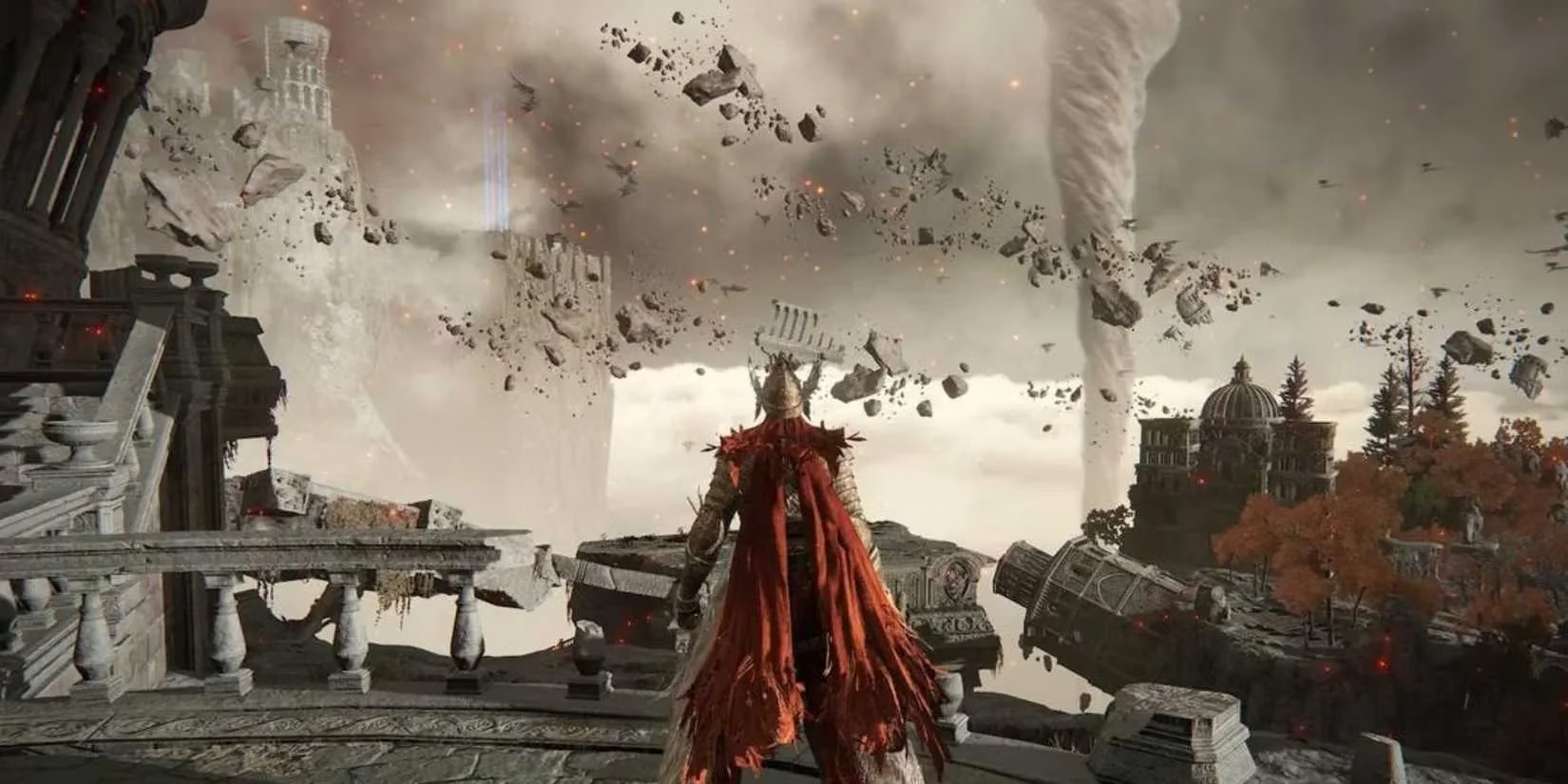
Elden Ring is a landmark achievement. Its world is a siren's call, begging to be explored. But its one glaring flaw actively punishes that exploration. 🏆
The weapon upgrade system is the culprit. You pour precious Smithing Stones into your trusty starting weapon to survive. Then, you delve into a hidden catacomb, defeat a monstrous boss, and are rewarded with a cool, unique weapon... that's completely useless compared to your +15 Claymore. The cost to experiment is prohibitively high, stifling build diversity and making exciting loot drops feel as rewarding as finding a pebble on the beach. In a game about discovery, this system discourages it.
5. The Legend of Zelda: Breath of the Wild - The Fragility of Joy
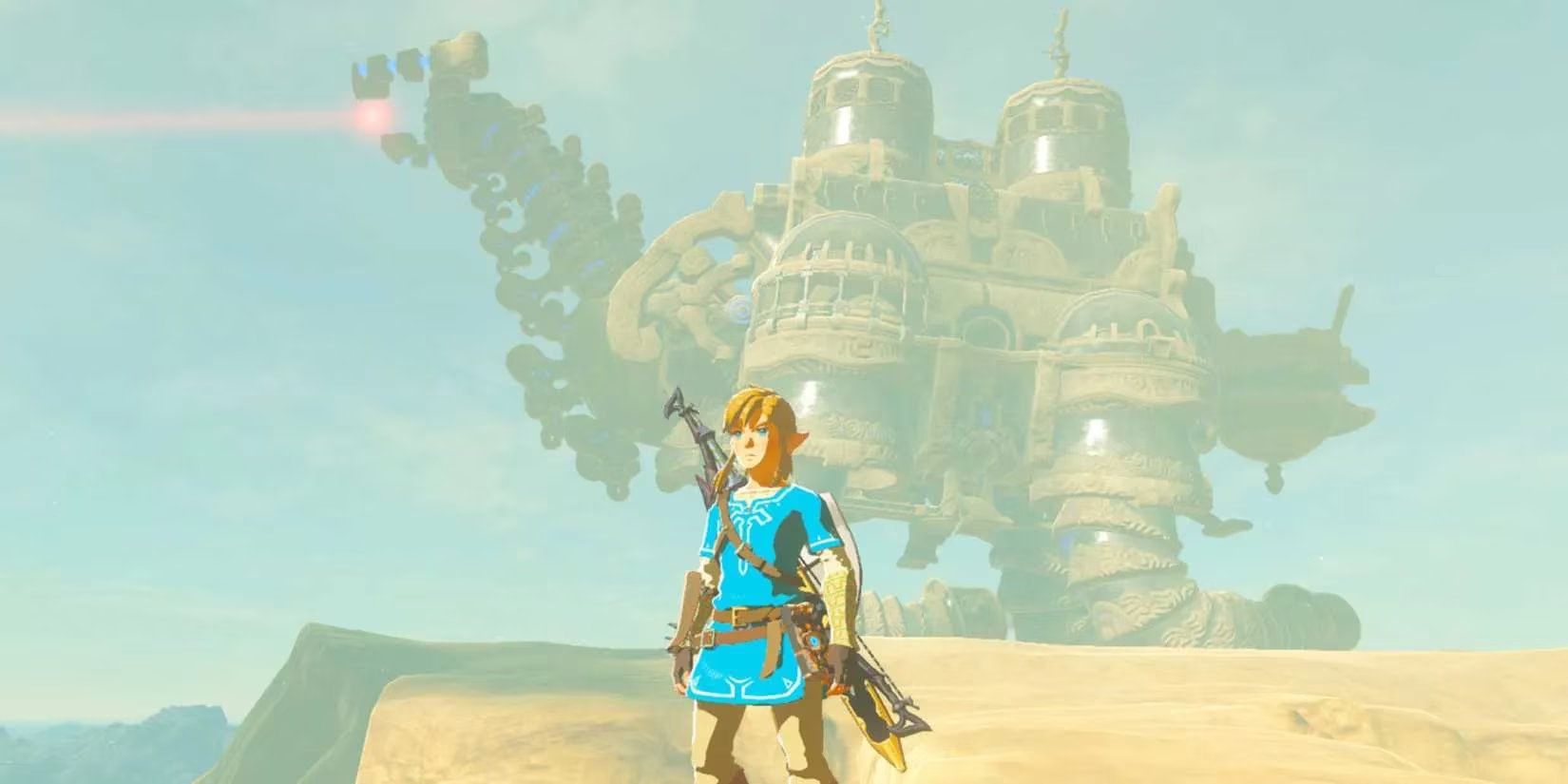
Breath of the Wild is a miracle of open-world design. Its sense of freedom is intoxicating. And then, your favorite Royal Broadsword shatters after five swings. The weapon durability system is this masterpiece's one, massive flaw.
It turns thrilling combat into a stressful inventory management sim. You hoard "good" weapons for hypothetical tough fights, while fending off Bokoblins with tree branches. It breaks the power fantasy and the flow of exploration constantly. For a game so dedicated to player freedom, this one mechanic feels like an oppressive, arbitrary rule.
4. Mass Effect 3 - The Missing Squad
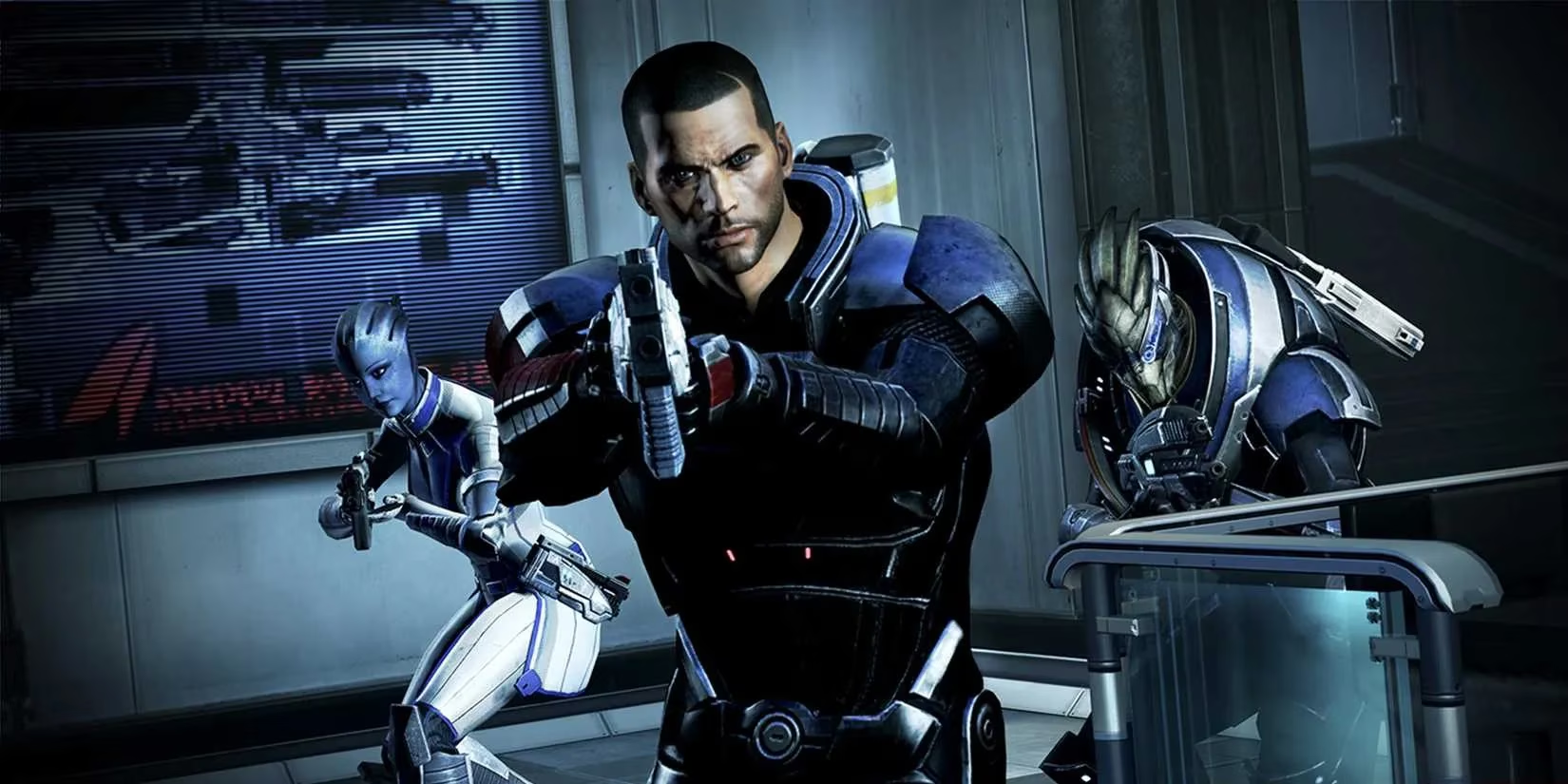
Forget the ending debate. My nitpick with ME3 is more personal: the party roster. We assembled a galaxy-saving dream team in ME2—12 unique, beloved characters. For the final war against the Reapers, that roster is slashed to 6 permanent slots, with only 2 new faces (one of whom is the bland James Vega). 👥
Where's Wrex? Where's Miranda? Jack? Legion? They make cameos, but they can't join you on missions. In the trilogy's emotional climax, having my family fractured and sidelined stings. The combat is the series' best, the story is epic, but fighting alongside a reduced crew makes the galaxy feel smaller, not larger, in its final hour.
3. Dragon Age: Origins - The Fade (A Necessary Evil... That's Just Evil)
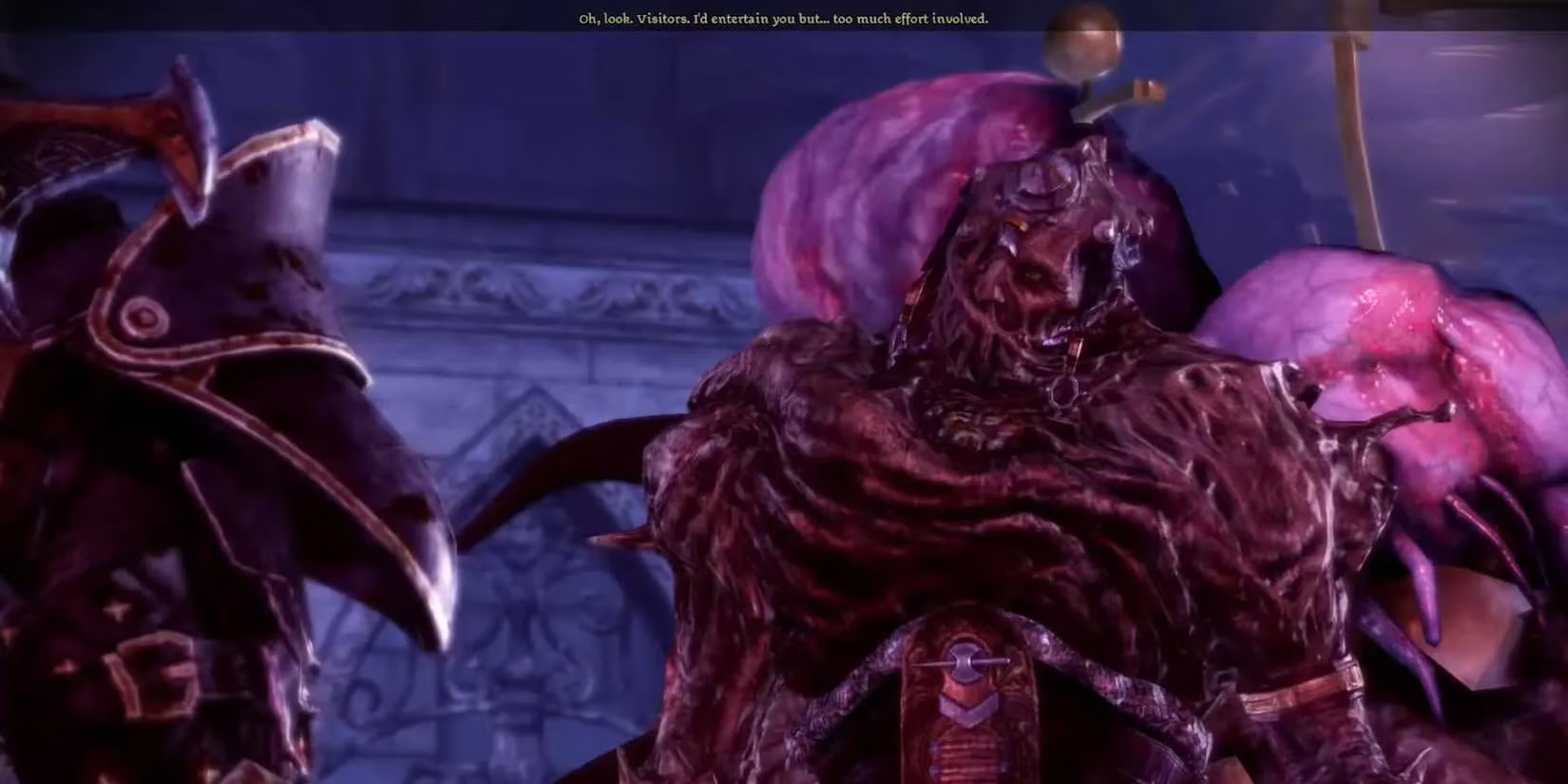
Dragon Age: Origins is Bioware's crowning glory—a perfect blend of story, character, and tactical combat. Then, you get to the Circle Tower quest and are dragged into The Fade. This segment is infamous for a reason.
It strips away your party, your gear, and the core gameplay, replacing it with a tedious puzzle-dungeon where you morph into generic creatures. It's long, confusing, visually monotonous, and brutally difficult because the game isn't balanced for solo play. It's a bizarre, pace-killing interlude that feels like a poorly designed mod slapped into the middle of a classic. It's no wonder the most popular mod for the game is one that lets you skip this entire section.
2. Vampyr - Janky Combat in a Beautiful World
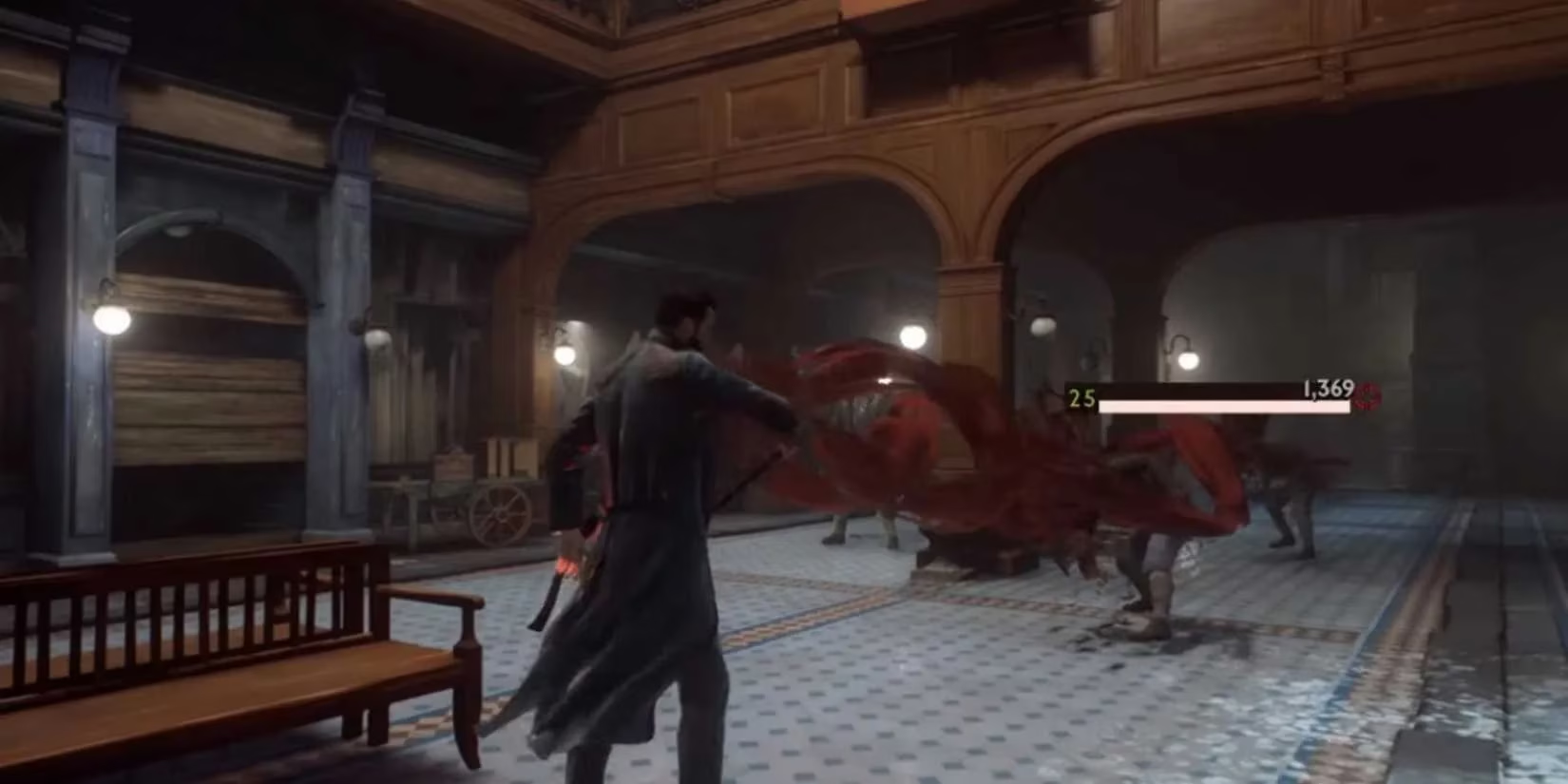
Vampyr is a bold, atmospheric RPG with a brilliant moral core: to gain power, you must feed on the citizens you're sworn to heal. The writing, voice acting, and world of 1918 London are superb. Sadly, the combat feels like it's from a different, much cheaper game. 🧛♂️
It's floaty, unimpactful, and oddly difficult. For a powerful vampire, you feel weak, getting overwhelmed by groups of basic enemies. The combat lacks the weight and fluidity the fantasy demands. It's the rusty hinge on an otherwise ornate and captivating door, constantly pulling you out of an otherwise immersive experience.
1. NieR:Automata - The Repetition Gate
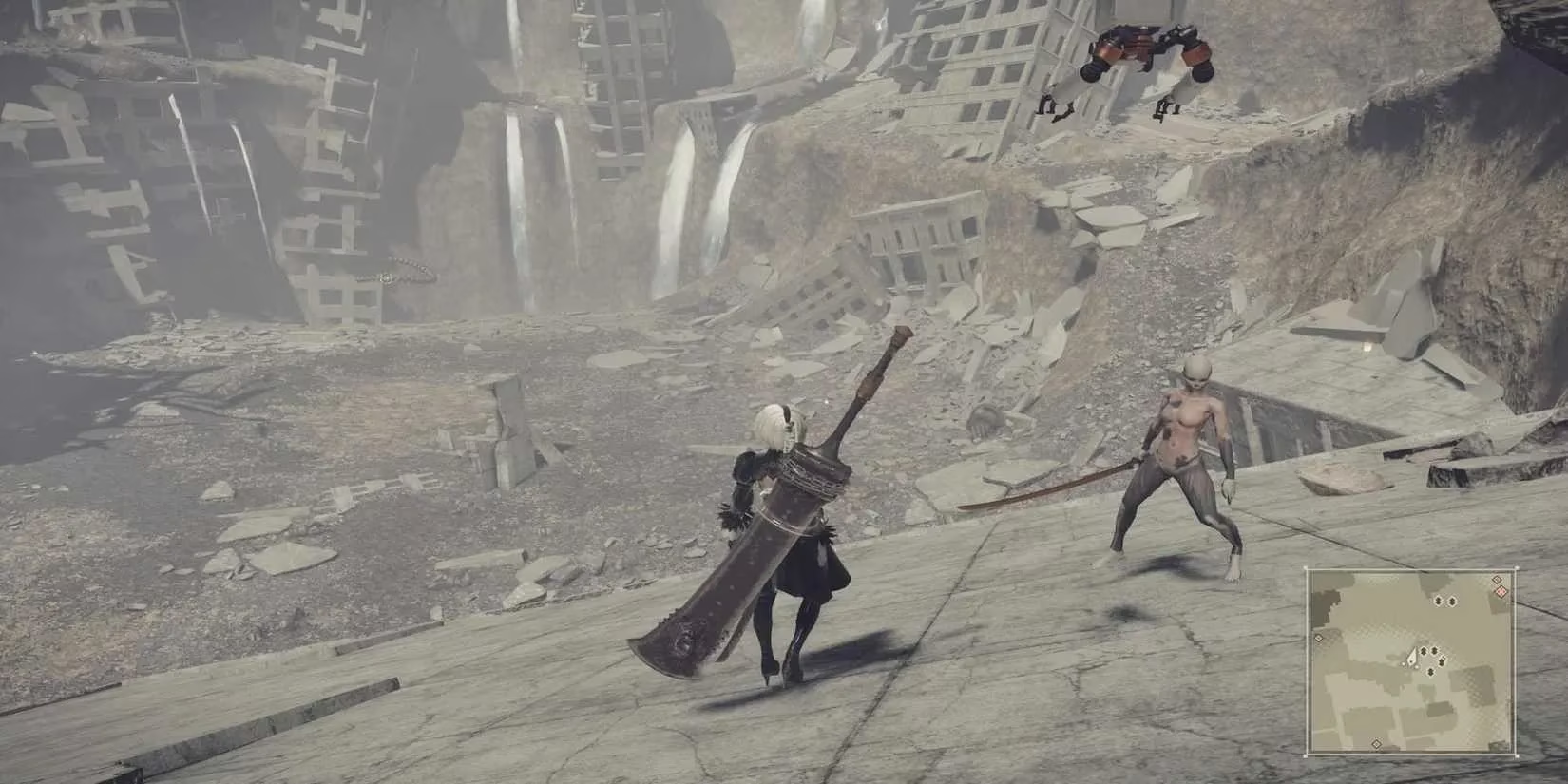
NieR:Automata is a transcendent work of art, a game that uses its medium to ask profound questions. To experience its full story, however, you must complete the game three times. Route A (as 2B) is incredible. Route B forces you to replay the same story from 9S's perspective, which, while adding narrative context, is a much less fun gameplay experience due to his limited combat style.
Only after this substantial time investment do you reach Route C, the true, mind-blowing finale. This structure is a significant barrier. Requiring players to essentially replay the game twice to reach the payoff is a big ask, like being forced to read the first two-thirds of a novel twice before being allowed to finish it. My advice? Blitz through Route B on Easy mode. The payoff in Route C is worth every second of the grind, but the path to get there is needlessly arduous.
Final Thoughts
Perfection in gaming is a mirage. These flaws don't ruin these masterpieces; in a strange way, they humanize them. They remind us that even the most ambitious creations have their limits. As players, we learn to love them, warts and all, because the experiences they offer in spite of these issues are often unparalleled. What's your favorite flawed masterpiece? Let me know in the comments! 👇
COMMENTS