Fast-paced JRPGs and dynamic combat systems deliver deep stories and thrilling battles, blending reflex-driven action with strategic depth.
I used to think of turn-based JRPG combat as a patient game of chess, but by 2026 my hands want something more like painting with a caffeinated brush. The best fast-paced JRPGs keep their stories and systems deep, yet their battles feel like a pulse instead of a metronome. They let me tear through enemies, switch characters on reflex, and still pause long enough to care about the world.
⚔️ The never-idle combat engines
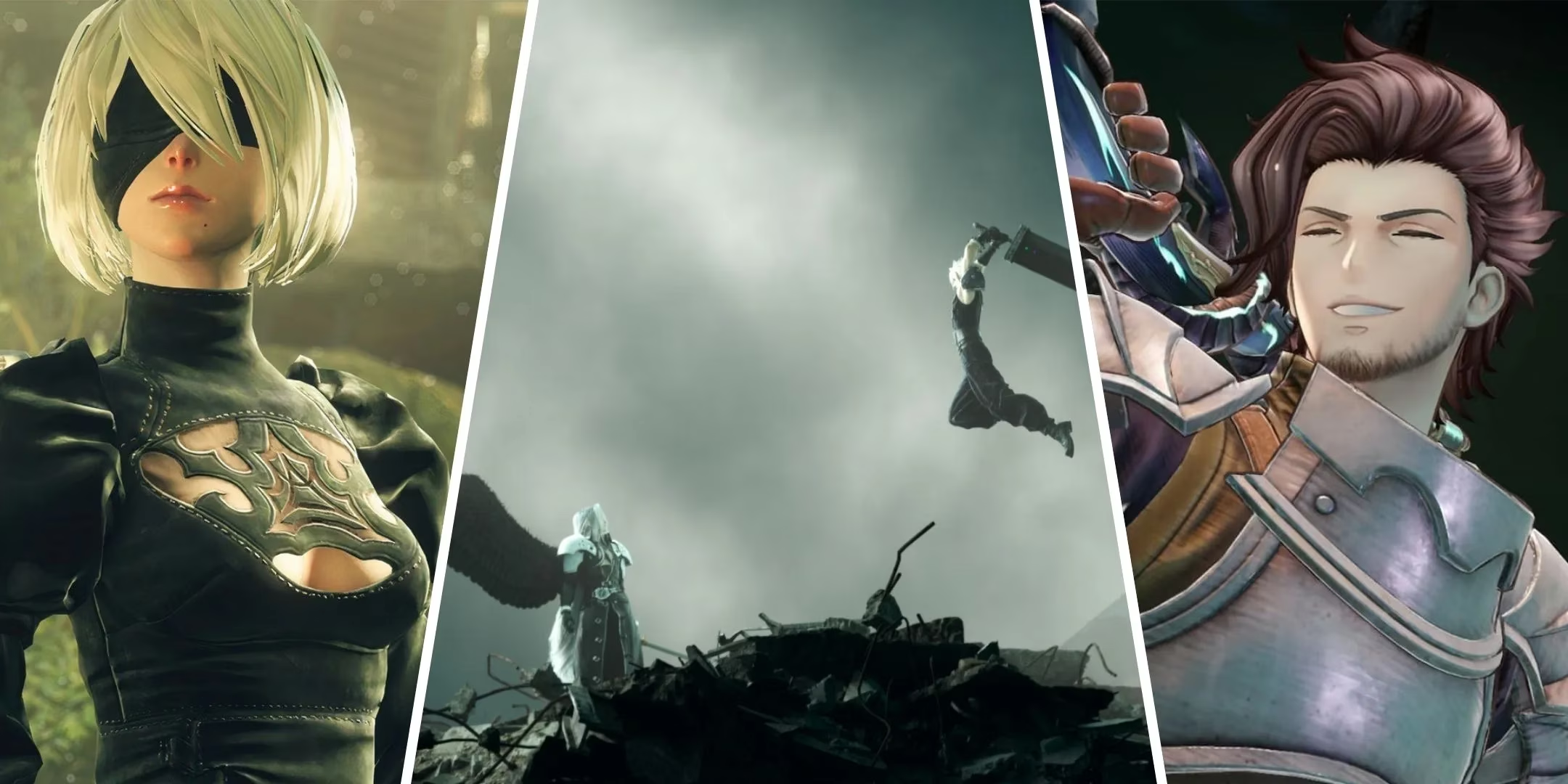
Granblue Fantasy: Relink starts fast and rarely lets go. Its fights are loud, colorful, and almost overwhelming in the best way. Special abilities stack with normal attacks to create a chaotic anime light show, but the system remains readable once I settle into its rhythm. The main story is not the main attraction; the endgame is where the game becomes a storm of missions and party experiments, and I love how swapping characters changes the pressure of each encounter.
NEO: The World Ends with You is another game that made me enjoy button-mashing with purpose. Pins give each character distinct abilities, while the Beatdrop system rewards well-timed combos and creative sequencing. It is not pure reflex; it asks me to think just enough between hits. The art direction is stylish, but the combat is the secret heartbeat.
Dragon’s Dogma 2 makes scale and momentum feel physical. Instead of simply cycling menus, I am grabbing onto enemies, finding weak points, and adjusting to a vocation’s fighting style. Each class reshapes the same battle into something different, and the quick dynamic pace means I am always watching the monster more than my own cooldowns.
Nier: Automata has the coiled precision of a switchblade wrapped in silk. At first the combat feels simple, but it hides a deep, fast system of weapon combinations, pod abilities, and custom chips. Well-timed dodges and chained attacks keep the action visually stylish. The narrative and soundtrack are strong, yet the combat is what makes me return for another loop.
🎮 Party-driven velocity
Xenoblade Chronicles 3 lets me bring up to seven active party members into a battle, which sounds like chaos. In practice, the system works like a loom weaving multiple colored threads into one bright tapestry of combos and effects. The fights feel intense and visually layered, and the Switch exclusive carries the trilogy’s fast combat identity while still delivering a polished story.
Star Ocean: The Second Story R offers real-time movement with up to four active characters. Its combat combines basic attacks and special skills, and stun-locking and combos give it a fluid edge. It feels like a Tales game with some of the complexity sanded down, but not the fun. Class diversity and customizable abilities make team synergy matter in harder encounters.
Tales of Vesperia is a franchise benchmark for continuous real-time combat. I can switch characters quickly to exploit enemy weaknesses, and each party member’s exclusive abilities support different approaches. The system grows with new techniques and combinations, and the flexibility keeps fights engaging whether I want damage, support, or crowd control.
💠 Modern classics with a faster pulse
Final Fantasy 7 Remake was a bold rewrite of a turn-based classic, and the risk paid off. Battle feels quick for a JRPG because I am moving characters around the field and attacking in real time. The animations make every slash and spell satisfying, so the faster pace does not thin out the original’s dramatic weight.
Ys 8: Lacrimosa of Dana is pure reflex fuel. The combat is dynamic against visible enemies, and instant character switching lets me match damage types quickly. Abilities consume SP, but basic attacks refill it, creating a loop that never lets the tempo stall. Flash Guard and Flash Dodge reward precise timing with brief invulnerability, critical damage, and slow-motion effects.
Kingdom Hearts II remains one of the best examples of fast-paced JRPG combat. Sora’s physical combos feel fluid and responsive, and Drive Forms add a transformative layer that helps me punch through tougher fights. The Final Mix version pushes that loop even further.
📊 At a glance
| Game | Core feel | Standout feature |
|---|---|---|
| Granblue Fantasy: Relink | Chaotic and colorful | Endgame combat missions |
| NEO: The World Ends with You | Stylish button-mashing | Beatdrop combo system |
| Star Ocean: The Second Story R | Fluid real-time teamwork | Stun-locking and combos |
| Xenoblade Chronicles 3 | Large-scale party battles | Up to 7 active characters |
| Tales of Vesperia | Continuous tactical motion | Quick character switching |
| Dragon’s Dogma 2 | Physical monster duels | Enemy weak points and vocations |
| Final Fantasy 7 Remake | Modernized action | Real-time field movement |
| Ys 8: Lacrimosa of Dana | Reflex-driven rhythm | Flash Guard and Flash Dodge |
| Kingdom Hearts II | Fluid combo clarity | Drive Forms |
| Nier: Automata | Precise, stylish flow | Custom chips and pod abilities |
In 2026, this corner of the genre feels more alive than ever. These games prove that a JRPG can be thoughtful and still move like a current, not a clock.
COMMENTS