Video game plot twists and genre shifts create unforgettable, immersive experiences, redefining gaming with bold, seamless reinventions.
In the world of video games, consistency is often considered sacred. Developers spend years polishing mechanics, balancing systems, and ensuring players understand the rules of their virtual playground. But every once in a while, a game comes along that throws the rulebook out the window halfway through—and completely changes what kind of experience it is. It’s like going to see a concert and halfway through, the band decides to switch from rock to jazz, and somehow, it just works. These aren’t just twists; they’re full-scale reinventions that rewrite genres, shift pacing, and force players to adapt to a whole new gaming philosophy on the fly. It’s a creative gamble that few studios dare to take, and even fewer pull off without breaking immersion. In fact, the best of these games make the transition feel so natural that you barely notice the seams—until you look back and realize you’ve been playing something entirely different from what you started.
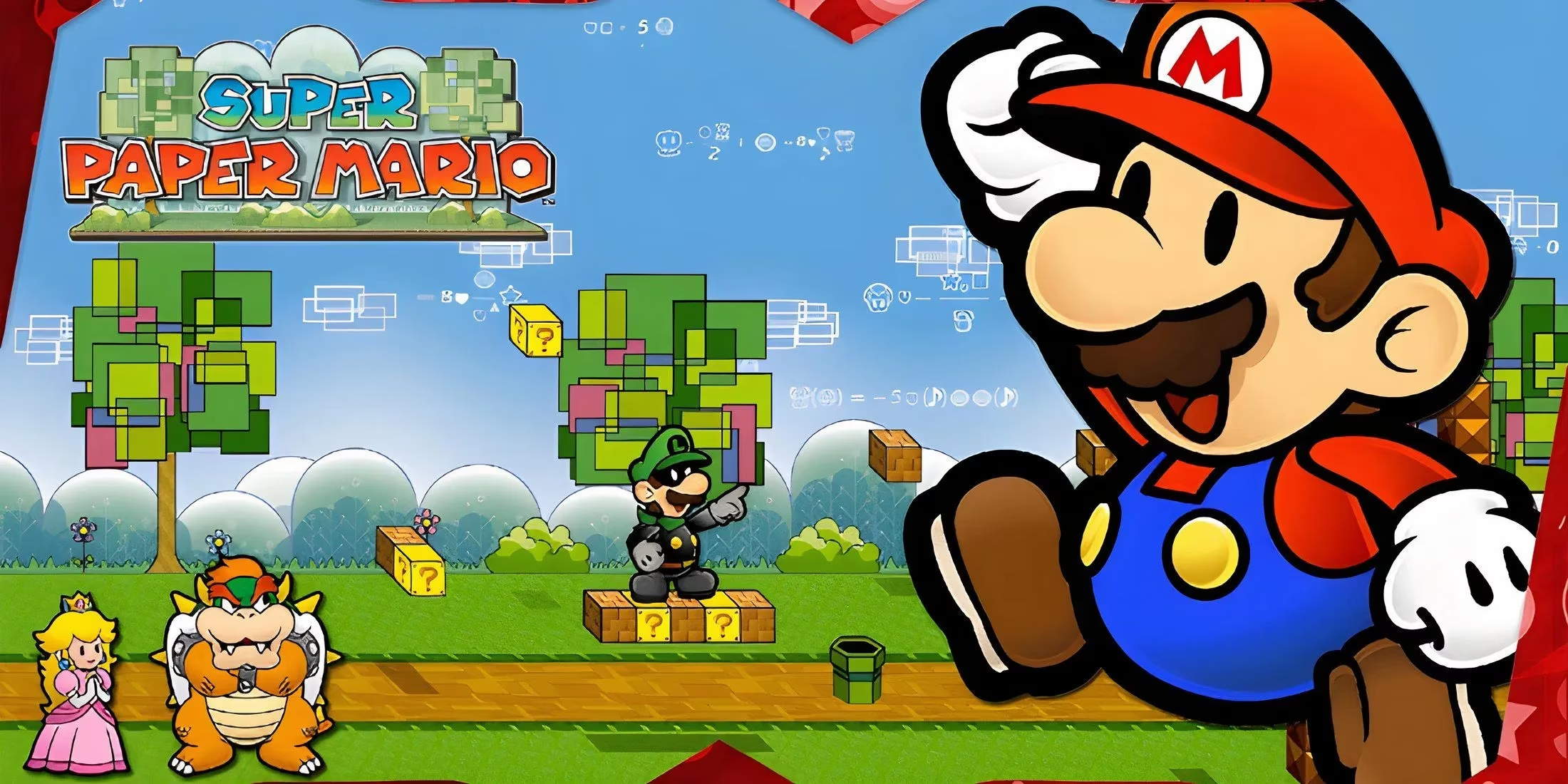
Super Paper Mario starts off feeling like a cozy, familiar friend. It looks and plays like a classic Mario side-scroller—you jump on Goombas, collect coins, and enjoy the whimsical humor the series is known for. But then, out of nowhere, it introduces a dimension-switching mechanic that lets you flip between 2D and 3D perspectives. This isn’t just a visual trick; it completely transforms how puzzles are solved and secrets are discovered. Walls you thought were solid become pathways, and hidden areas reveal themselves with a simple button press. And just when you think you’ve got it figured out, the game layers on RPG elements and a surprisingly deep story. It’s a genre-blending surprise that feels less like a Mario spin-off and more like a clever, multi-layered adventure. Talk about a plot twist you didn’t see coming!
Final Fantasy XV spends most of its runtime as a leisurely road trip across a stunning open world. You’re cruising in the Regalia, camping under the stars, taking on side quests, and bonding with your buddies—it’s all very chill and freeform. But in its final act, the game does a complete 180. The open world vanishes, replaced by a tightly scripted, linear narrative that ramps up the urgency and emotional stakes. This shift from exploration-driven freedom to focused storytelling might sound jarring on paper, but in practice, it amplifies the game’s themes of sacrifice and destiny. It’s a bold move that leaves a lasting impression, proving that sometimes, less freedom can mean more impact.
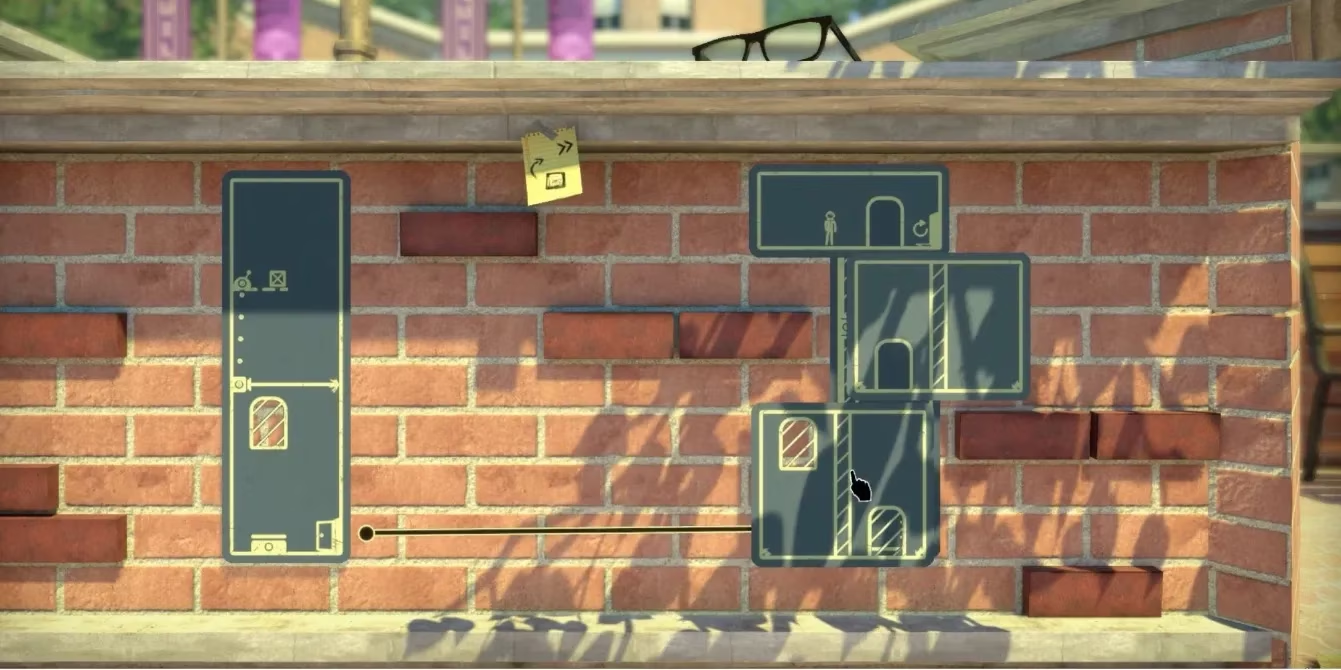
The Pedestrian looks deceptively simple at first—a charming 2.5D puzzle-platformer where you guide a stick figure through interconnected street signs and cityscapes. The early puzzles are clever but straightforward, focusing on rearranging panels to create pathways. But as you delve deeper, the game starts to play with the very fabric of its reality. The boundaries between 2D and 3D space blur, and eventually, you’re manipulating the environment outside the signs, even interacting with the screen itself. It’s a perspective shift that doesn’t just feel novel; it fundamentally changes how you think about space and logic. The transition is so elegantly executed that it never feels forced—just brilliantly mind-bending.
Brütal Legend kicks off with all the subtlety of a guitar solo at full volume. You’re thrown into a metal-inspired world, hacking and slashing demons with a giant axe, accompanied by Jack Black’s hilarious commentary. It’s pure, over-the-top action-adventure fun. Then, out of nowhere, the game introduces real-time strategy elements. Suddenly, you’re commanding troops, managing resources, and staging large-scale battles on concert-like stages. This switch divided fans at the time, but it undeniably added a layer of depth and chaos that fit the game’s epic, stadium-rock vibe. It’s like the game suddenly decided to upgrade from a garage band to a full symphony orchestra—and honestly, it kinda rocks.
The Messenger begins as a loving tribute to 8-bit ninja action platformers. It’s tight, challenging, and packed with retro charm as you slash through enemies and leap across pixel-perfect platforms. But halfway through, the game pulls off a stunning double-whammy: it visually upgrades to a 16-bit aesthetic and morphs into a full-fledged Metroidvania. Levels become interconnected, backtracking becomes essential, and new abilities open up previously inaccessible areas. This genre shift isn’t just a gimmick; it’s a clever meta-commentary on the evolution of retro gaming itself. It’s smooth, smart, and incredibly satisfying—a ninja’s trick that leaves you grinning.
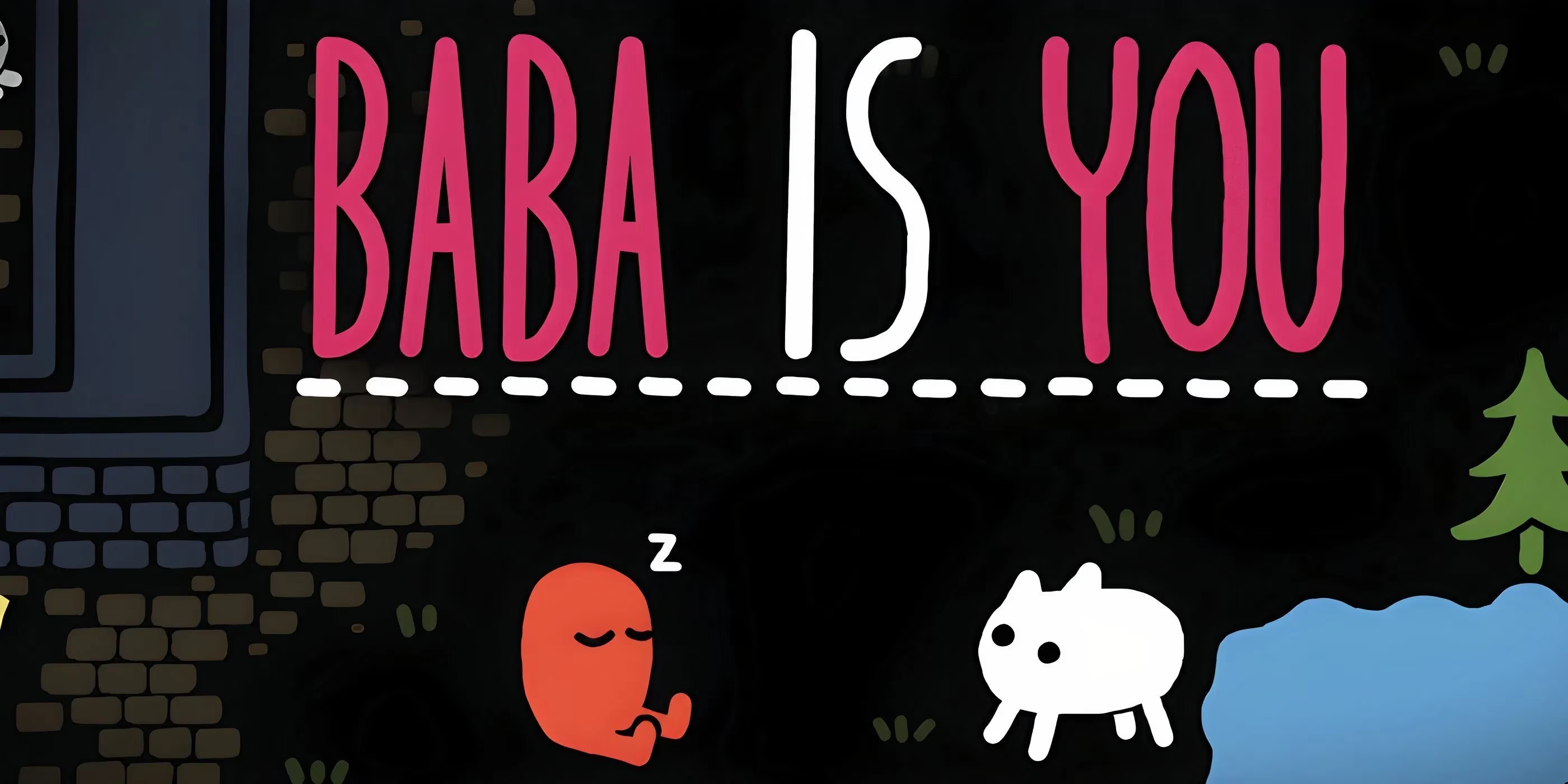
Baba Is You might look like a simple block-pushing puzzle game with minimalist graphics. And for the first few levels, that’s exactly what it is. But its genius lies in its central mechanic: you can change the rules of the game by literally rearranging the words that define them. Move “Wall Is Stop” to “Wall Is Push,” and suddenly, obstacles become tools. As the game progresses, this mechanic evolves from clever to brain-melting, forcing you to rethink object relationships, spatial logic, and even the nature of language. The transition turns the game from a puzzle-solver into a philosophy experiment—one where you’re not just playing by the rules, but rewriting them as you go. Now that’s what I call thinking outside the box!
Fable III starts with a classic hero’s journey: you rise from humble beginnings, gather allies, and lead a revolution to overthrow a tyrannical king. It’s all about choices, morality, and becoming a legend. But once you seize the throne, the game flips the script entirely. Suddenly, you’re not a hero; you’re a ruler facing impossible decisions. Do you tax your citizens to fund defenses, or keep promises and risk invasion? The RPG about personal choice becomes a tense management sim about compromise and consequence. It’s a jarring but brilliant shift that makes you feel the weight of power in a way few games ever do.
Star Wars Jedi Knight II: Jedi Outcast begins with a gritty, grounded first-person shooter experience. You’re a mercenary relying on blasters, cover, and tactics—there’s no Force, no lightsabers, just raw combat. Then, in a moment of pure Star Wars magic, you regain your Jedi powers. The game transforms into a dazzling spectacle of Force pushes, acrobatic jumps, and dynamic lightsaber duels. This isn’t just a power boost; it’s a complete overhaul of combat and level design that makes the second half feel like a different—and far more exhilarating—game.
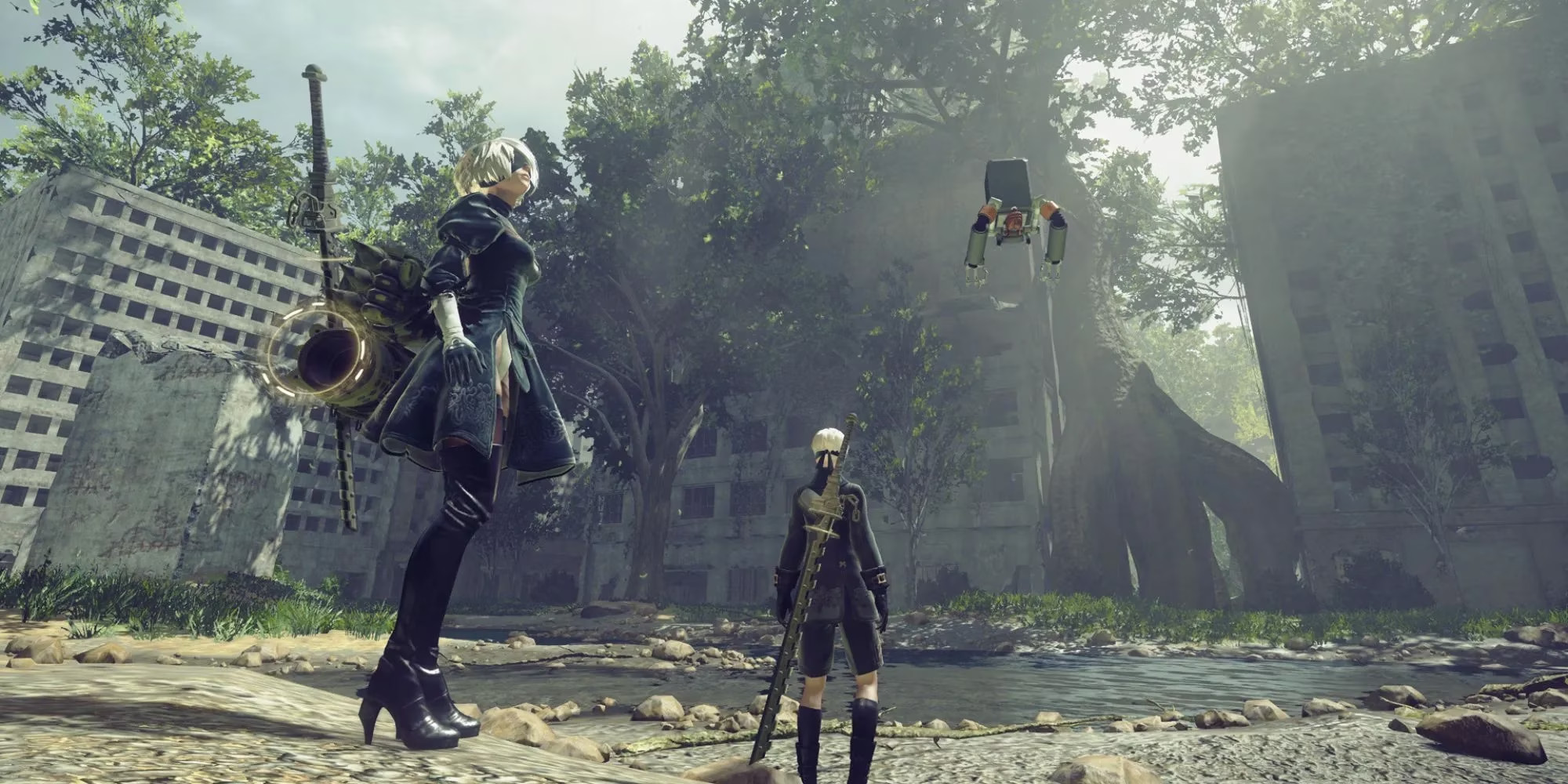
Nier: Automata is the master of disguise. On the surface, it’s a stylish action RPG with fast-paced combat, haunting music, and deep philosophical themes. But it never settles into one genre. Within a single playthrough, it shifts from hack-and-slash to bullet-hell shooter, 2D platformer, and even text-based adventure. These changes aren’t just for show; they reflect the game’s themes of identity, repetition, and existential doubt. It keeps players constantly off-balance, ensuring that the gameplay itself becomes a narrative tool. It’s a stunning example of how mechanical variety can deepen storytelling, making you question what a game can even be.
Here’s a quick look at how these games transform:
| Game | Initial Genre | Midway Shift | Why It Works |
|---|---|---|---|
| Super Paper Mario | 2D Platformer | 3D Puzzle-Exploration + RPG | Adds depth without losing charm |
| Final Fantasy XV | Open-World Road Trip | Linear Narrative | Increases emotional urgency |
| The Pedestrian | 2.5D Puzzle-Platformer | 3D Environmental Manipulation | Expands spatial logic brilliantly |
| Brütal Legend | Hack-and-Slash Adventure | Real-Time Strategy | Fits the epic, chaotic theme |
| The Messenger | 8-bit Action Platformer | 16-bit Metroidvania | Smooth meta-commentary on retro gaming |
| Baba Is You | Block-Pushing Puzzle | Rule-Rewriting Philosophy Game | Makes players redefine the game itself |
| Fable III | Choice-Driven RPG | Kingdom Management Sim | Highlights the burden of power |
| Jedi Outcast | Tactical FPS | Force-Powered Action | Unleashes iconic Star Wars fantasy |
| Nier: Automata | Action RPG | Genre-Hopping Hybrid | Reflects thematic complexity |
These games remind us that video games are an art form built on interaction—and sometimes, the most memorable interactions come from breaking the very rules you’ve just learned. They challenge players to adapt, think differently, and stay engaged in ways that predictable sequels and safe designs rarely do. In an industry often criticized for playing it safe, these titles are brave, bizarre, and utterly brilliant. They don’t just change mechanics; they change minds. And honestly, isn’t that what great art is all about? So next time you’re playing a game that feels a little too comfortable, keep an eye out—it might just be preparing to flip the script on you.
COMMENTS