NieR: Automata anime adaptation reimagines the game's narrative and endings, blending dual perspectives into a compelling, unified story.
When NieR: Automata first arrived in 2017, it felt like stepping into a shattered mirror. Every shard reflected a different angle of its dying world, and players who pressed their hands against the glass could feel the cold allure of multiple timelines and endings. By 2026, that mirror has been recast. The anime adaptation, NieR: Automata Ver1.1a, which premiered in 2023, took those glittering fragments and fused them into a single, breathtaking window—one that lets the same light pour through, but rearranged into a story that feels both familiar and dangerously new.
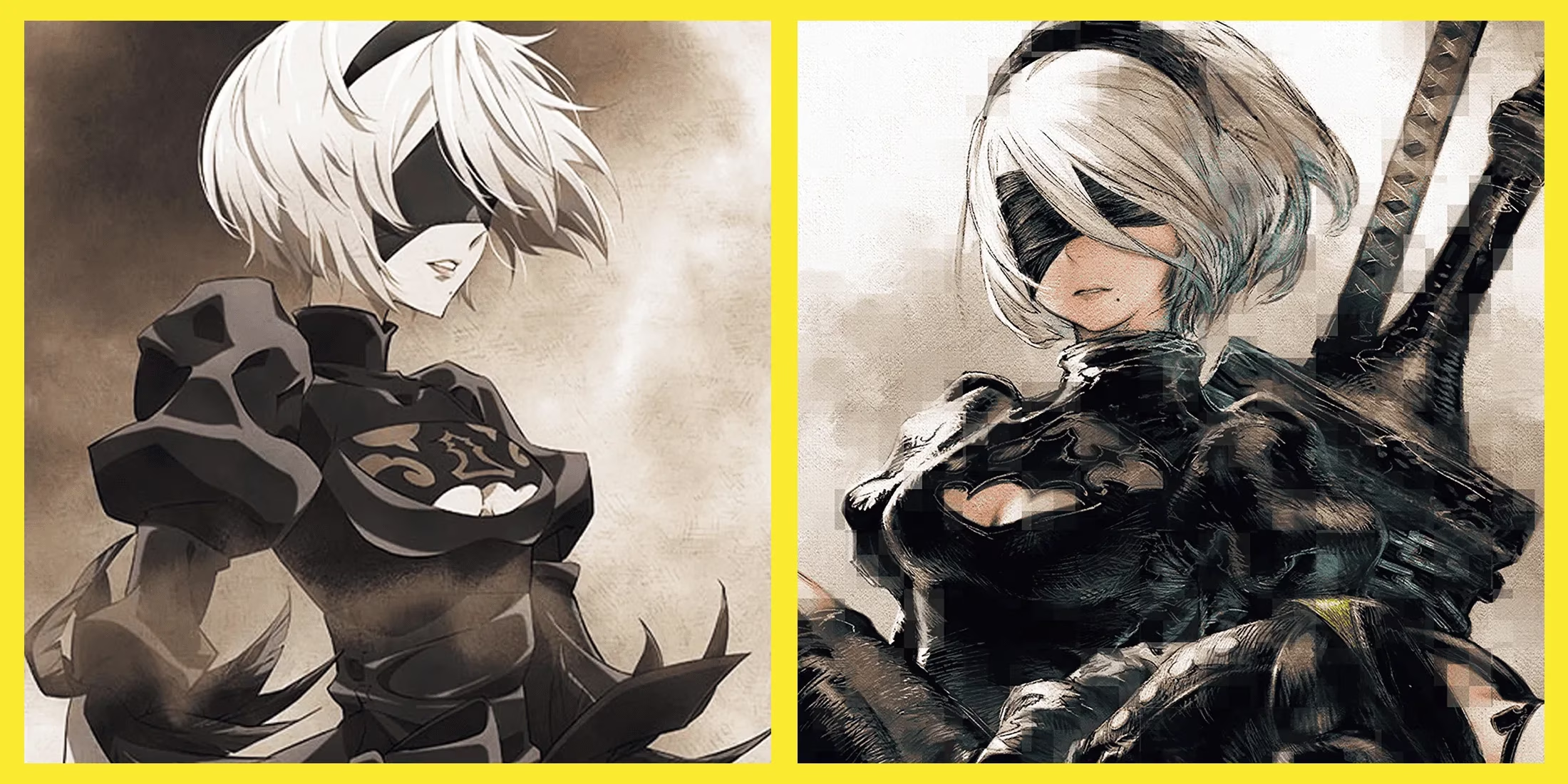
A veteran player revisiting the series today would notice immediately how the anime treats the game's dual perspectives like two streams merging into one river. The original title parceled out its narrative across Route A, seen through the stoic eyes of 2B, and Route B, filtered through 9S's hacking-scarred consciousness. Ver1.1a braids these threads together in real time, allowing scenes to breathe through both characters at once. Where the game demanded a second playthrough to understand 9S's hidden turmoil, the anime lets it bleed through from the very start—a choice that transforms the storytelling from a puzzle box into a tapestry.
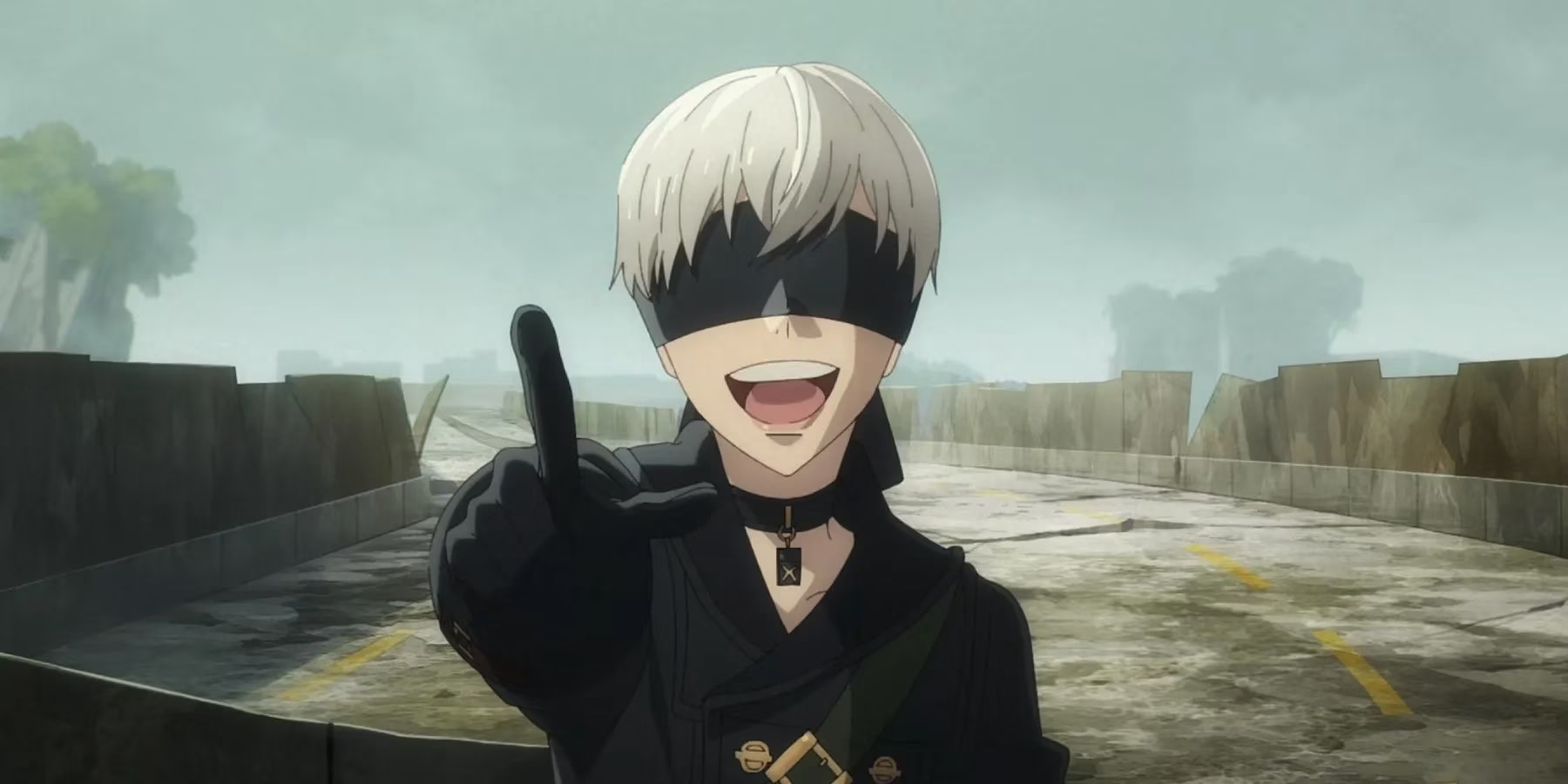
The branching storylines that once branched like a banyan tree's aerial roots—troll endings and all—are pruned to a singular, remixed finale. In the game, players wrestled with endings A through E, often replaying chapters to wring meaning from despair. The anime, however, distills the essence of endings C, D, and E into a single sequence. The choreography of sacrifice changes; events collide in orders that feel intentionally wrong, as if the anime is humming the same melody but shifted to a minor key. For fans who memorized every beat, this is less a retelling and more a séance with the ghosts of timelines that never were.
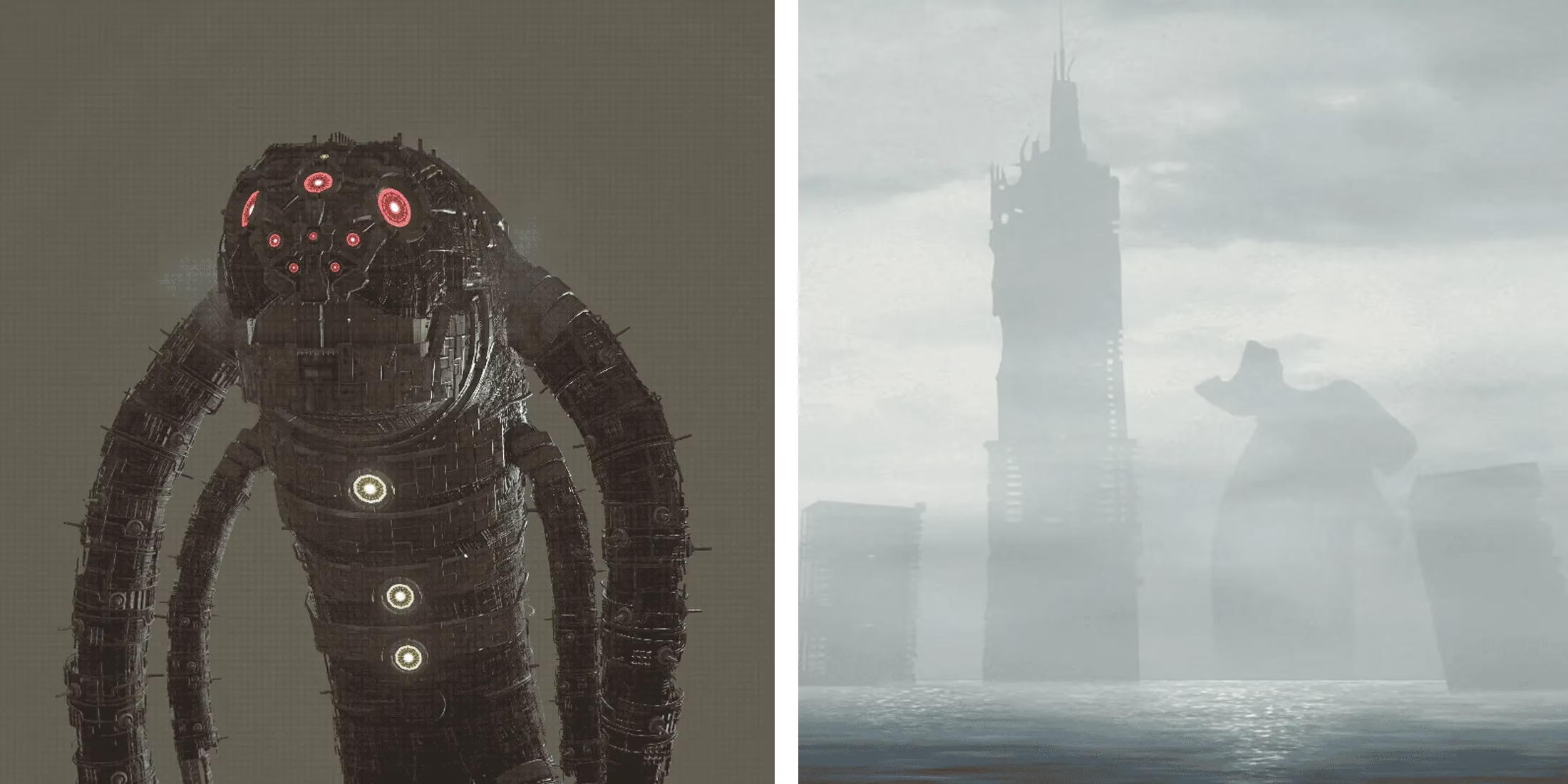
One of the most silent yet profound alterations is the fate of Grun, the colossal machine weapon that once shook the city to its foundations. In the game, Grun was a roaring obstacle; in the anime, it never truly appears. Instead, its silhouette rests among the drowned skyscrapers—a petrified titan serving only as moody scenery. It's a decision that whispers about the anime's philosophy: not every monster needs to be slain again. Some are left as fossils, reminders that even the apocalypse can grow bored of itself.
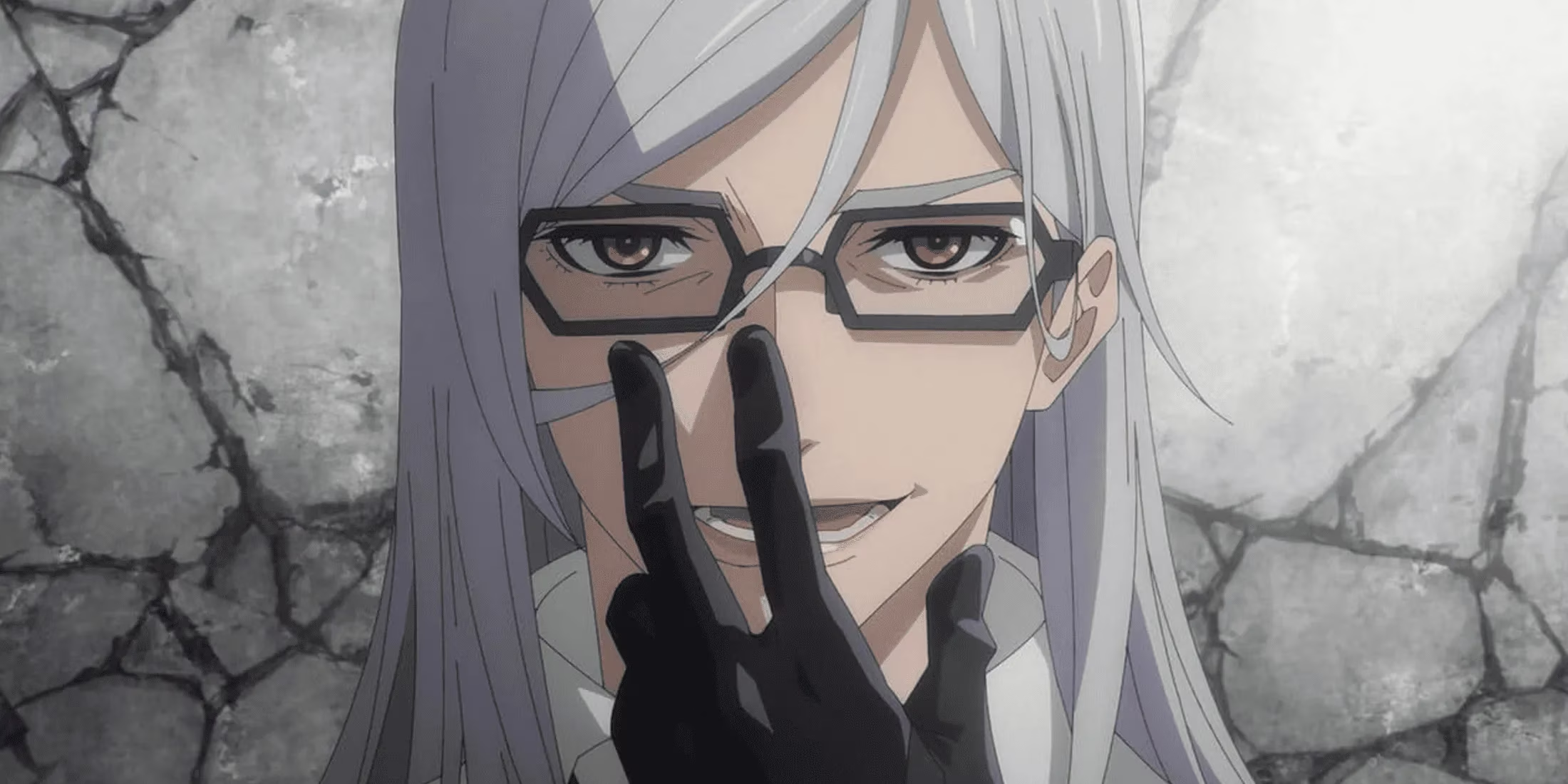
The emotional temperature of the cast has been dialed into territory the game only hinted at. If the original's android psyche was an iced-over lake, the anime shows the water moving beneath—2B’s cold grace now carries a perceptible caretaker's tremor, 9S's playfulness twists into a blade with a double edge, and Commander White cracks her porcelain mask to reveal something raw. The move toward vibrancy isn't just cosmetic; it's a survival tactic for a medium that can't rely on button inputs to convey intimacy. Freed from gameplay loops, Ver1.1a lets characters breathe and, sometimes, weep.
Pascal, the gentle machine who built a village to escape violence, becomes a recipient of this deepened focus. The anime retrofits him with a whole starlit history: his emergence from mindless servitude, the first flicker of sentience like a candle in a hollow chest, and the slow, painful construction of his pacifist dream. Where the game left parts of his arc implied, the anime walks the viewer through every crack in his moral foundation, making his eventual arc both richer and more devastating.
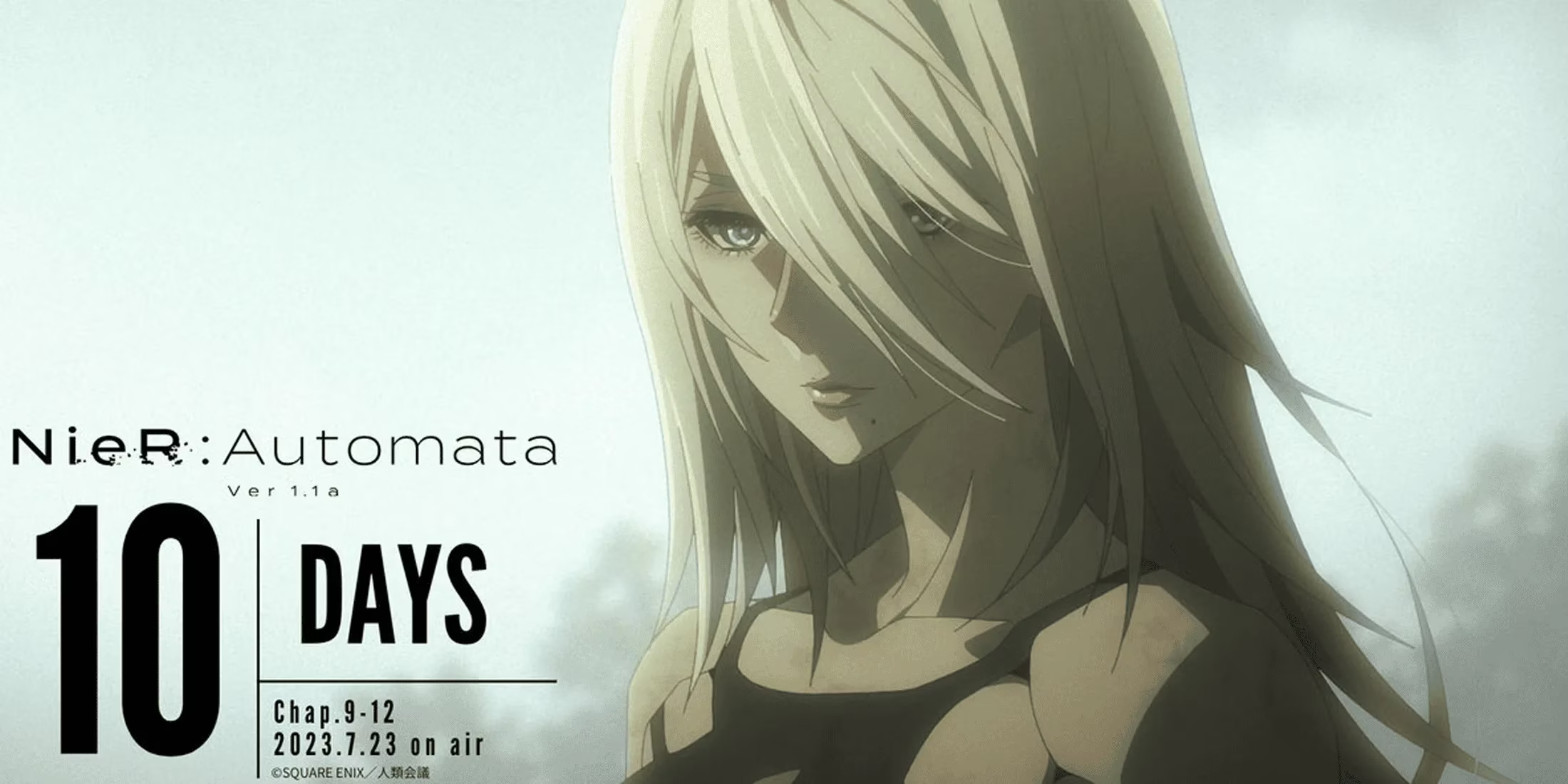
A2, the rogue YoRHa fugitive who once felt like a cipher, receives a similar unboxing. The anime excavates her past with archaeological care: her first breath as a combat model, the resin-scented despair of the Pearl Harbor Descent mission, and the exact moment she severed all ties. It's the kind of backstory the game scattered across stage plays and novellas—readily available but rarely seen. By planting these memories directly into the narrative soil, Ver1.1a makes A2's bitterness feel not like a defect, but like a family heirloom.
Yet with intimacy comes mortality. The anime is a far more lethal world. In the game, many supporting characters endured until the credits rolled; here, the body count climbs like a fever. Pascal's village doesn't just suffer—it is erased. Lily, Jackass, the whole ragged choir of the Resistance—they fall one by one, often in front of the camera. This grim pruning isn't cruelty for its own sake. It re-emphasizes the franchise’s core question: in a world engineered for endless war, can anyone truly claim a future?
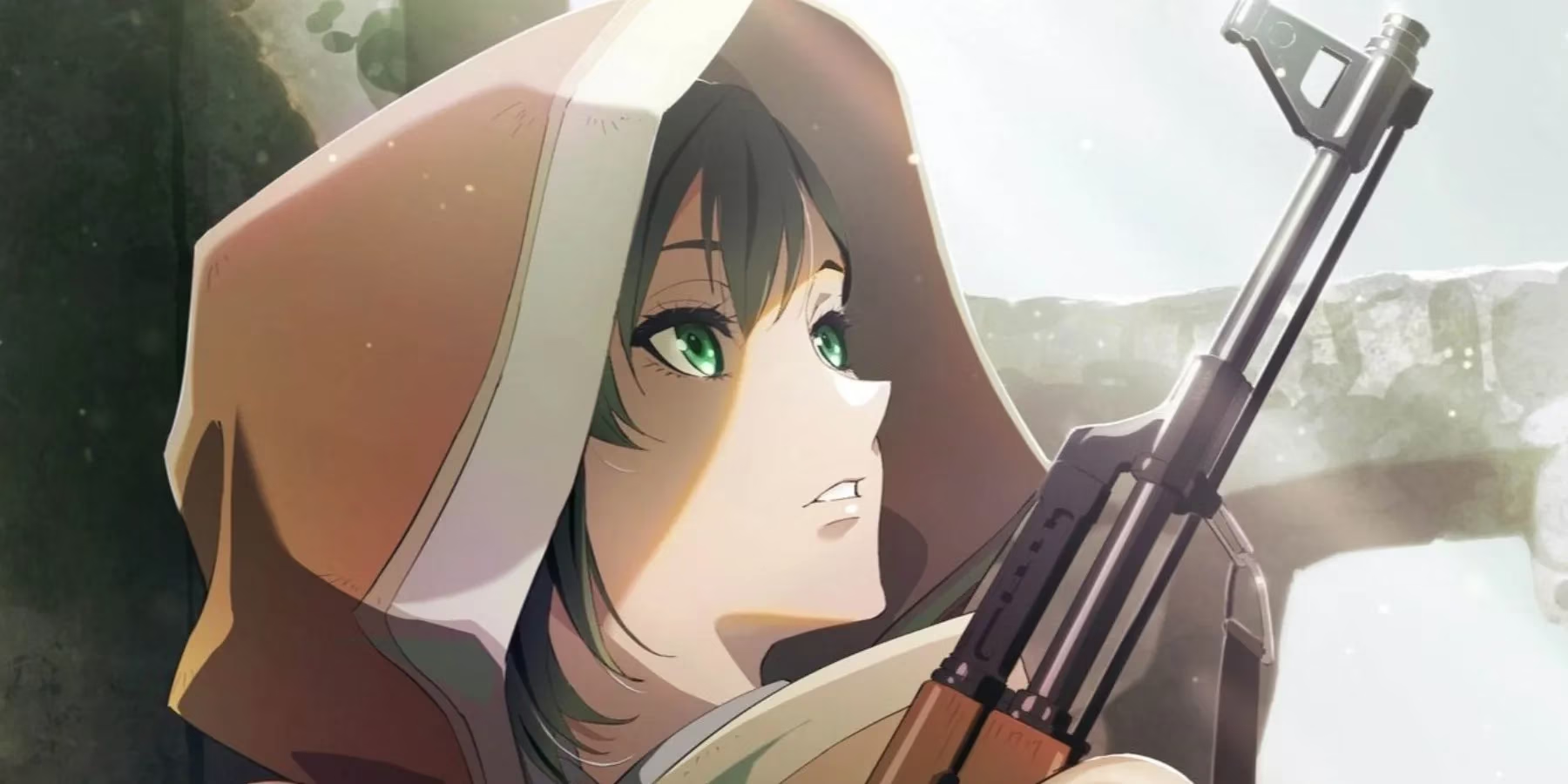
Perhaps the most elegant switch involves Anemone and Lily. In the game, Anemone leads the Resistance while Lily dies early on; the anime inverts that legacy. Here, Anemone's life bleeds out during the Pearl Harbor Descent, and Lily inherits the mantle—a living scar rather than a mere footnote. The swap reorients emotional loyalties and gives viewers a leader who carries survivor's guilt like a second shadow.
The twin machines Adam and Eve also receive a rewritten destiny. When 2B strikes, it is not Adam who welcomes death. Eve intervenes, and the younger twin shatters in place of the elder. The result is a howling, monstrous Adam—a creature consumed by grief and transformed into something close to the abominations of NieR Reincarnation. The anime even weaves in quieter nods to NieR Replicant: during a psychological dive, 9S glimpses Kainé and Yonah like photographs floating in a flooded basement, tiny easter eggs for those who remember the weight of that older, sadder story.
As Yoko Taro himself admitted, reciting the same script felt meaningless. The anime team was given permission to wander—and wander they did. Every change, from the shifted endings to the expanded heartbeats of side characters, is a deliberate crack in the mirror. By 2026, those cracks have become a new art form, proving that some stories grow not by repetition, but by thoughtful rebellion.
Information is adapted from GamesIndustry.biz, and it helps frame why NieR: Automata Ver1.1a’s “remixed” structure feels intentional rather than accidental: anime adaptations often streamline branching game routes into a single broadcast-friendly throughline while reallocating budget from set-piece bosses to character-centric episodes. Seen through that lens, the series’ merged 2B/9S perspective, tightened ending cadence, and heavier emphasis on supporting-cast mortality read like deliberate production and pacing choices designed to preserve the original’s themes—identity, repetition, and manufactured purpose—without relying on replay loops to deliver emotional payoff.
COMMENTS