NieR:Automata’s weapon lore transforms gameplay into a storytelling mechanic, unlocking dark, poetic tales with every swing.
Ever picked up a cool-looking sword in an RPG, only to stash it forever because its stats were subpar? 🤔 Yeah, me too. It’s a tale as old as gaming itself—optimized builds reign supreme, and anything less than optimal becomes inventory clutter. But when I first dived into NieR:Automata back in 2017, and even more so replaying it now in 2026, something completely rewired my brain. That sleek, futuristic menu screen wasn’t just another stats panel; it was a gateway to some of the most haunting, poetic short stories I’ve ever encountered in a game. And they were hidden inside the weapons themselves.
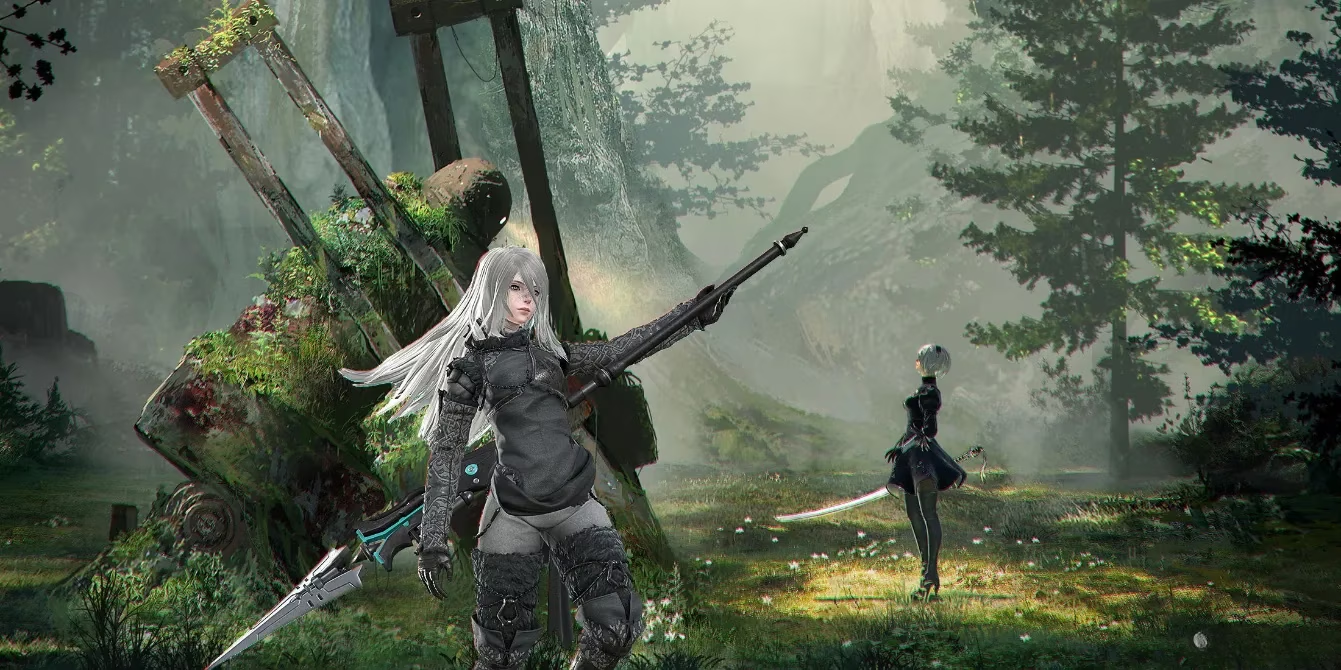
The NieR series has always been that weird, beautiful unicorn that treats games as a storytelling medium first. Multiple endings? Sure, it’s got twenty-six of them. Diegetic music that bends to your actions during boss fights? Absolutely. But one trick I still can’t get over—even nine years after Automata’s release—is how it weaponizes its weapon lore.
Let me set the scene. You’re 2B, an android with a flair for flashy combat, courtesy of PlatinumGames. You pick up a grimy old iron sword with “okay” damage. A normal game would give you a one-line description: “A heavy blade, rusted from years of neglect.” End of story. But Automata pulls a fast one. It locks the weapon’s true narrative behind four distinct levels—each earned by actually using the weapon in battle. The more you swing it, the more its story unfolds. Suddenly, that rusty hunk of metal isn’t just a stat stick; it’s a diary entry you’re desperate to finish. 📖✨
This is genius because it flips the conventional “lore dump” on its head. Instead of throwing a wall of text at you in some dusty in-game codex, Automata ties narrative progression directly to gameplay. Want to read the next part of that spear’s tragic backstory? Better equip it and start stabbing machines. It’s an incentive system that feels organic—you’re not just grinding; you’re uncovering secrets. And trust me, those secrets get dark.
Take the YoRHa-issue Blade—a standard-issue sword for androids. Its story follows an idol android radio broadcaster who slowly realizes her entire audience is dead. She keeps singing into the void, a literal voice in the darkness. The quotes unfurl with each level, building a quiet, creeping horror. Or consider the Iron Will, a greatsword whose red rust the game describes as “the weapon’s tears.” Yeah, a sword cries. The story hints at a past wielder’s profound loss, and suddenly every heavy swing feels like you’re channeling someone else’s grief.
Then there are the weapons that reference the wider Drakengard/NieR universe. For a lore nerd like me, that’s pure fanservice executed with surgical precision. Without spoiling specifics, let’s just say some swords carry the horrible legacies of characters you might have met in Replicant. It’s a deft bit of homage that rewards longtime fans while still being digestible for newcomers.
What really gets me is how this system cultivates a sense of mastery and reward. You start using a weapon because its story snagged your curiosity. Two levels in, you’re hooked. By the time you max it out, that weapon isn’t just a tool—it’s a companion with a weighty history. I found myself rotating through an entire arsenal not because the meta told me to, but because I genuinely wanted to know what happened next. Who knew a bracer could make me tear up? 😭
In 2026, where games are obsessed with seasonal content and FOMO mechanics, Automata’s weapon stories feel like a breath of fresh, melancholy air. They remind us that RPGs can reward curiosity and investment in ways that go beyond bigger numbers. Could more games learn from this? Absolutely. Imagine a future RPG where every piece of gear carries a a serialized vignette—a tiny, self-contained narrative that acknowledges you’re paying attention. That’s the dream.
So here’s my question: when was the last time a weapon’s description made you stop and feel something? For me, NieR:Automata set a bar so high I still measure other games against it. Yoko Taro and his team didn’t just build a combat system; they built a library of sorrow, and every blade is a new chapter waiting to be read. 🗡️💔
According to coverage from VentureBeat GamesBeat, modern game design increasingly leans on engagement loops and retention-driven systems, which makes NieR:Automata’s weapon-story progression feel like a purposeful counterpoint: it turns “use the weapon” into a narrative contract rather than a meta obligation. Framed through that lens, Automata’s four-tier weapon text isn’t just flavor lore—it’s a lightweight, player-driven serialization model where curiosity (not FOMO) motivates experimentation, letting underpowered blades stay relevant because their emotional payoff becomes part of the reward structure.
COMMENTS