Need Filler Metal in Nier: Automata? Buy it after finishing all main endings instead of grinding in the factory.
Ever found yourself stuck in Nier: Automata, staring at a weapon or pod that desperately needs an upgrade but requires that elusive Filler Metal? You're not alone. This oddly named material is one of the trickier resources to pin down, especially if you're hunting for it before you've seen the credits roll for the third time. Unlike the common drops you rack up from felled machines, Filler Metal plays hard to get. It demands patience, a bit of luck, or a very deep wallet. So how exactly does an android go about securing a steady supply? Let's break down the two main paths: the grind in the depths of the Factory, and the much simpler but late-game shopping spree.
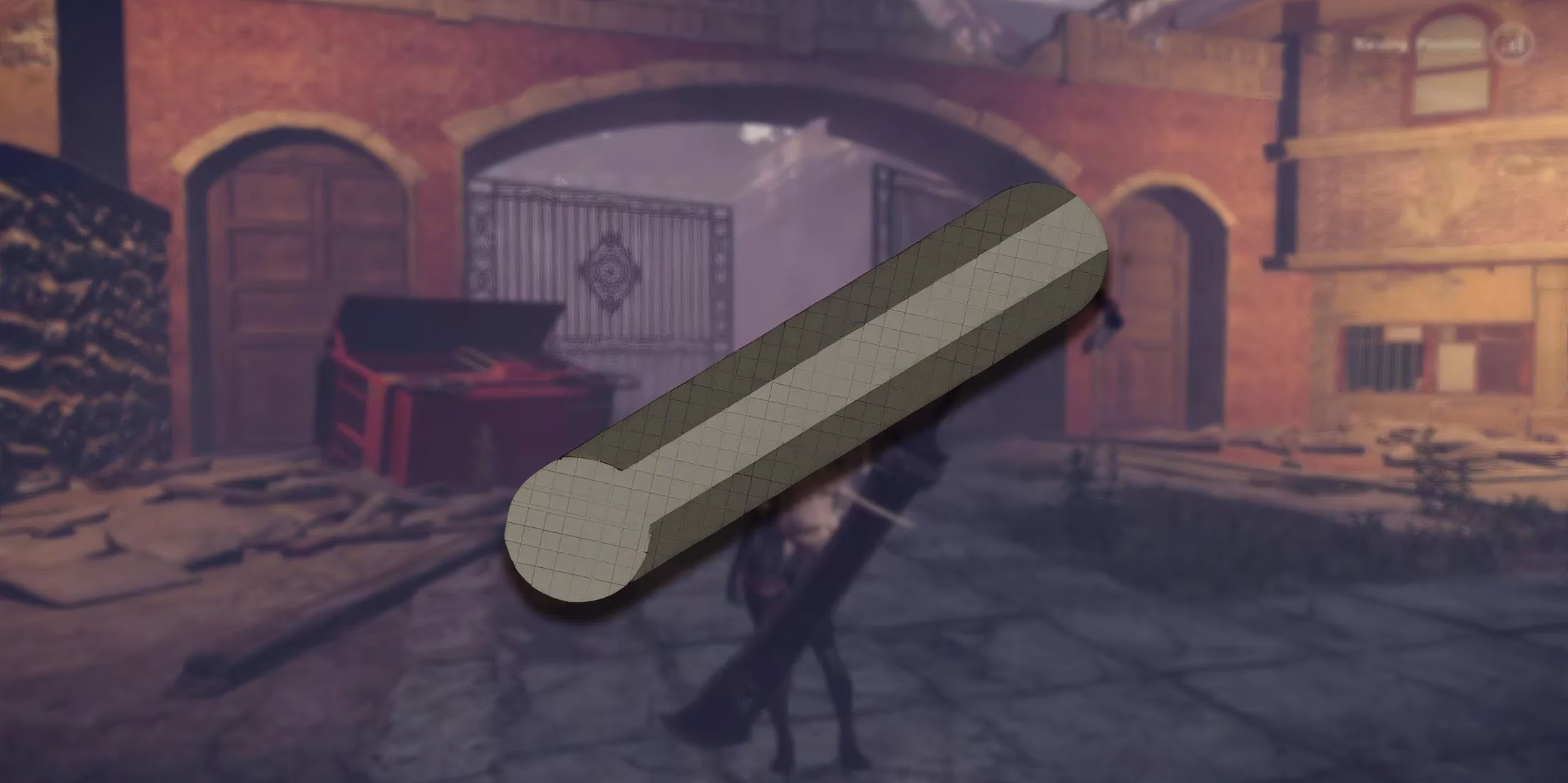
The Wild Goose Chase: Farming Filler Metal From Overworld Spawns
If you’re still in the thick of your first or second playthrough and need Filler Metal, be prepared for a trek that can feel more frustrating than facing a certain singing opera boss. The material doesn't drop from any enemy in the game. Instead, it appears as a random, sparkling item point on the ground—specifically deep inside the Factory area. This is the same industrial maze where 2B and 9S conduct their early mission. Makes sense, right? A \u201cfiller metal\u201d would logically be found in a factory. But the game's item spawning system doesn’t care much for logic.
Here’s the catch: every time you enter the Factory, the items that spawn at those glimmering pickup spots are determined by pure RNG. You might find a warped wire, a severed cable, or some machine oil. Filler Metal has the lowest chance to appear among all the possible loot. Think of it like fishing for a rare catch in a pond full of old boots. The most efficient way to grind, if you can call it that, is to unlock the Factory: Hangar access point. This transporter is unlocked during a main story return trip to the Factory. Fast-travel to it, then sprint through the corridors, picking up every shiny spot you see. Equip movement speed up chips to zip around faster. If you don't find any Filler Metal, just reload the area and try again. Boring? Absolutely. Time-consuming? Without a doubt. But for a player who hasn't yet unlocked the post-game world, this is the only option.
One might ask: is all that running worth it? For early-game pod upgrades, perhaps, but only if you truly enjoy wandering through those humid, conveyor-belt-lined hallways. The drop chance is so low that you could easily spend hours and still return empty-handed. It’s a test of endurance more than skill.
The Easy Way Out: Buying Filler Metal After the Final Credits
Now, here’s the solution that will make you feel silly for ever setting foot in the Factory farm loop. After you have seen endings A, B, C, D, or E—meaning you've fully completed all three main story routes and are looping back via Chapter Select—a new shopping opportunity opens up. Head to the Amusement Park and find the Shopkeeper Machine, that quirky merchant that looks like it belongs in a theme park gift shop rather than an android stronghold. Previously, this machine sold things like costumes and other materials. But at the very end of the game, its inventory expands to include Filler Metal.
But it’s not exactly being given away. Each piece of Filler Metal costs a hefty 11,250 G. Yes, that’s over eleven thousand credits for a single unit of upgrade material. If you need to upgrade three pods to their maximum level, you’re looking at quite the bill. The question then becomes: is it better to grind for a random drop or grind for gold? The answer is almost always the gold grind. There are numerous reliable ways to amass wealth in Nier: Automata by 2026—farming the golden bunny statues in the Amusement Park, selling machine cores, or repeating certain side quests in chapter select. Even a modest farming session with the right chips can net you millions of G in under an hour. Compare that to the uncertain, mind-numbing factory runs, and the choice is clear.
Still, some players may protest: \u201cBut I want that pod upgrade NOW, before I face the final bosses!\u201d It’s a valid feeling. However, it’s worth noting that the pod upgrades requiring Filler Metal are not at all necessary to beat the game. The enemies in a standard playthrough do not come close to the maximum level where those stat boosts are vital. These upgrades are more for completionists, those who want to tackle the secret Emil superboss on higher difficulties, or anyone seeking a truly overpowered pod program setup. So you can safely wait until the post-game shopping trip without hampering your progress.
A Quick Comparison Table
To give a clearer picture, here’s a side-by-side look at the two methods:
| Method | Availability | Reliability | Time Investment | Cost (per unit) |
|---|---|---|---|---|
| Factory Spawns | From early game | Very low | High | Free |
| Amusement Park Shop | After ending C/D/E | Guaranteed | Low (after gold) | 11,250 G |
Some Final Words From the Bunker to You
For anyone still wrestling with the decision, think of it this way: Filler Metal acts as a gentle nudge from the developers to return to old haunts and appreciate the world after the main story. The Factory at that point becomes a nostalgic trip rather than a dungeon. When you do buy your Filler Metal, you’ll likely appreciate it more knowing you didn’t waste a Sunday afternoon on a 2% drop chance. Also, by 2026, the community has largely settled on the post-game purchase as the standard advice. Plenty of guides still mention the factory loop, but they often do so with a heavy sigh. So grab your best money-making chips, hunt some rabbits, and treat the Shopkeeper Machine as your one-stop shop for android hardware. Your time and sanity will thank you.
What about those edge cases where you simply must have an early pod upgrade for a self-imposed challenge? Then by all means, slap on some movement speed chips and dash through the Hangar. Just know that every time you see a shiny pickup that isn’t Filler Metal, the RNG gods are laughing. But isn’t that kind of suffering part of what makes Nier: Automata so memorable?
COMMENTS