NieR: Automata character switching enhances gameplay and narrative depth, letting players experience 2B, 9S, and A2's unique perspectives.
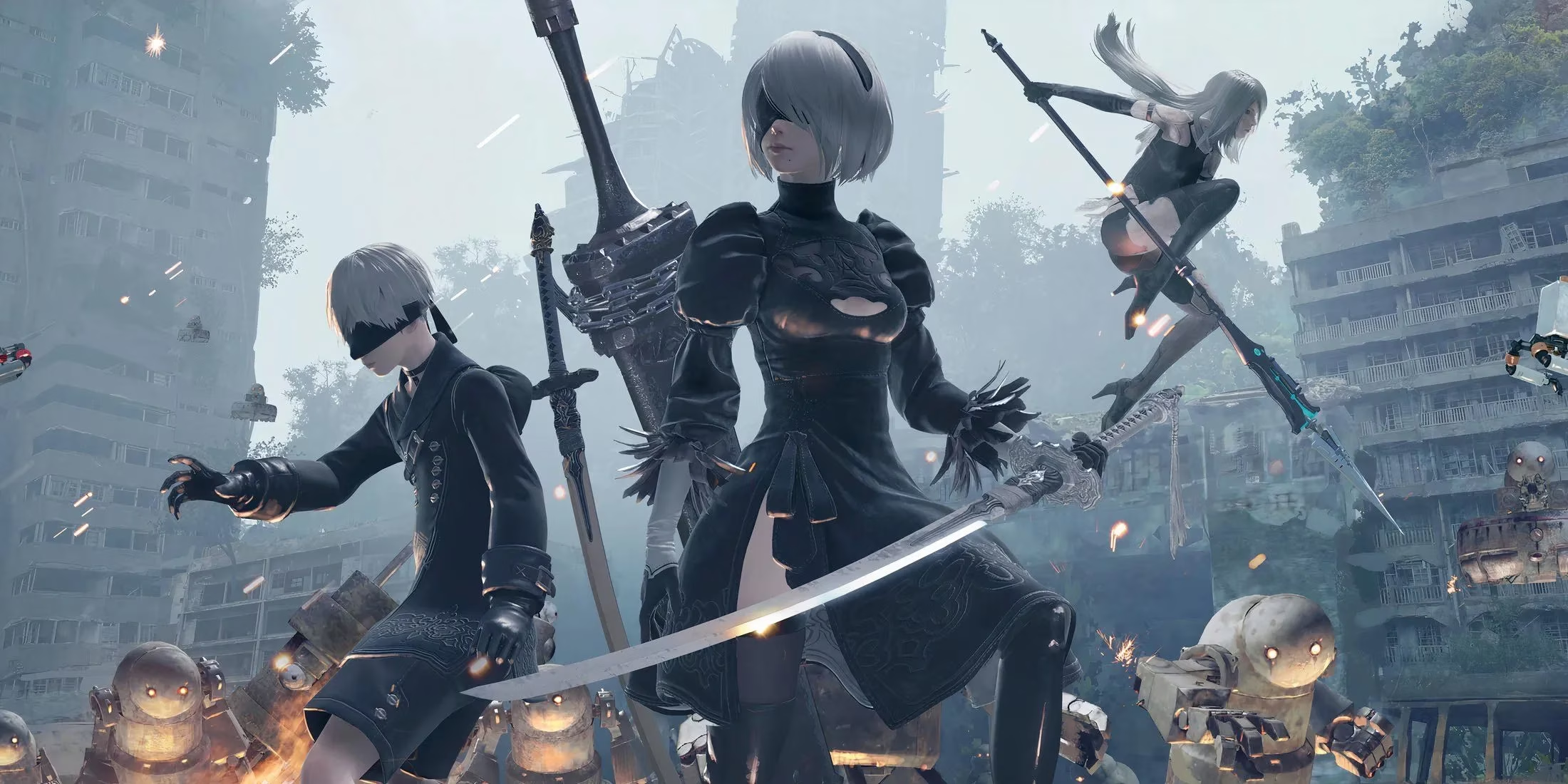
In the hauntingly beautiful and philosophically charged world of NieR: Automata, the narrative unfolds through the eyes of three distinct androids: 2B, 9S, and A2. Each brings a unique blend of combat mechanics, narrative perspective, and emotional depth that transforms the player’s experience across multiple playthroughs. Understanding how these characters operate, and the nuanced system that governs when and how one can switch between them, is essential for fully unraveling the game’s intricate tale. The year is 2026, and even almost a decade after its initial release, the game remains a masterclass in using character perspective as a narrative tool.
The core storyline of NieR: Automata is divided into three main playthroughs, commonly referred to as Route A, Route B, and Route C. During the first playthrough, players exclusively control the poised and deadly combat model 2B as she executes missions alongside her scanner partner 9S. Her combat style is a balanced, fluid dance of light and heavy sword attacks, complemented by a versatile pod support system. She can wield two weapon sets simultaneously, chaining graceful combos that blend speed and power. This route establishes the emotional core of the partnership and introduces the central conflict against the machine lifeforms.
Upon completing the first route, a second playthrough begins, this time placing players in the analytical mind of 9S. His gameplay diverges significantly from 2B’s. Lighter and less physically robust, 9S relies heavily on his hacking ability to remotely take control of enemy units or detonate them from within. He favors single-sword combat and frequent pod programs, encouraging a more strategic, less direct approach. While the events of Route B largely mirror those of Route A, they are filtered through 9S’s unique scanning abilities, revealing hidden layers of machine consciousness and deepening the sense of tragedy. The overlap is deliberate, offering both familiarity and fresh insight.
The third playthrough, Route C, shatters the pattern entirely. It picks up after the climatic events of the first two routes and thrusts players into a fractured narrative where control shifts dynamically between 2B, 9S, and the newcomer A2. A2, the fugitive prototype model, wields a devastatingly aggressive combat style centered around a rage-fueled "Berserker" mode. Unlike the other two, she sacrifices her health to empower attacks, demanding a high-risk, high-reward playstyle that feels raw and punishing. During this segment, the story dictates who is playable at any given moment, forcing the player to experience each android's personal descent and struggle from their own perspective. There is no option to freely switch; the narrative itself becomes the sole arbiter of perspective, maximizing emotional impact.
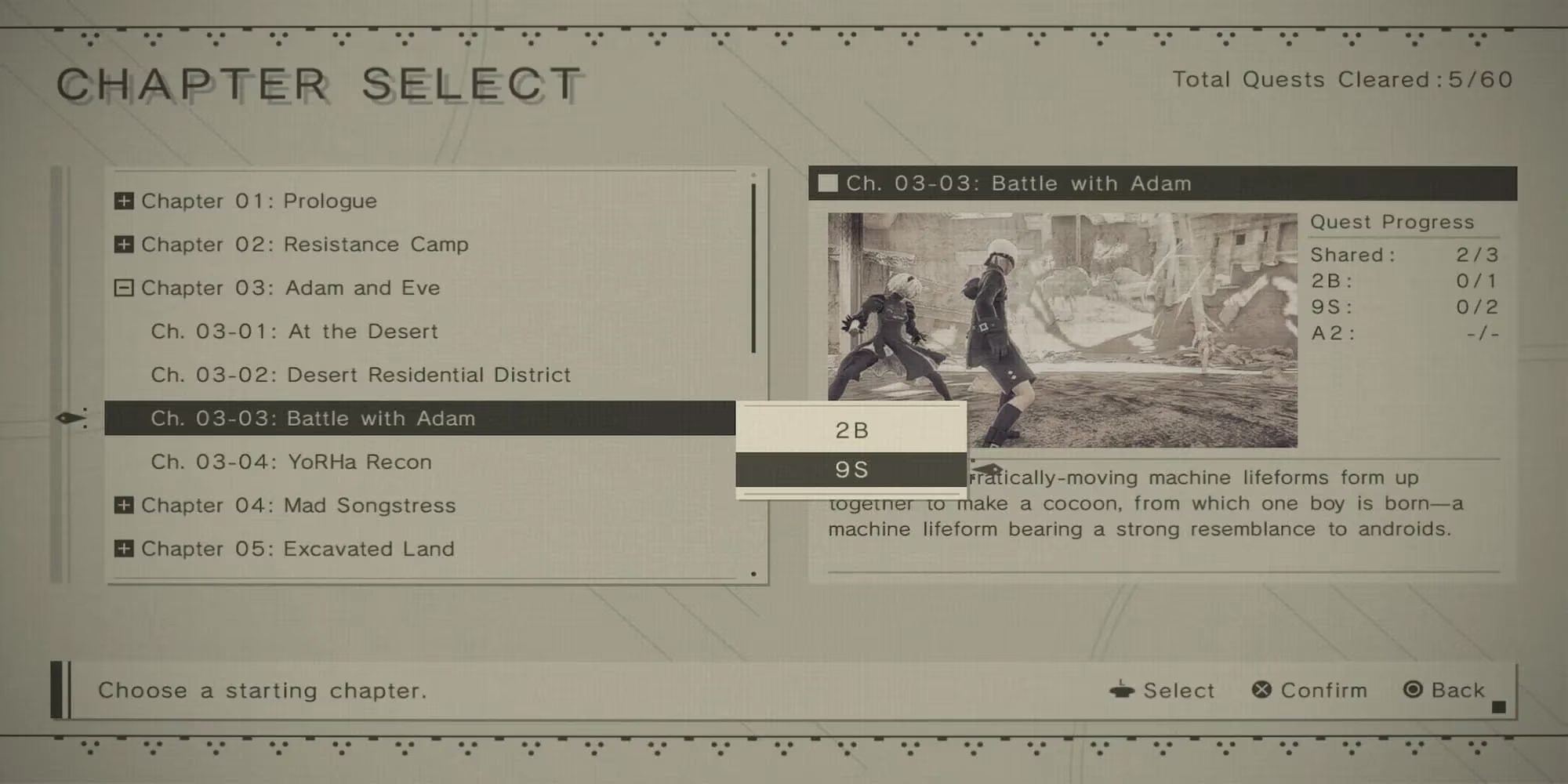
Once any of the main endings is achieved, a powerful tool unlocks: Chapter Select mode. This feature retroactively grants a level of freedom over character choice that was deliberately withheld during the initial experience. By accessing Chapter Select, players can revisit any of the game’s 17 chapters. Importantly, in many chapters, the right side of the screen will display numbers corresponding to completed or incomplete side quests for each character. If a character’s portrait appears with quest data, that chapter can be replayed as that android. This means one can, for instance, replay an early chapter originally locked to 2B as 9S, provided the system permits it. However, certain late-game chapters—particularly those from Route C—remain exclusive to specific characters due to plot-critical moments that hinge on their personal involvement.
This system enables meticulous completionists to tackle any missed side quests without starting from scratch. Since all three characters share a unified leveling system, progress, experience, and collected items carry over seamlessly when switching via Chapter Select. Players can freely jump between chapters and characters to farm rare materials, upgrade every weapon, or hunt for the elusive joke endings scattered throughout the game—all from the perspective that suits the task best. The shared progression elegantly avoids the grind typically associated with multiple protagonist systems, while still preserving the structural integrity of the story.
Mastering each character’s combat nuances is equally rewarding. 2B’s versatility shines in crowd control and aerial combos. 9S’s hacking can trivialize encounters but demands precise timing, while A2’s berserker stance melts bosses at the cost of survival. Swapping between them via Chapter Select allows experimentation with different plug-in chipsets, uncovering synergies that might have been overlooked during the linear playthroughs. For example, a full offensive chip build on A2 can feel catastrophic, whereas the same set on 9S might prove suicidal without hacking support.
The journey through NieR: Automata is designed to subvert expectations about replayability. The initial rigidity of character assignment is a narrative necessity, concealing hidden truths and fostering attachment. The post-game liberation through Chapter Select then transforms the experience into a playground for exploration and completion. Even in 2026, navigating this dual structure remains one of the most compelling meta-commentaries on video game storytelling, reminding players that perspective is not just a gameplay mechanic, but the very lens through which meaning is forged.
COMMENTS