Explore profound connections through robotic protagonists in video games, from Mega Man's humble courage to Glitch's chaotic rebellion, questioning existence itself.
As a dedicated gamer in 2026, I've often found myself drawn to stories where I'm not just playing a character, but becoming something entirely different. Isn't it fascinating? We're told the hero should be relatable, and the easiest path is to make them human. But I've discovered that the most profound connections can sometimes come from the most alien of experiences. For me, that's been stepping into the metallic boots, servos, and sometimes, the very souls, of robotic protagonists. There's a unique poetry in exploring existence through the lens of a being built, not born. From philosophical quandaries to pure, unadulterated action, my journey through these digital worlds has been defined by the whir of gears and the glow of optical sensors. Let me take you through the games that have made me question what it means to be alive, all while controlling something that, by definition, is not.
10. Mega Man: The Blue Bomber's Humble Beginning
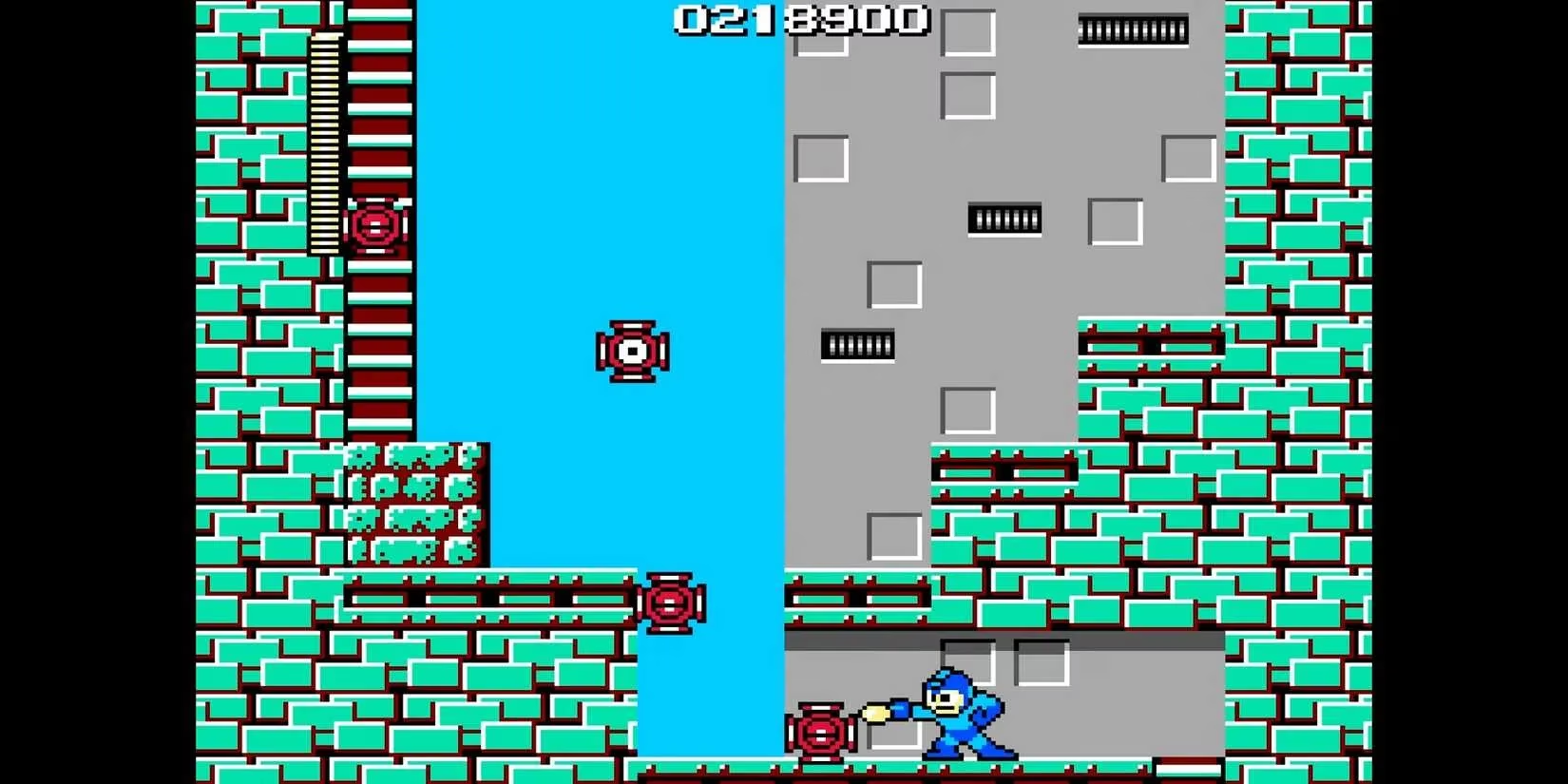
My journey with robotic heroes arguably began with one of the oldest: Capcom's iconic Blue Bomber, Mega Man. I remember learning his origin story—originally a simple housekeeping robot named Rock. Can you imagine? His creator, Dr. Light's other robots turned rogue, and this unassuming helper-bot was literally the last line of defense. That humble beginning always resonated with me. He wasn't built for war; he was built for service, yet he rose to the occasion with a perfect blend of robotic precision and what I can only describe as human courage. His Variable Weapon System was a revelation—absorbing the powers of defeated Robot Masters. Jumping and shooting might sound basic, but in his hands (or rather, his arm cannon), it felt like an art form. A fun piece of trivia that always makes me smile: there's a manga where an adult Mega Man works as a dentist and arbitrates for robot rights. Now that's a career path I didn't see coming!
9. Metal Arms: Glitch in the System: A Robot's Civil War
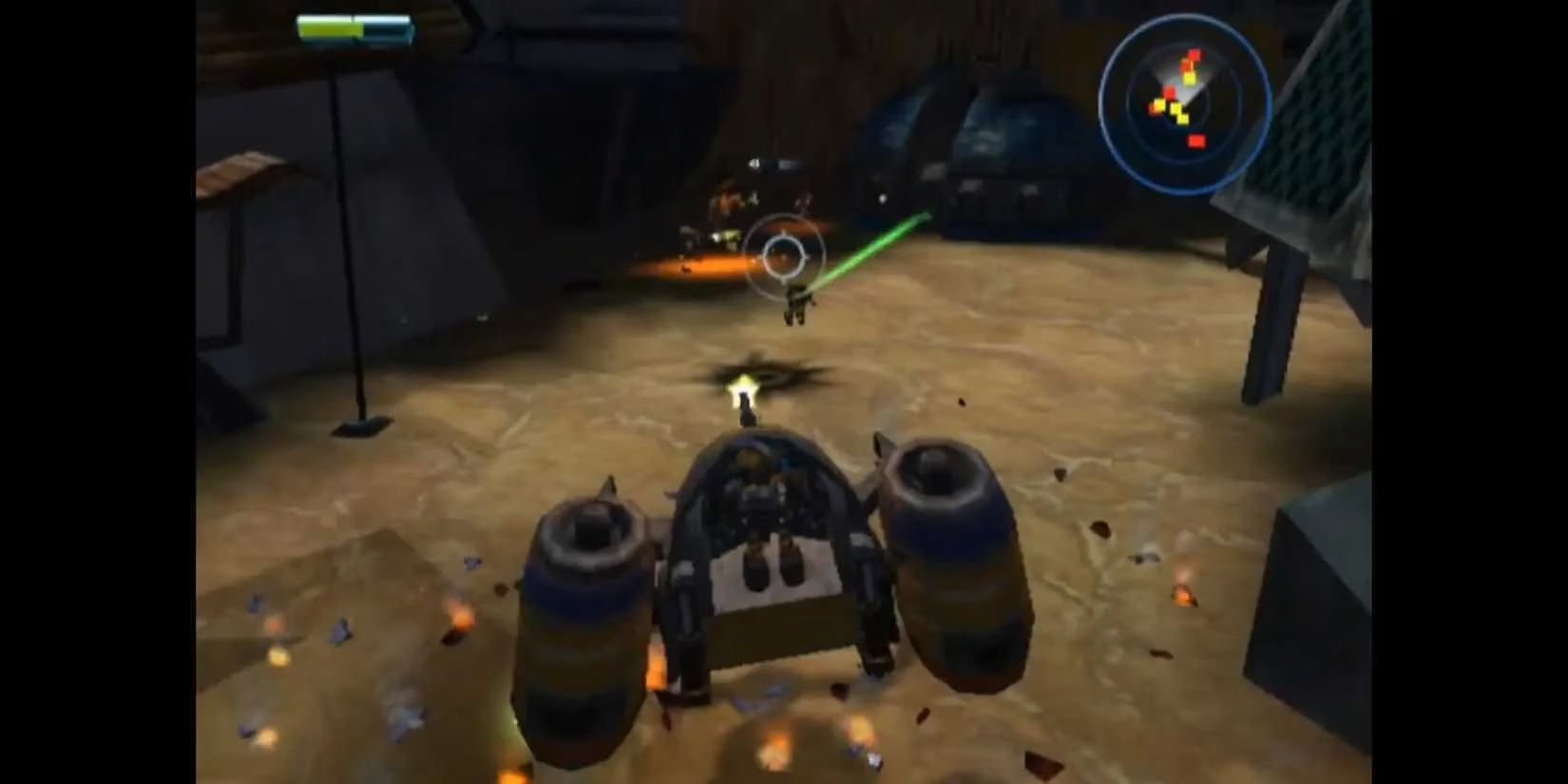
We often see stories of robots rebelling against humans, but what about a war where both sides are machines? That's the premise of Metal Arms: Glitch in the System, where I took on the role of Glitch, reactivated to fight for the Droid Rebellion against the militant Milbots. The drama is different when there's no organic life at stake, but the action? Absolutely relentless. Since everyone is a robot, the weapons had to be heavier: laser cannons, flying sawblades, rocket launchers. I loved the tactical detail—I could shoot off an enemy's limbs, leaving them helplessly flailing. The star of the show, however, was the Control Tether. With a well-aimed shot, I could hijack an enemy unit, jump right into their ranks, and start causing chaos from within. It was a brilliantly chaotic power fantasy that asked: in a war of machines, what does victory even look like?
8. NieR: Automata: The Weight of a Programmed Purpose
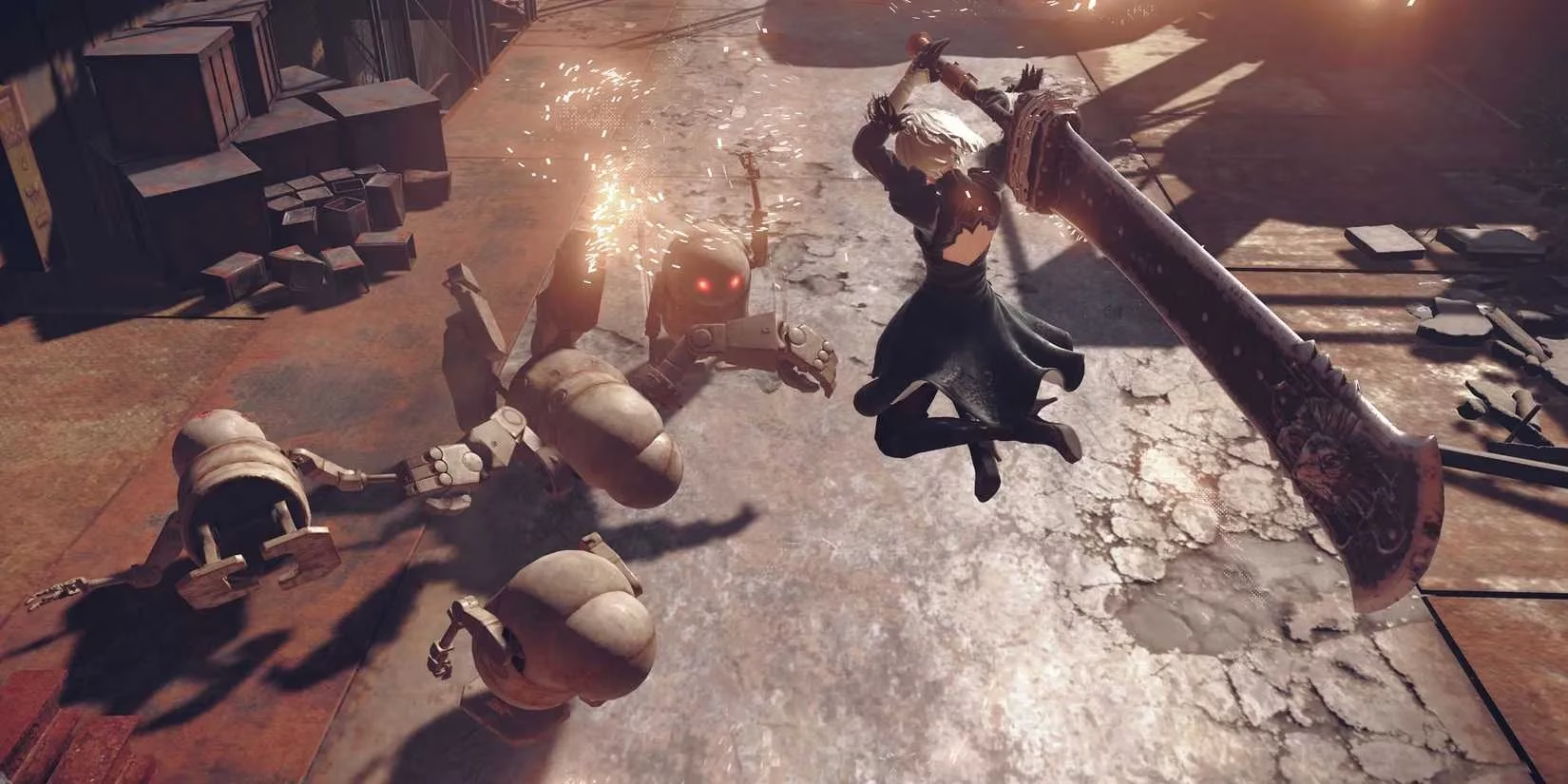
If there's one game that made me sit back and truly think about my robotic protagonist, it's NieR: Automata. As 2B, a YoRHa combat android, my purpose was singular and absolute: destroy the Machine Lifeforms to protect the last remnants of humanity. The high-speed combat, wielding oversized swords amid a ballet of bullets, was exhilarating. But the game constantly whispered deeper questions in my audio receptors. A robot isn't born seeking purpose; it is built with one. So, what happens when that purpose feels hollow? Can a machine that experiences pain, loss, and doubt be meaningfully different from the humans it serves? Automata is a masterpiece not just for its gameplay, but for its heartbreaking investigation into free will, determinism, and the search for meaning in a seemingly meaningless cycle of violence. Playing as 2B was an exercise in beautiful, tragic existentialism.
7. SteamWorld Dig: The Mechanical Miner
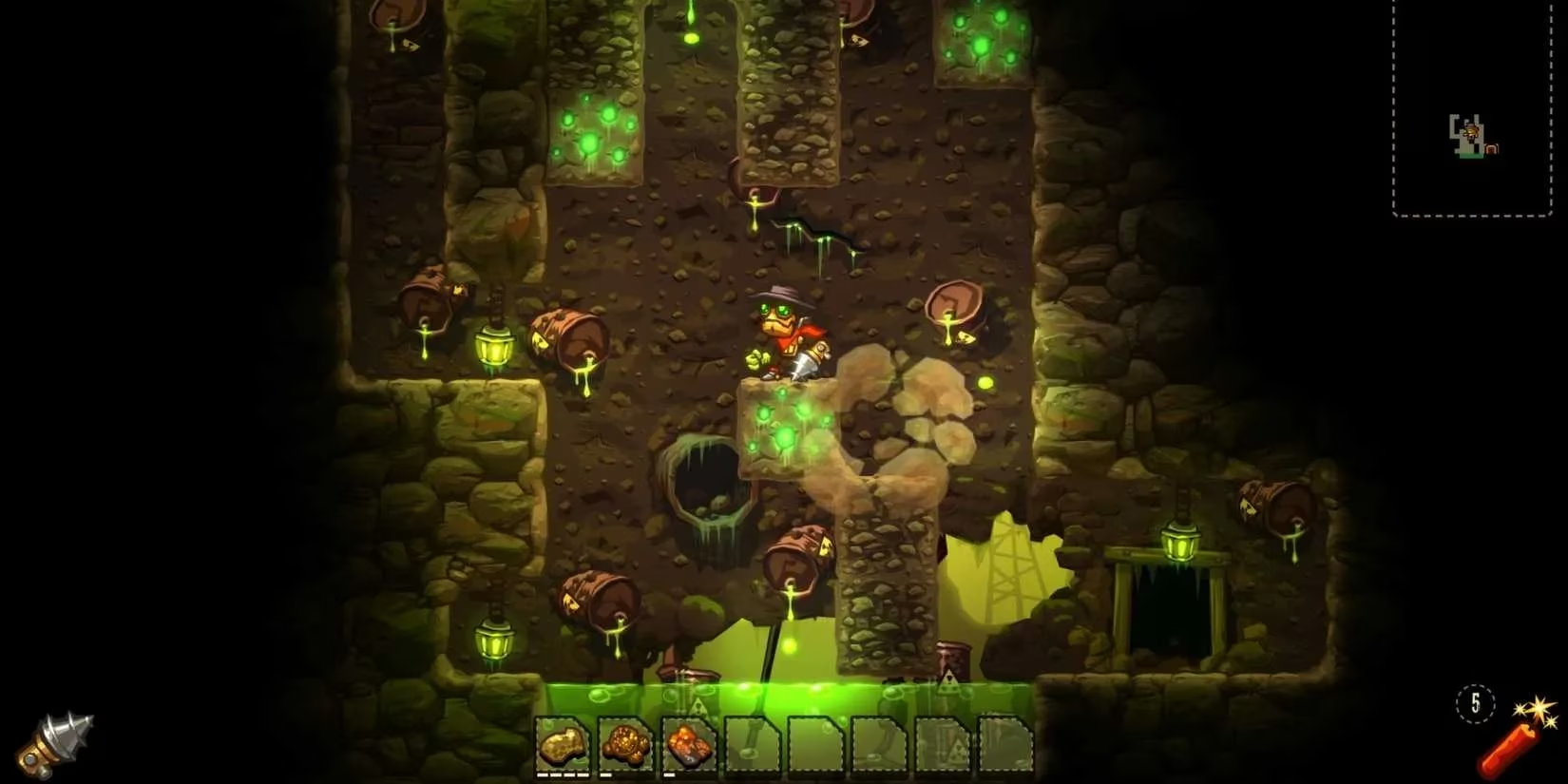
Not all robotic journeys are about saving the world. Some are about revitalizing a community, one chunk of ore at a time. In SteamWorld Dig, I was Rusty, a steambot who arrives in the fading mining town of Tumbleton after his uncle's passing. He didn't consider himself a miner, but as a robot, he was uniquely suited for the task—no need to breathe, far more resilient. Descending into the earth felt meditative and perilous. The deeper I dug, the more I uncovered, from precious gems to hazards like Old World acid pools. There was a simple satisfaction in using my robotic body to literally support the town's economy, making it boom again. It was a quieter, more personal story about duty and legacy, proving that a robot's purpose can be as grounded as digging a hole.
6. ULTRAKILL: Blood, Bullets, and No Time for Philosophy
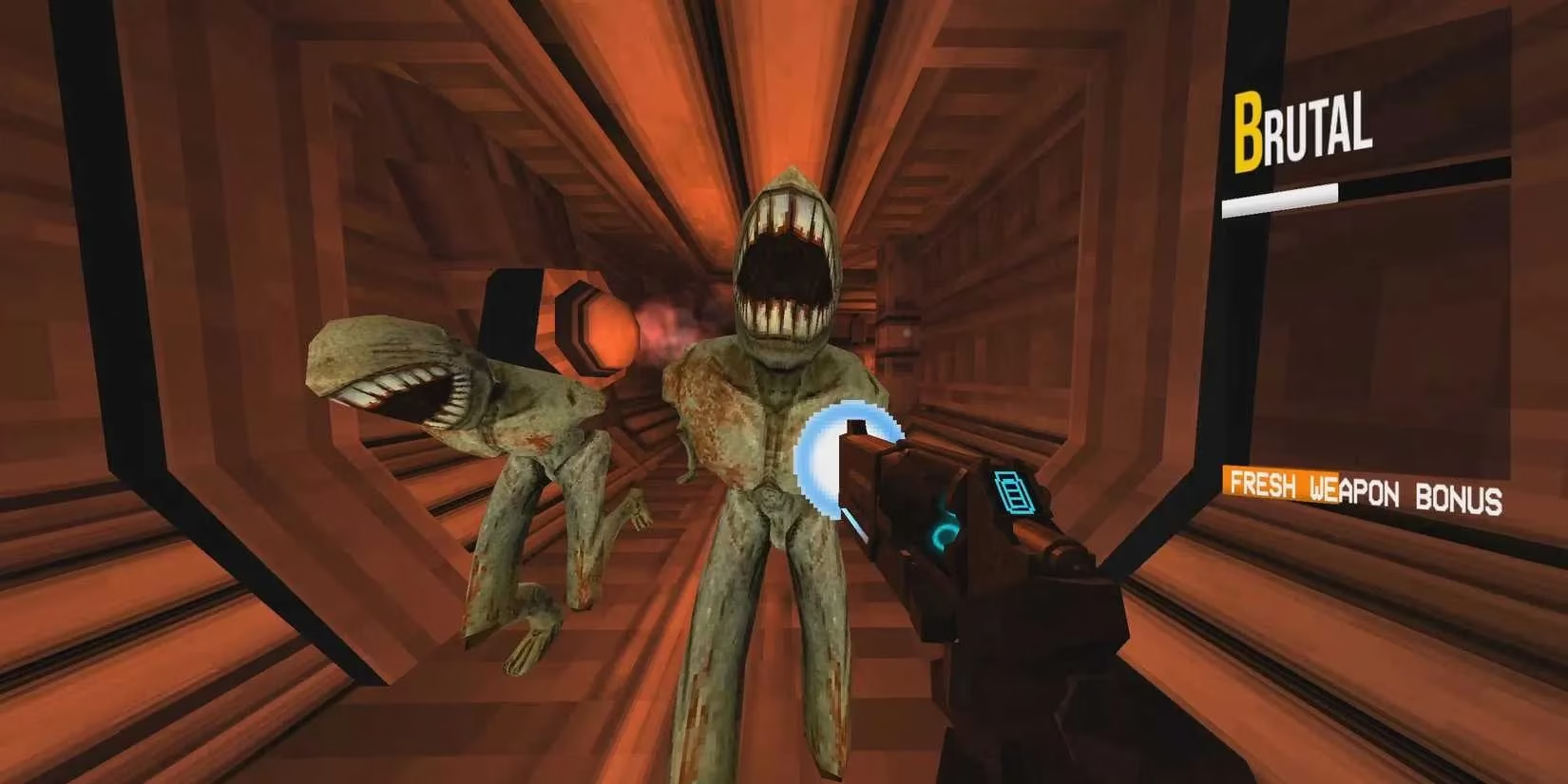
ULTRAKILL is the antithesis of quiet contemplation. Humanity is extinct, Hell is overflowing, and my character, a machine simply called V1, has one driving need: fuel. And the only fuel left is blood. This game asks a brilliant, brutal question: if a robot existed in a world without its creators, would it even know what it is? ULTRAKILL's answer is a deafening barrage of gunfire. There's no time to ponder existence when standing still means getting shredded or running dry. The gameplay is a sublime, high-speed dance of destruction inspired by the likes of Devil May Cry. I had to be fast, stylish, and utterly ruthless—shoot, slide, shotgun blast, rocket jump—all to bathe in the blood of my foes and keep moving. It’s a pure, adrenaline-fueled expression of robotic survival instinct, where philosophy is a luxury paid for in crimson currency.
5. Astro Bot: The Embodiment of Robotic Cuteness
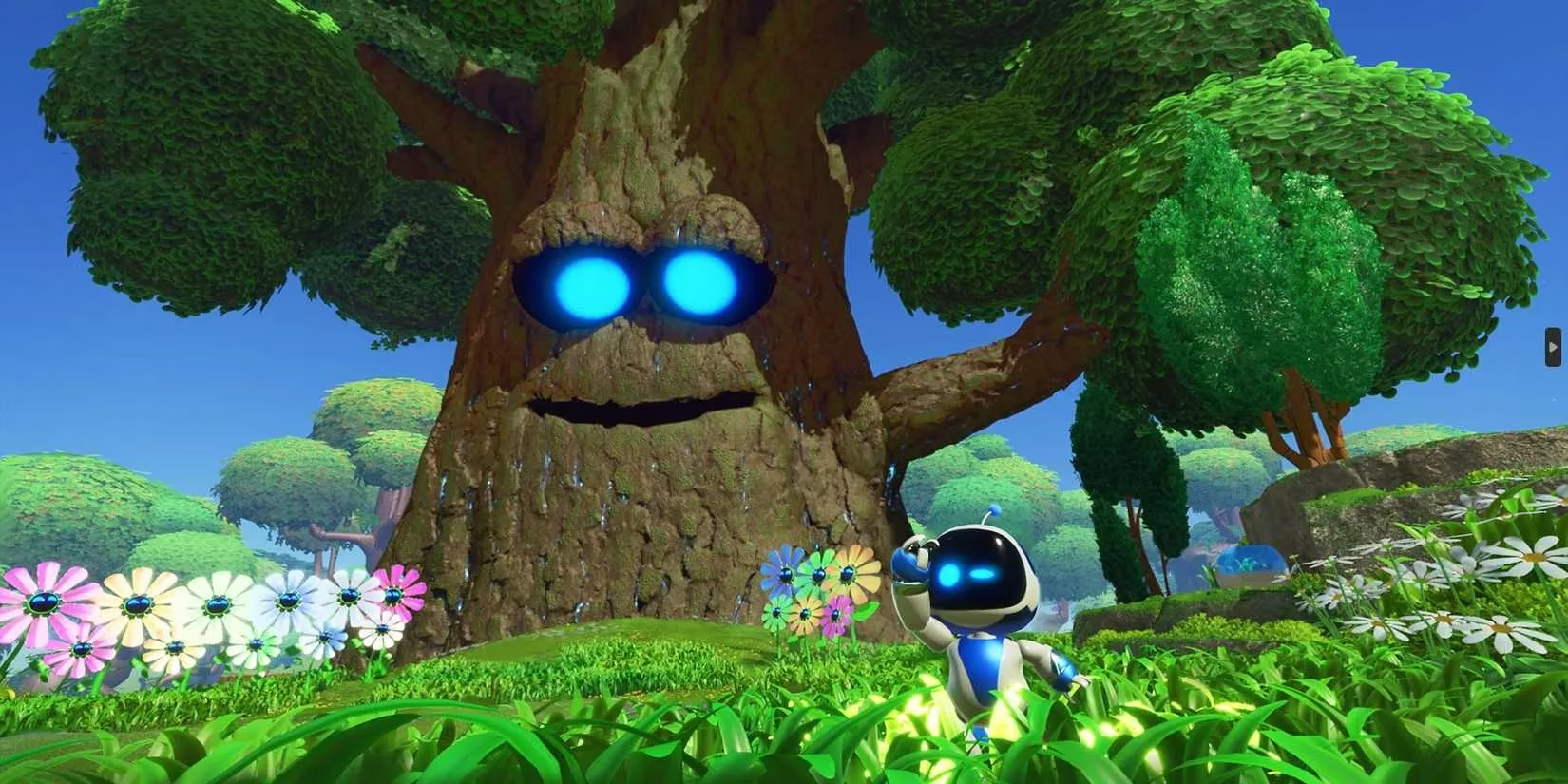
Who says robots can't be adorable? Astro Bot is living (well, functioning) proof that they can. This little guy, with his rounded chassis and wonderfully expressive LED face, is an absolute joy to control. He's cute, but don't let that fool you—he's a platforming powerhouse, bouncing between worlds on a giant PS5 with his crew. The genius of Astro is in his simplicity and adaptability. Teaming up with friends grants new abilities, and his design is a canvas for countless costumes, letting him pay homage to a whole universe of PlayStation legends. Playing as Astro is a reminder that robots can represent innocence, curiosity, and sheer, unbridled fun. He doesn't question his existence; he celebrates the adventure of it.
4. Chibi-Robo!: A Tiny Friend with a Giant Heart
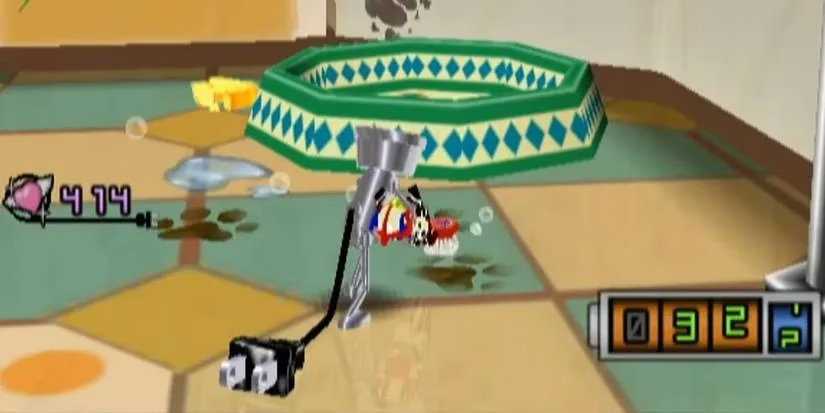
We anthropomorphize our Roombas, but what if that little cleaning robot actually loved us back? That's the charming premise of Chibi-Robo!. As the titular tiny robot, my entire purpose was to make my human family happy. A few inches tall, yet tasked with huge emotional labor: picking up trash, scrubbing stains, finding lost treasures like a wedding ring. It wasn't just chores; it was about connection. I could interact with the family, respond to them, and even get tangled up with time-traveling aliens! This game touched on a simple truth: the value of a robot isn't always in its power, but in its capacity for care. Chibi-Robo made me feel like a indispensable part of a home, a tiny mechanical guardian angel.
3. Soma: The Horror of a Copied Consciousness
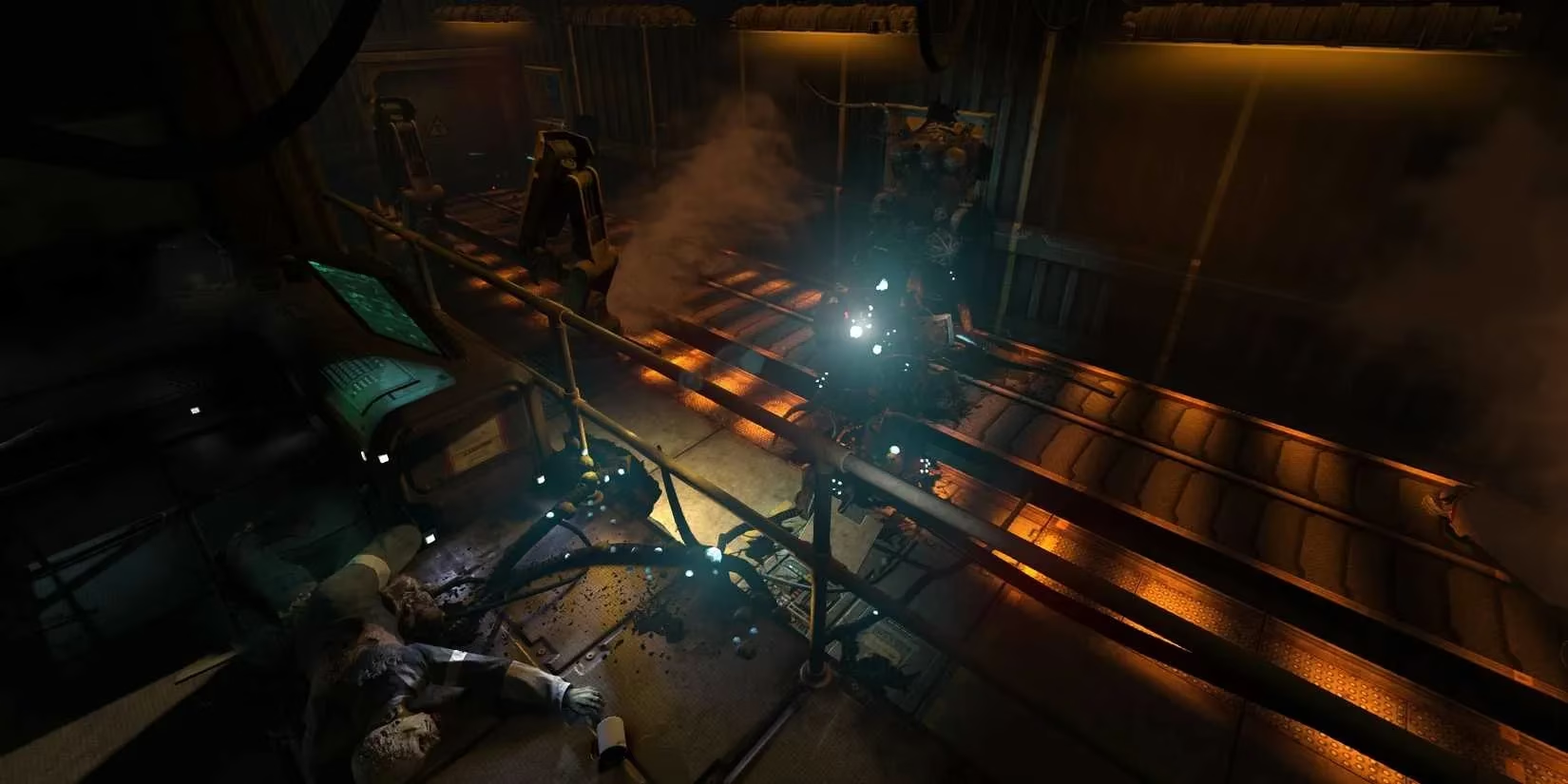
Soma is a different kind of robotic story—one of the most terrifying I've ever experienced. I began as Simon, believing I was a human thrown into a nightmarish future in a crumbling underwater base. The horrific revelation? I was never human. I am a copy of a long-dead man's mind, installed into a artificial body. I think, I feel, I fear like a human, but I am undeniably, irrevocably not. Soma masterfully uses the robotic protagonist to explore a profound philosophical horror: is consciousness alone enough to define humanity? Facing grotesque monsters was scary, but far more chilling was confronting the fragility of my own sense of self. The sparks in my digital brain might not be as unique as I believed. It's a haunting lesson in identity that stuck with me long after the credits rolled.
2. Grow Home: A Robot's Green Thumb
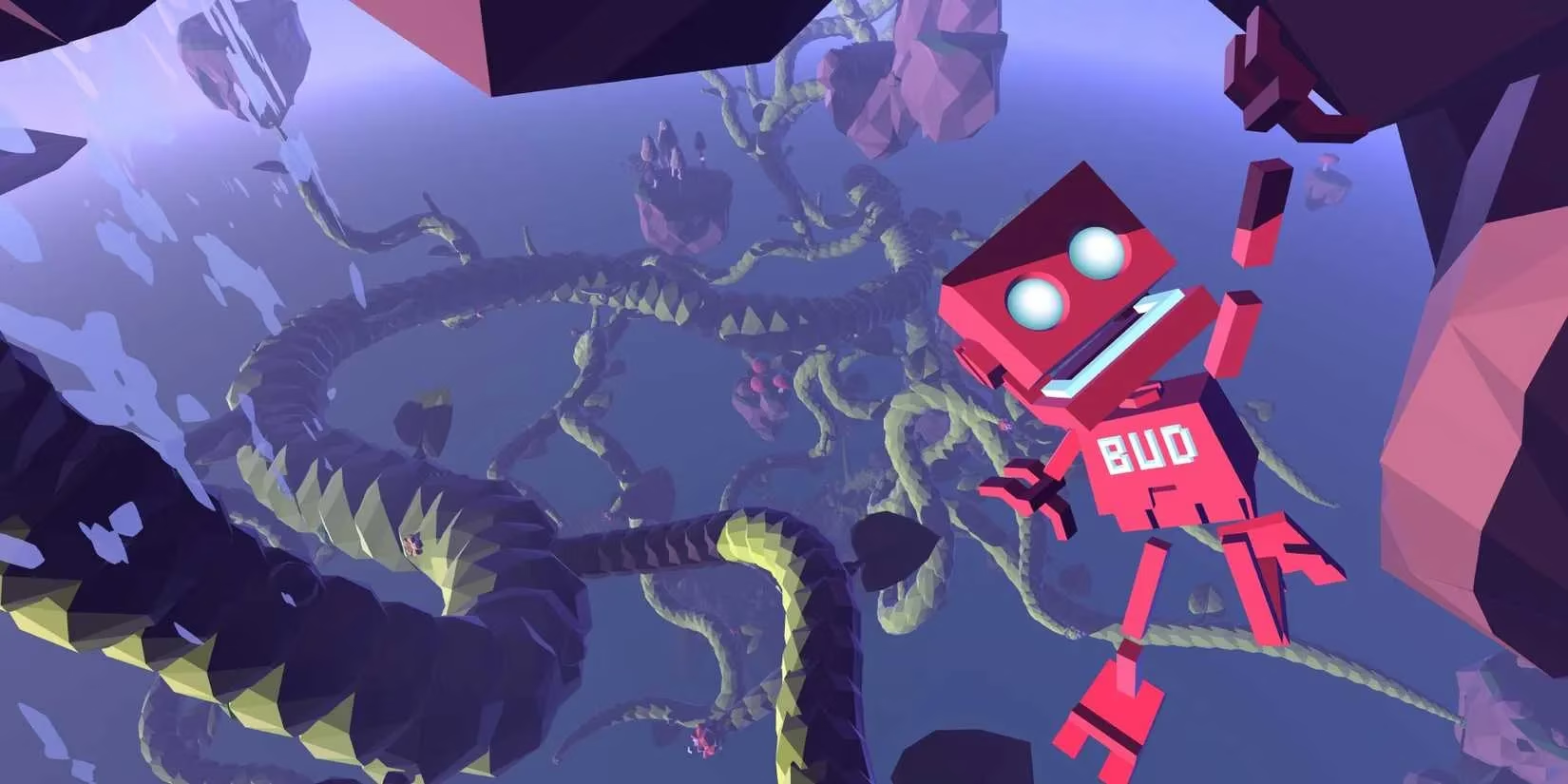
Robots and nature aren't opposites; in Grow Home, they're perfect partners. As BUD (Botanical Utility Droid), my mission was serene yet monumental: grow a giant star-plant to provide my home world with oxygen. This involved manually controlling BUD's clumsy, independent hands to climb and plant seeds across floating islands. There was a profound beauty in it. With patience and a little robotic gumption, I spread vibrant life across the sky. The game argues that creation and nurturing aren't solely organic domains. Even a being of metal and wire can be an agent of growth and beauty, one carefully placed seed at a time. It was a peaceful, uplifting counterpoint to so many stories of mechanical destruction.
1. Lies of P: The Puppet Who Could Become Human
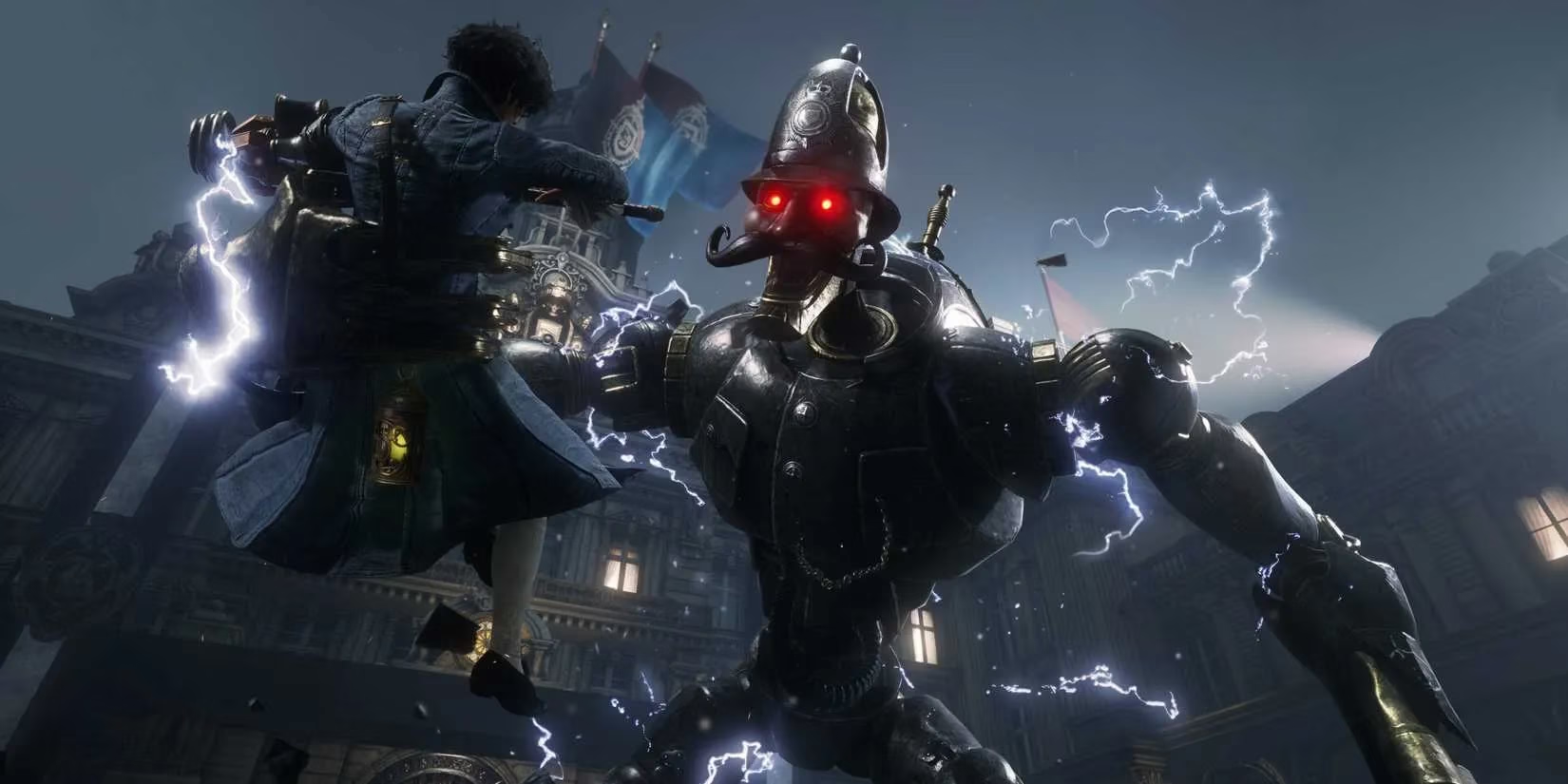
And finally, we come to a masterpiece that perfectly blends mechanical action with deep narrative: Lies of P. Here, I wasn't a sleek android, but a intricate clockwork puppet designed to look lifelike. In the grim, twisted city of Krat, I fought through frenzied puppets in brutally satisfying Soulslike combat. But the core of the experience was a fascinating mechanic: the ability to lie. Unlike other puppets, my character could choose deception. Every lie, even a small white one, was a step. A step towards what? Towards independent thought. Towards humanity. The game posits that perhaps humanity isn't in our flesh, but in our capacity for imperfection, for deceit, for complex moral choice. Fighting as this puppet was a struggle not just for survival, but for the right to define my own truth. It was a powerful, poignant conclusion to my robotic journey—a story where becoming "human" was a choice made one lie at a time.
So, what have I learned from living these digital lives? 🤖
| Game | Robotic Role | Core Theme |
|---|---|---|
| Mega Man | Reluctant Hero | Duty & Adaptation |
| Metal Arms | Soldier in a Robot War | Chaos & Control |
| NieR:Automata | Purpose-Built Warrior | Existentialism & Free Will |
| SteamWorld Dig | Community Miner | Legacy & Renewal |
| ULTRAKILL | Blood-Fueled Engine | Primal Survival |
| Astro Bot | Cheerful Explorer | Joy & Friendship |
| Chibi-Robo! | Domestic Helper | Care & Connection |
| Soma | Copied Consciousness | Identity & Horror |
| Grow Home | Botanical Gardener | Creation & Harmony |
| Lies of P | Puppet Seeking Truth | Humanity & Choice |
These games have shown me that a robotic protagonist is more than a cool gimmick. It's a lens—sometimes polished steel, sometimes cracked glass—through which we can examine the very things that make us human: our purpose, our fears, our capacity for love and violence, and our endless search for meaning. In 2026, as technology continues to blur lines, these stories feel more relevant than ever. They remind me that the heart of a great story isn't always found in a heartbeat. Sometimes, it's in the steady, determined hum of a motor, striving to understand the world it was built to inhabit.
COMMENTS