Explore the profound emotional journeys within open-world games, where expansive landscapes serve as the stage for heart-wrenching narratives and unforgettable character development.
Alright, buckle up, fellow gamers, because we're about to dive into the digital worlds that don't just want your time and button-mashing skills—they want your soul. Or at the very least, a few of your tears. I'm talking about those open-world masterpieces that weave emotional gut-punches right into their sprawling landscapes. You know the feeling: you're just riding your horse through a gorgeous sunset or swinging between skyscrapers, feeling like a total badass, and BAM! The story hits you right in the feels. It's like emotional whiplash, but in the best way possible. These games prove that a massive sandbox isn't just for mindless exploration; it's the perfect stage for a heartbreaking, soul-stirring drama where you're both the audience and the lead actor. So grab your tissues (or just manly-man sleeve, no judgment here), and let's talk about the games that made us all cry like babies.
The Crown Jewel of Cowboy Catharsis: Red Dead Redemption 2
Let's start with the big one, the elephant in the saloon. If we're talking emotional narratives in open worlds, we have to talk about Arthur Morgan. My man Arthur starts off as your typical gruff outlaw, but oh boy, does his journey hit different. On a High Honor playthrough (which, let's be real, is the only way to play for maximum impact), you witness this hardened criminal slowly trying to scrub the rust off his soul. It's a masterclass in character development. But the game, being the absolute savage that it is, gives him tuberculosis. Talk about a plot twist that's worse than a dynamite arrow to the knee!
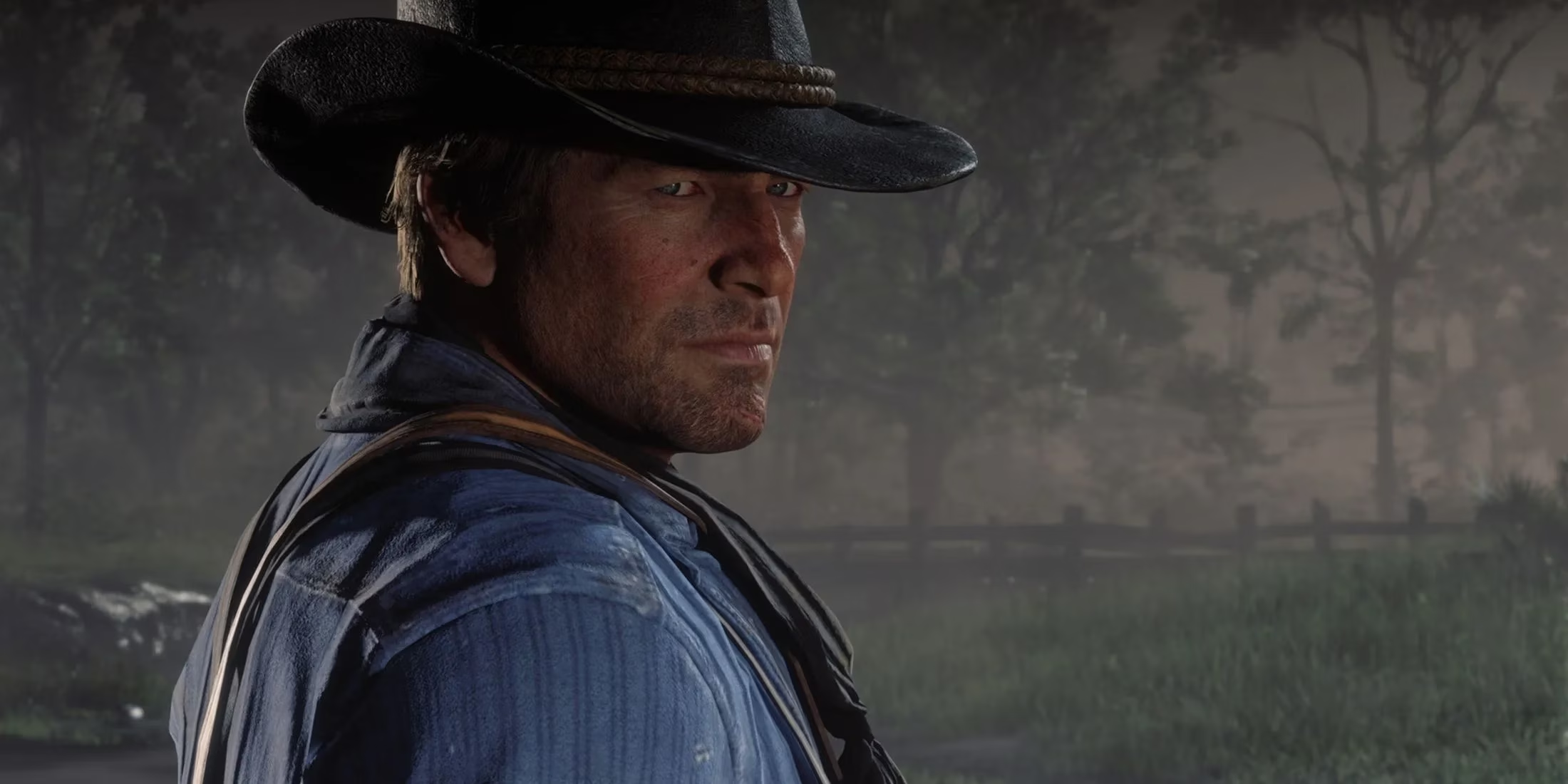
Watching him grapple with his mortality while his whole world—the Van der Linde gang—falls apart around him is pure, unadulterated pain. Hosea's death, Micah's snake-like treachery, Dutch losing his dang mind... it's a lot. And yet, Arthur's final mission isn't about revenge or treasure; it's about making things right. That final sunrise scene? Forget about it. I was a sobbing mess. It's the kind of storytelling that sticks with you long after the credits roll. Absolute chef's kiss.
The Superhero Sob-Fest: Marvel's Spider-Man
Swinging through New York City in Insomniac's Spider-Man is pure, unbridled joy. It's the power fantasy we all dreamed of as kids. But this game has a secret weapon: a story that isn't afraid to get dark. We're not just stopping bank robberies here; we're dealing with real, devastating loss.
-
Peter & Otto: Watching Peter's mentor, Doctor Octavius, descend into villainy is heartbreaking. You can feel Peter's helplessness and pain. It's a brutal betrayal.
-
Miles & His Dad: Miles losing his father, Jefferson Davis, is a moment of quiet, profound sadness that grounds the superhero spectacle.
This game perfectly balances the classic, quippy Spider-Man tone with moments of genuine despair. It makes the victories sweeter and the losses cut deeper. Proof that even in spandex, life can really suck sometimes.
The Friendship That Defined a Road Trip: Final Fantasy XV
Listen, Final Fantasy XV had its issues. The combat could be a bit simple, and the story pacing was... interesting. But what it got 100% right was the bromance. The bond between Noctis, Gladiolus, Ignis, and Prompto isn't just told; it's lived. You feel it during those long car rides, the campfire chats, and the stupid photo ops.
By the time you reach the end, you're not just fighting a villain; you're fighting to protect this brotherhood. Noctis's sacrifice isn't just a heroic act; it's the ultimate price paid for his friends and his world. And that post-credits scene? The last campfire? That's the emotional nail in the coffin. It takes a game with flaws and elevates it into something truly special and unforgettable. Bros before... well, everything, apparently.
The Inevitable Heartbreak We All Saw Coming: Final Fantasy VII Rebirth
If you played the original, you knew this moment was coming. You braced for it for dozens of hours. And yet, when Sephiroth's blade descended in Final Fantasy VII Rebirth, it still felt like a punch to the gut. The game plays with the moment, which ruffled some feathers, but the core emotional beat remains devastating.
The real kicker is Cloud's reaction. His inability to process the loss, his shattered mind clinging to denial—it's brutal to watch. It transforms a iconic scene of tragedy into a deeply personal story of trauma and grief. Knowing it was coming didn't make it any easier to handle. Not one bit.
Existential Dread & Killer Androids: NieR: Automata
Yoko Taro, you magnificent, mask-wearing troll. NieR: Automata is a mind-bend. It's a small open world packed with philosophical questions, relentless action, and endings that will make you question your own existence. This isn't just a hack-and-slash; it's an emotional odyssey.
The conclusions for 2B, 9S, and A2 are layered with so much sadness, hope, and despair. You'll fight for these characters, and then the game will ask you to make sacrifices for them—and for complete strangers. It's the kind of experience that cements itself in gaming history not just for its gameplay, but for the profound emotional resonance it achieves. PlatinumGames' combat has never felt so poetic.
The Darkest Crime Saga: Grand Theft Auto IV
In a series known for satire and over-the-top action, Grand Theft Auto IV stands out for its shockingly mature and grim story. Niko Bellic isn't a cartoonish criminal; he's a weary man trapped in a cycle of violence, chasing the hollow promise of the "American Dream."
The finale's choice is cruel: you either lose your cousin Roman, the symbol of your hope for a normal life, or Kate, your chance at love and redemption. Whichever you pick, Niko is left a hollow shell. After all the shooting and driving, you're left with the ashes of what you were trying to build. It's a powerfully bleak commentary that the series hasn't really revisited since.
A Race Against Time in Night City: Cyberpunk 2077
After its rocky launch, Cyberpunk 2077 emerged as a narrative powerhouse. Playing as V is a constant, desperate race against the clock as Johnny Silverhand's engram slowly overwrites your mind. Every quest, every relationship feels tinged with the urgency of impending death.
| Ending Type | The Emotional Cost |
|---|---|
| The Base Game Endings | V either dies, becomes an engram, or has a few months to live. All are bittersweet and lonely. |
| Phantom Liberty "Perfect" Ending | V is cured! But... everyone has moved on, leaving them a ghost in their own life. |
The cruelest twist? Even the "happy" ending in the Phantom Liberty expansion leaves V cured but utterly alone. Your friends thought you were dead and built new lives. You get your life back, but you lose your place in the world. It's a different kind of heartbreak—the silence after the storm.
A Somber, Silent Quest: Shadow of the Colossus
This one is a slow burn. You start Shadow of the Colossus believing in a noble quest: save the girl. But as you defeat each majestic, tragic giant, a sense of wrongness grows. Wander isn't being heroic; he's being corrupted, piece by piece.
The revelation that he was knowingly sacrificing his very humanity for love is devastating. The final image of a reborn Mono finding a childlike Wander is haunting. It's not a triumphant victory; it's a melancholic, beautiful, and deeply hopeful tragedy told with almost no words. It proves that in gaming, sometimes the quietest stories shout the loudest in our hearts.
So there you have it. These open worlds are more than just playgrounds; they're emotional battlegrounds. They remind us that the most powerful quests aren't about saving the world, but about saving—or losing—what makes us human. Now if you'll excuse me, I think I have something in my eye... again.
COMMENTS