Pragmata reinvents sci-fi action, integrating dynamic hacking and combat to surpass NieR: Automata’s gameplay legacy.
It's 2026, and gamers are still nursing a collective hangover from the wild, existential trip that was NieR: Automata. The game, a decade young, remains the weird, wonderful, and deeply melancholic brainchild of Yoko Taro and PlatinumGames that we just can't quit. While the industry has showered it with countless crossovers and tributes, a proper successor to its unique blend of slick combat, philosophical dread, and... let's be honest... sometimes clunky hacking minigames has been MIA. Enter Capcom's long-awaited sci-fi enigma, Pragmata. This upcoming title isn't just knocking on the door of Automata's legacy; it's looking to remodel the whole darn house, starting with one of the 2017 classic's most divisive features.
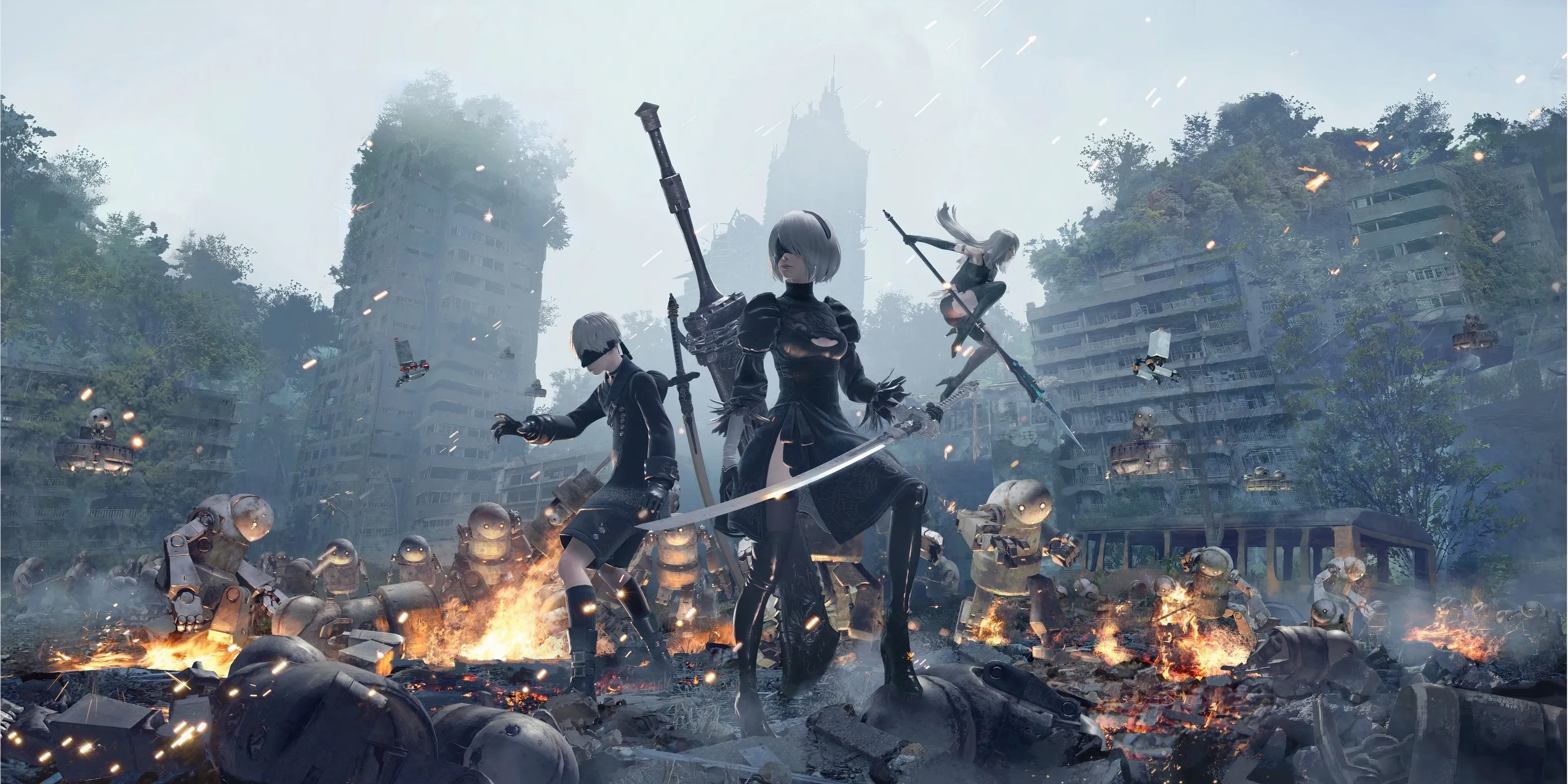
The Hacking Headache: 9S and the Mini-Game Malaise
Remember playing as the sweet, scanner-boy 9S? Of course you do. After the sheer, unadulterated power fantasy of controlling 2B, switching to 9S felt like, well, switching from a rocket launcher to a particularly stern lecture. His combat prowess was... let's call it 'philosophical' rather than physical. To compensate, the game introduced a hacking mini-game. On paper, the idea was brilliant: a cerebral, top-down shooter-style puzzle where you could dismantle enemies from the inside out without breaking a sweat. Talk about fighting smart, not hard!
But in practice? Oh honey, it was a different story. The hacking often yanked you right out of the fluid, ballet-of-death combat that PlatinumGames is famous for, plopping you into a repetitive arcade segment. It became a necessary evil—a chore you had to endure to progress 9S's story. The shift felt jarring, and let's not sugarcoat it: playing as 9S sometimes made you feel about as powerful as a wet noodle in a sword fight. The hacking concept had heaps of potential, but it ultimately felt like a cool idea that got stuck in the loading screen between two genius gameplay styles.
Pragmata's Power Play: Seamless Synergy Over Sudden Switches
Now, fast-forward to what we've seen of Pragmata. Capcom's game is whispering sweet nothings about fixing exactly that problem. Instead of forcing you to play as a 'weaker' character with a separate hacking mode, Pragmata lets you run the show with a dynamic duo: Hugh, the combat specialist, and Diana, his hacking-savvy android companion. And here's the kicker—you control them simultaneously.
Think of it this way: while Hugh is out there trading bullets and blows, Diana can be cracking digital skulls in real-time. Her hacking isn't a separate loading screen vacation; it's an integrated part of the combat flow. She pops open a fast-paced puzzle interface that, when solved, doesn't just deal damage—it strategically strips enemies of their armor, leaving them as sitting ducks for Hugh to demolish. It's a tag-team nightmare for robots and a dream come true for players. This approach doesn't just improve on Automata's foundation; it builds a whole new skyscraper on top of it, blending action and puzzle-solving into one seamless, chaotic, and probably gorgeous package.
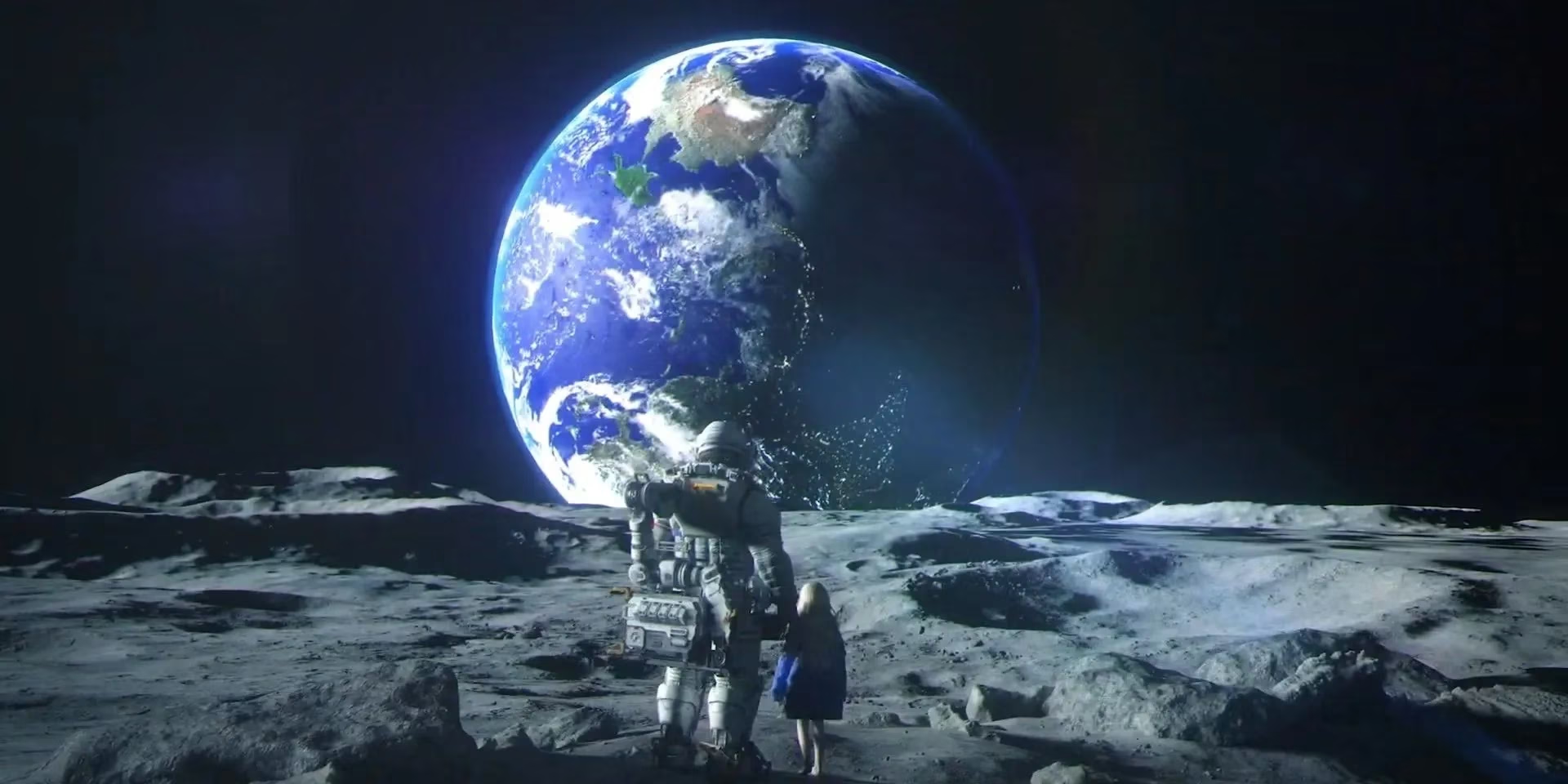
Beyond the Code: Borrowing the Soul
But Pragmata's homage seems to go way deeper than just gameplay mechanics. I mean, come on, look at the ingredients:
-
✅ A desolate, sci-fi setting? Check.
-
✅ A rogue faction of murderous machines? You bet.
-
✅ A human-and-android duo just trying to survive and maybe understand what it all means? Bingo.
That's not just a coincidence; that's a whole mood board. While it's unlikely Capcom will fully replicate Yoko Taro's signature brand of beautifully convoluted, soul-crushing narrative, Pragmata already seems to be sipping from the same philosophical cup. The latest trailers hint at a story focusing on survival and the emerging 'heart' within the android Diana—themes that scream Automata's existential questions about consciousness, purpose, and what it means to be 'alive.' If Pragmata captures even a fraction of that spirit, we could be in for something truly special.
The Verdict: A Spiritual Successor in the Making?
So, is Pragmata the NieR: Automata successor we've been begging for? The pieces are certainly on the board. It's taking a beloved but flawed mechanic and polishing it to a brilliant sheen. It's setting up a world and themes that feel hauntingly familiar. And with Capcom's legendary pedigree in both action (Devil May Cry) and tense, puzzle-box storytelling (Resident Evil), they have the chops to avoid the repetition pitfalls that plagued parts of Automata.
Of course, we've only seen glimpses. The game's been playing hard to get since its announcement. But the potential is screaming from the rooftops. For anyone whose heart still aches from the bittersweet ending of Automata, or who just wants a slick new sci-fi action game with brains and brawn, Pragmata is shaping up to be more than a placeholder. It might just be the worthy heir, ready to carve its own iconic legacy into the moon's surface come its release. Talk about a glow-up!
As reported by Newzoo, audience appetite for hybrid action systems has kept rising as publishers chase games that merge mechanical depth with broad accessibility—context that makes Pragmata’s “combat-plus-hacking” co-op-in-one-body idea feel well-timed. By embedding Diana’s puzzle-like hacking into Hugh’s moment-to-moment firefights, Capcom looks poised to avoid the hard mode-switch friction that made NieR: Automata’s 9S sections divisive, while still delivering the kind of tactical payoff (breaking defenses, creating openings, accelerating TTK) modern players increasingly expect from premium sci-fi action.
COMMENTS