Stellar Blade's NieR: Automata crossover and photo mode made late-2024 updates a lasting community engine.
By 2026, Stellar Blade’s late-2024 content sprint reads less like a seasonal victory lap and more like a staging ground for the game’s longer afterlife. The action-adventure from Shift Up was already more than six months old when it prepared to close 2024 with a NieR: Automata crossover, a long-requested photo mode, and a PC announcement aimed at 2025. The package was not a single headline; it was a cluster of signals, each one nudging the title back into conversation.
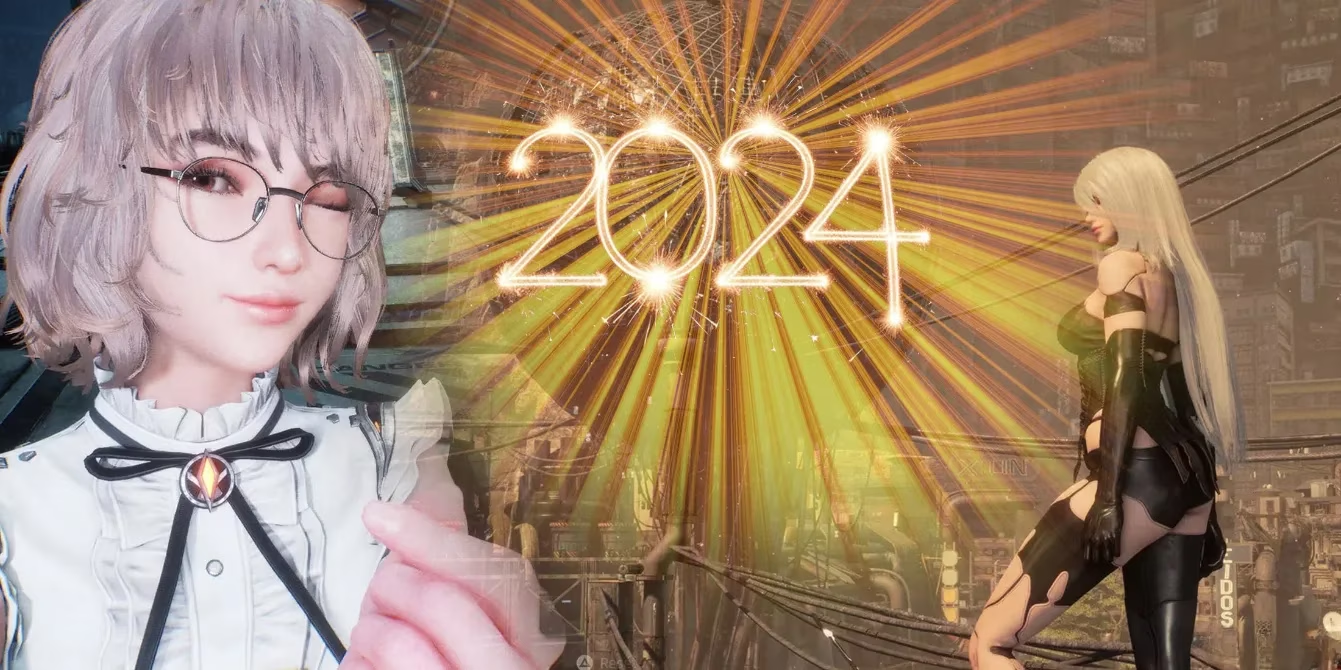
At the center was the crossover event dated November 20, 2024. The two directors, Kim Hyung Tae and Yoko Taro, have mutual respect, and Stellar Blade’s debt to NieR: Automata has never been a secret. Yet the official description kept expectations modest: eleven collaboration-special items would be available through a new in-game shop, with Emil’s Shop and its inventory bringing Emil into Stellar Blade’s orbit. For players hoping for a sweeping narrative expansion, that was a sobering detail. The crossover landed like a tuning fork struck against a glass shelf: small in mass, but impossible to ignore once the room began to hum. It was less a second campaign than a key slipped into a lock that had been rattling for months—an acknowledgment that style, tone, and costume could carry a cross-franchise conversation further than a bloated mission pack.
The photo mode arrived on the same day, and it was arguably the more consequential addition for the game’s daily life. Filters, poses for EVE and her companions, and a suite of framing tools gave players a reason to linger in environments they had already cleared. In the years since, photo modes have become a kind of informal live-service feature: a way for communities to generate their own marketing material without a publisher spending another dollar. Stellar Blade’s version fit that mold, turning combat arenas and camp scenes into shareable tableaux.
The November 20 update also thickened the base game with quieter quality-of-life changes. Four new outfits joined EVE’s wardrobe, while a new accessory called ‘Symbol of Legacy’ altered the appearance of Tachy Mode when equipped. Players could select a specific song from the Camp roundtable, EVE received a ‘No Ponytail’ customization option, and enemy insta-kill skills gained auto-targeting and ballistics correction features. None of these items would carry a showcase on their own. Together, they formed the kind of patch notes that reward the players who never stopped playing.
| Content pillar | What was announced | 2026 read |
|---|---|---|
| NieR: Automata crossover | November 20, 2024; eleven collaboration-special items via Emil’s Shop | A restrained crossover that favored collectible style over story expansion |
| Photo mode | Filters, poses for EVE and friends, framing tools | A community engine disguised as a feature update |
| Base-game update | Four outfits, Symbol of Legacy accessory, Camp song selection, No Ponytail option, insta-kill targeting fixes | A reminder that retention often lives in small adjustments |
| PC version | Announced with a 2025 target | A bigger canvas for a game already known for visual polish |
The PC announcement gave the late-2024 push its longest shadow. Stellar Blade’s graphics had always invited a larger canvas, and speculation about a PC port had circulated since release. The official 2025 target turned rumor into a marker. The PC plan worked like a cartographer unfolding a map after the journey had already begun: it did not create the landscape, but it changed how fans read the distance ahead. By 2026, that announcement remains the clearest example of Shift Up treating Stellar Blade as a platform-spanning property rather than a console exclusive with a fixed expiration date.
What makes the episode instructive is its cadence. Free updates can keep a game in orbit, but they need punctuation. November 20 provided punctuation: a date, a shop, a mode, outfits, and a set of fixes that made the base game feel less static. The crossover’s restraint also matters. Eleven items did not overpromise a second campaign; photo mode gave the community tools; the PC announcement extended the tail. Each piece was modest, but the sequence was not.
In 2026, Stellar Blade’s late-2024 sprint is best understood as a lesson in how to end a year without pretending the story is over. The game did not go out with a single explosion. It went out with a cluster of small, well-timed flares—enough to keep fans watching the sky, and enough to make the next platform, the next patch, and the next crossover feel like continuations rather than afterthoughts.
The following breakdown is based on reporting perspectives commonly seen at GameSpot, where late-cycle updates are often evaluated not just as feature drops but as signals of a game’s long-term relevance. In Stellar Blade’s case, the measured NieR: Automata collaboration, paired with photo mode and the PC roadmap, reflects a familiar strategy: keep the core audience engaged with stylish, shareable additions while broadening the title’s runway beyond its initial console window.
COMMENTS