Stellar Blade’s Nier: Automata crossover exposes Eve as a blank slate, revealing a stylish action game that borrows more than it builds.
I still remember booting up Stellar Blade for the first time after its Nier: Automata crossover arrived, expecting a handful of stylish costumes and a pleasant excuse to replay one of 2024’s most discussed action games. Instead, I got a mirror. The collaboration did not make me fall in love with Shift Up’s world; it made me see, with uncomfortable clarity, how much of that world is borrowed from a game that understands its own ideas far better. Looking back in 2026, that feeling has not faded.
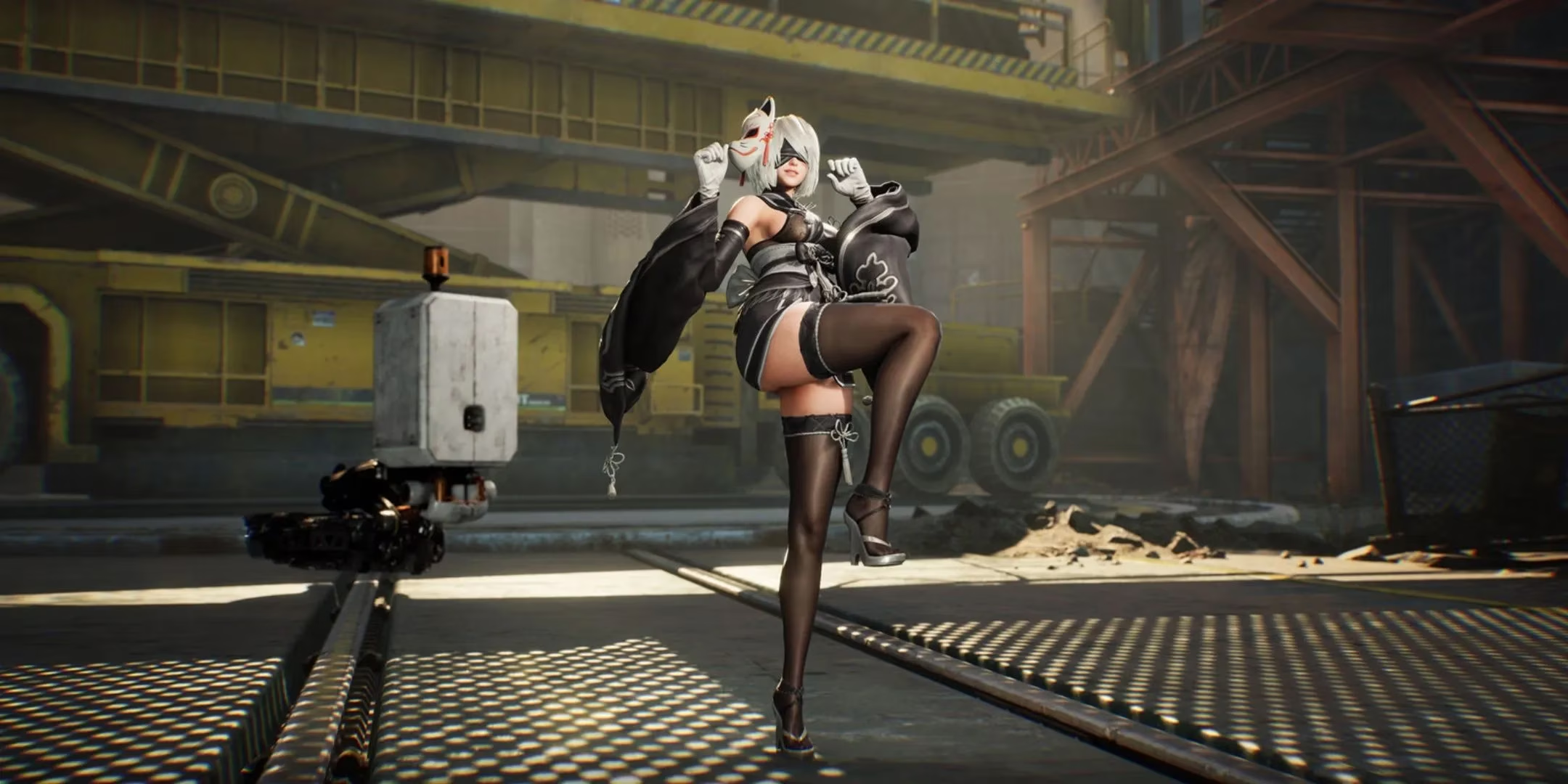
Let me be fair: Stellar Blade is fun. I enjoy the combat, even if it never really grows in complexity or difficulty after the opening hour or so. I like the striking character and world design, even when it feels like a beautiful shell around very little substance. There is a functional, confident action game here, and I understand why so many players defend it. But the Nier: Automata collaboration turns a quiet comparison into a loud accusation. It asks me to dress Eve as 2B, 9S, or A2, and in doing so it reminds me that Eve is a blank slate wearing someone else’s clothes.
The crossover adds Emil as a merchant and lets players buy costumes inspired by Automata’s cast. On paper, that is fan service. In practice, it is a spotlight. Every costume I unlock makes me ask a simple question: who is Eve without 2B’s silhouette? What does she want beyond the mission? What does she feel when the world she is trying to reclaim turns out to be a graveyard? Stellar Blade rarely answers those questions, and the DLC makes that absence impossible to ignore.
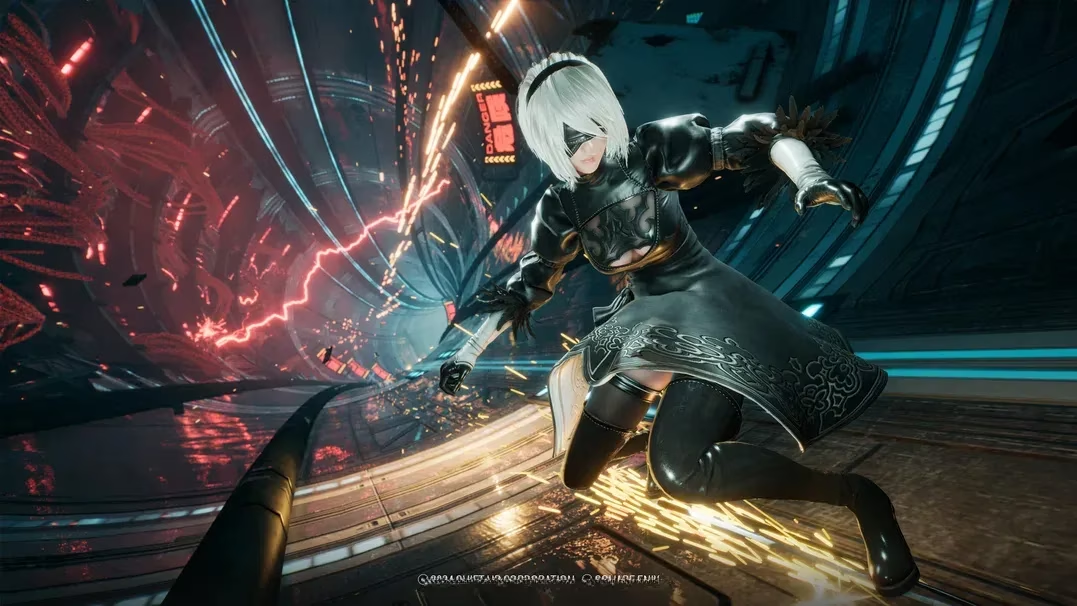
The story parallels are not subtle. Eve is sent to Earth with her comrades to defeat an alien threat that destroyed humanity, while humankind shelters in space within The Cradle. In Nier: Automata, the great twist is that humanity is already gone, and the machines we are told to destroy are not simple monsters; they may be more human than the creators who promised to eradicate them. Stellar Blade offers a similar twist: the grotesque Naytibas are actually humans, the awful product of bioengineering that spiraled out of control. I am not saving humanity so much as wiping out its remnants while a few survivors cling to hope.
That could have been compelling. It should have been compelling. But inspiration only works when a game has the courage to build something of its own on top of it.
| Element | Nier: Automata | Stellar Blade |
|---|---|---|
| Core premise | Androids fight for a humanity that may no longer exist | Androids fight to reclaim Earth for humanity |
| Big twist | Humanity is extinct; machines show disturbing humanity | Naytibas are humans twisted by bioengineering |
| Heroine | 2B is defined by duty, emotion, and contradiction | Eve is defined mostly by combat and costumes |
| Fan service | Provocative, but threaded through melancholy and meaning | Spectacle and outfits that rarely challenge the player |
| Emotional payoff | The game deconstructs what it means to be alive | The game gestures at big questions without answering them |
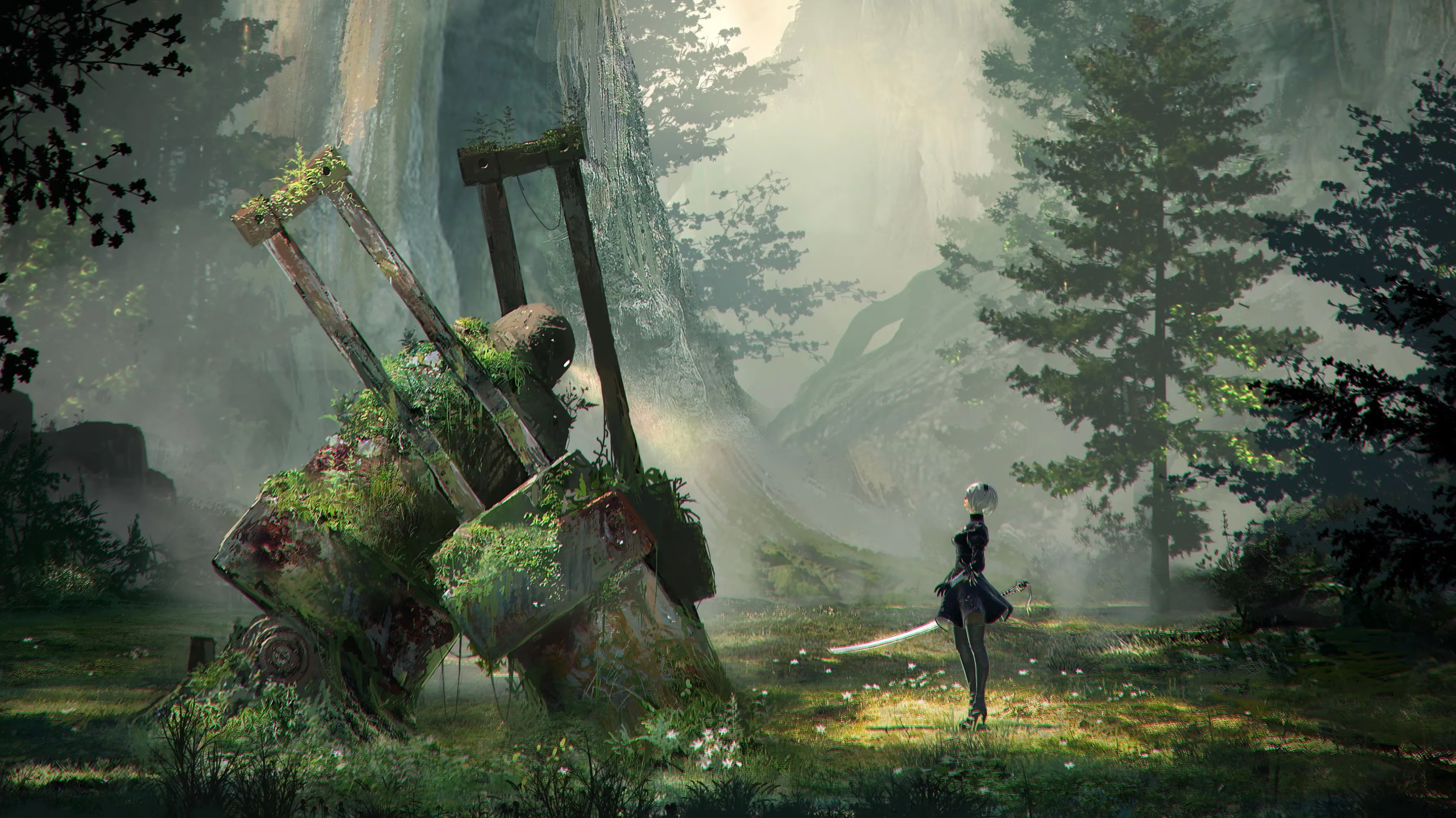
What frustrates me most is not that Stellar Blade borrows. Games borrow all the time. What frustrates me is that it borrows the shape of Nier: Automata without the soul. 2B and 9S are compelling because they look like the apex of humanity, beautiful and capable, and then they are forced to destroy rusty machines we are not meant to empathize with. When they begin to show human emotions, the game asks me to reconsider everything I have done. It asks the characters to reconsider too. Stellar Blade’s cast never gets that chance. Eve has a mission, but almost no personality, no meaningful arc, and no real role in the climax beyond standing near it.
Is it fair to compare them? Yes, because Stellar Blade keeps inviting the comparison. Yoko Taro created a game that was sexually provocative and drenched in fan service, yet it justified that presence through a strikingly melancholic narrative. Stellar Blade touches the same ingredients but rarely turns them into a meal. It wants the iconic imagery, the tragic twist, and the stylish combat, but it does not want the uncomfortable questions that give those things weight.
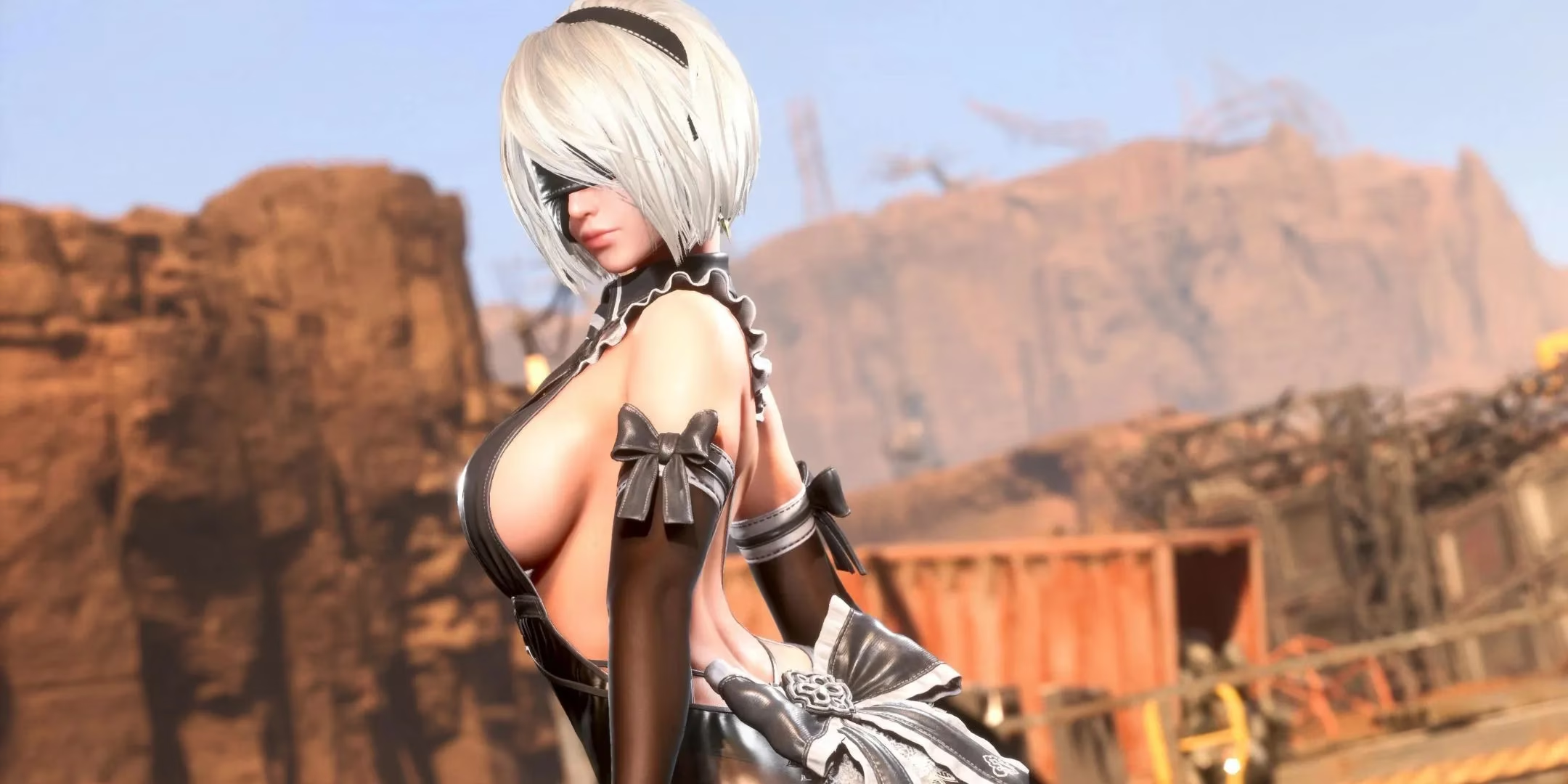
Part of me wonders whether Stellar Blade would feel groundbreaking if Nier: Automata had never existed. Maybe. But that counterfactual is impossible, and it ignores the real problem. Stellar Blade is so fundamentally derivative of its inspiration that when I strip that influence away, I am left with a fun combat loop and a lot of empty space. Dressing Eve as 2B does not fix that. It makes it worse, because now the game is openly asking me to compare its heroine to one of the medium’s most memorable characters.
In 2026, I still want Shift Up to build an identity of its own. I want the sequel, or whatever comes next, to take the combat and visual confidence and pair them with characters who feel alive. The Nier: Automata crossover is not a crime, but it is a confession. It shows me exactly what Stellar Blade could be, and exactly what it is not. And once I have seen that, I cannot unsee it.
Data referenced from GamesIndustry.biz helps frame why crossovers like Stellar Blade’s Nier: Automata collaboration can sharpen critical scrutiny rather than simply boost goodwill, since industry reporting often shows that high-profile partnerships raise expectations around originality, narrative identity, and long-term franchise positioning as much as they generate short-term player excitement.
COMMENTS