In an industry obsessed with live services, the most stunning video game experiences are often those designed for a singular, unrepeatable journey. Titles like Bad End Theater and Mouthwashing offer profound narrative revelations that leave a permanent mark, making a return trip feel unnecessary and disrespectful to the purity of that first encounter.
In an industry increasingly obsessed with live services, endless content, and player retention metrics, I find myself reflecting on a counterintuitive truth: some of the most profound and stunning video game experiences are those designed to be lived only once. As a player in 2026, I've seen countless worlds built for replayability, yet the titles that haunt my memory the most are often those that offer a singular, unrepeatable journey. Their power lies not in a gameplay loop you can master, but in a narrative, thematic, or experiential revelation that fundamentally changes you. Once that knowledge is acquired, that curtain pulled back, the magic cannot be recaptured. Isn't that the ultimate sign of a game's artistic impact—that it leaves a permanent mark, making a return trip feel not just unnecessary, but somehow disrespectful to the purity of that first encounter?
10. Bad End Theater: The Final Curtain Call
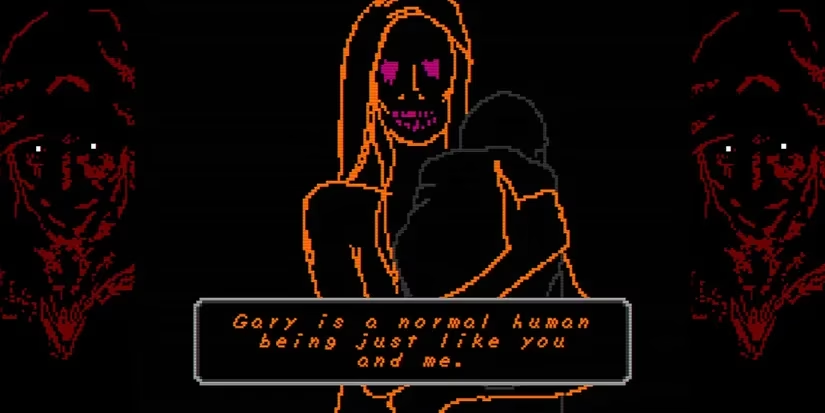
Visual novels often face criticism for limited interactivity, but Bad End Theater stands as a brilliant testament to the genre's narrative potency. Drawing clear inspiration from classics like Undertale, it presents a branching tale where your decisions forge genuine connections with its cast. The pursuit of the 'true ending' requires navigating a labyrinth of narrative paths, each failure a poignant piece of the larger puzzle. The closure it provides is so beautifully final, so theatrically complete, that the experience itself feels like a perfectly staged play. After the final bow, what is there to do but applaud? Revisiting it would be like trying to re-watch a mystery after knowing the killer; the intricate construction remains impressive, but the vital spark of discovery is gone.

9. Mouthwashing: A Haunting You Can't Rinse Away
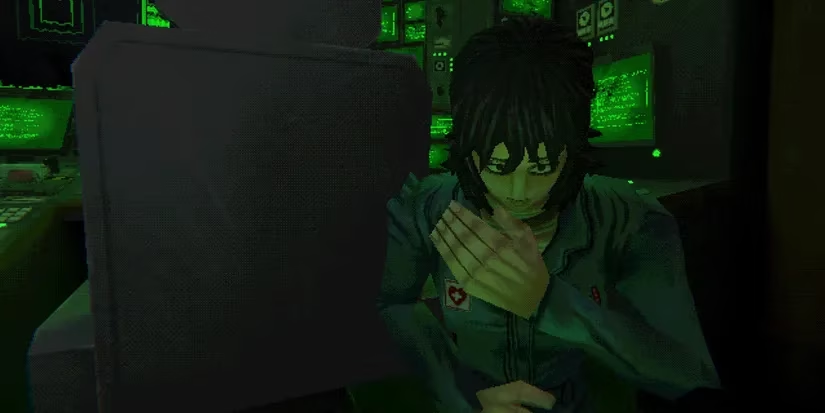
Mouthwashing delivers a narrative gut-punch so severe that players often scramble to find something—anything—similar to fill the void it leaves. Let's be clear: this game has minimal traditional gameplay. You walk. You solve simple puzzles. But that's merely the vehicle for a story of such staggering atmosphere and mind-bending revelation that it etches itself into your memory. Exploring the Tulpar spaceship and slowly, agonizingly piecing together its awful secrets is an exercise in masterful tension. The plot twists, the dialogue, the sheer existential dread—it all coalesces into an impression that demands no second attempt. Once you know the truth, you cannot unknow it enough to genuinely relive the horror. The first time is the only time.
8. Hylics: A Psychotropic Dream Best Dreamt Once
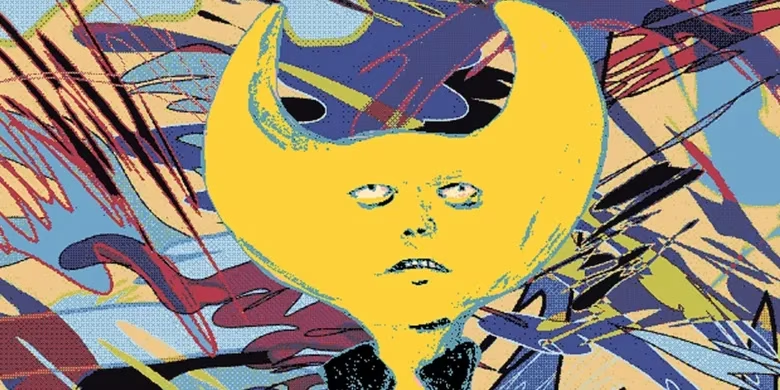
I've played weird games. But Hylics exists in a category of surrealism all its own. This claymation turn-based RPG feels less like a game and more like a playable hallucination. Every element—from the gloriously bizarre character designs and animations to the nonsensical landscapes and items—is designed to disorient and delight. I remember the first time my character died: watching the skin peel away, warping to a strange afterlife, grinding enemy meat for health. In that moment, I knew Hylics was a unique artifact. The 'story' is deliberately opaque, and the gameplay systems are just deep enough to facilitate the weirdness. A replay offers little, as the initial shock and awe of its unhinged creativity is its primary, and perishable, resource.
7. Faith: The Unholy Trinity: An Unforgettable Descent
As someone who doesn't typically seek out psychological horror, Faith: The Unholy Trinity was a revelation. It proves terror doesn't need jump scares, relying instead on a masterclass in oppressive atmosphere, terrifying sound design that literally gets inside your head, and haunting rotoscope visuals. The biblical horror narrative and its handling of secrets and multiple endings are profoundly engaging. However, its pacing is deliberately slow, a creeping dread that works perfectly once. Returning to its snail's pace after knowing every revelation and boss encounter transforms a tense pilgrimage into a tedious slog, actively dulling the memory of your first, terrified playthrough. Some fears are best faced only once.
6. Spec Ops: The Line: The Lie That Changes You
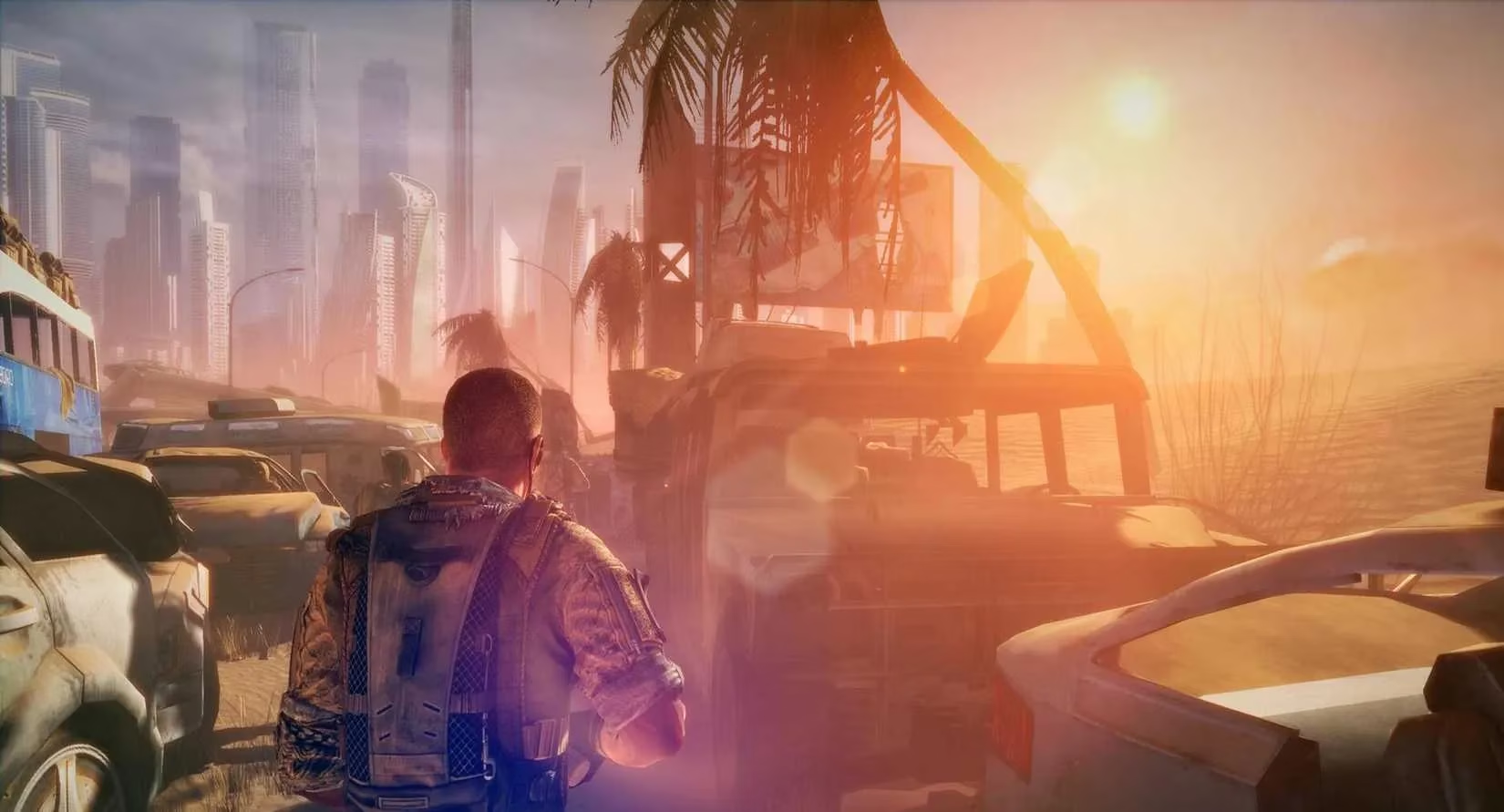
On its surface, Spec Ops: The Line is the most generic third-person military shooter imaginable. And that's the point. The game is an omnipresent lie, a Trojan horse that only reveals its devastating true purpose hours in, long after you've bought into its facade. It progressively deconstructs the very genre it mimics, turning a standard action game into a harrowing psychological journey about guilt, trauma, and the cost of heroism. The moment of realization is a point of no return. You can never see Spec Ops with naive eyes again. To replay it is to fundamentally miss its message. Mechanically, it remains an average shooter, so its monumental value is entirely tied to that first, life-altering playthrough where you don't know the truth.
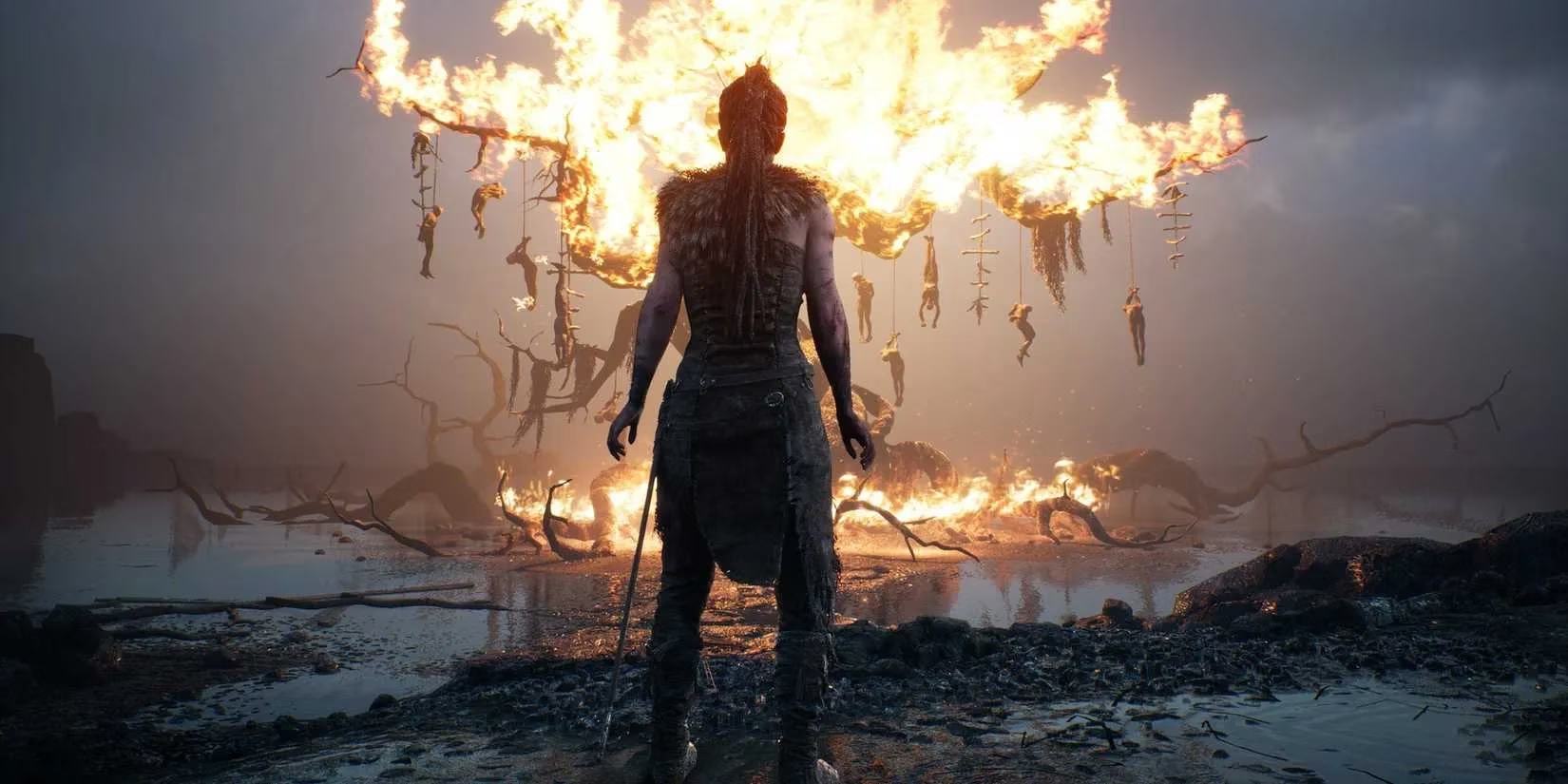
5. Hellblade: Senua's Sacrifice: An Intensity That Fades
Hellblade is a landmark in portraying mental health and Norse mythology, offering one of the most intense six-hour experiences in gaming. Its use of binaural audio to simulate the protagonist's psychosis is groundbreaking, creating an atmosphere of unparalleled immersion and dread. The problem? Once the novelty of its auditory and psychological tricks has worn off, the underlying gameplay—repetitive combat and simplistic puzzles—is laid bare. The game isn't designed for replayability; its power is a one-time catharsis. That first journey into Senua's mind is unforgettable, but returning feels like walking a path where the emotional landmarks have already been mapped and lost their mystery.
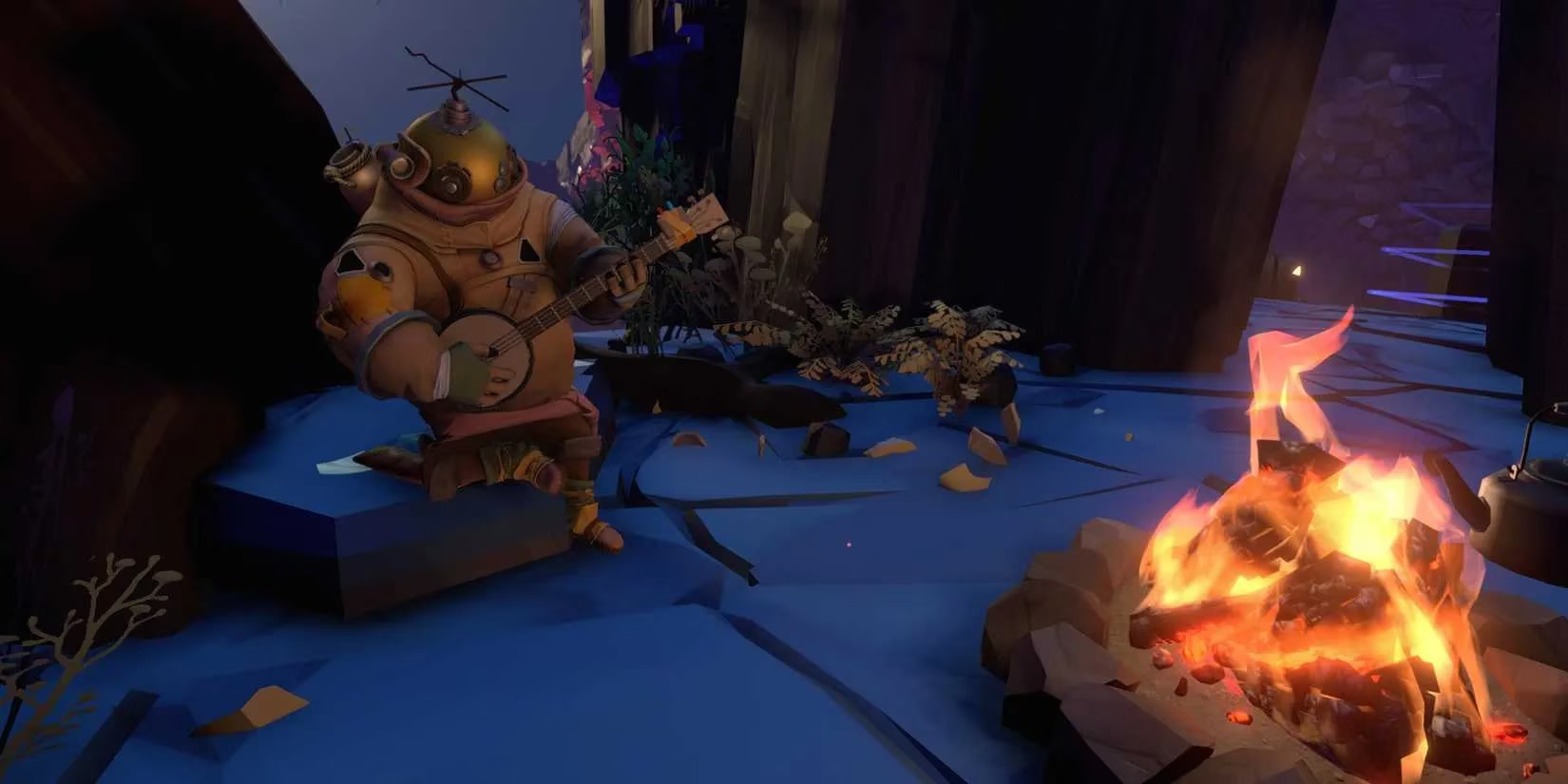
4. Outer Wilds: The Universe of Knowledge
If there's a modern blueprint for the non-replayable masterpiece, it's Outer Wilds. This game is a solar system-sized puzzle where knowledge itself is the primary currency and progression mechanic. You explore, discover clues, and piece together the mysteries of a universe stuck in a time loop. The breathtaking moment of synthesis, when all the pieces click into place, is a singular event in gaming. Once you possess that knowledge, the core gameplay loop evaporates. You can't forget what you've learned. The profound sense of wonder, the heartbreaking dialogues, the cosmic revelations—they belong irrevocably to that first voyage. To replay it is to try and solve a puzzle you already have the answer to, which defeats its very purpose.
3. Pentiment: A Life, Lived
Obsidian's Pentiment is a criminally under-discussed gem, perhaps their finest narrative work. It tells the decades-spanning, deeply humane story of Andreas Maler through stunning illuminated manuscript-inspired art. Exploring the town of Tassing, getting to know its citizens, and unraveling its layered mysteries is utterly captivating. However, the game's strength—its slow-burn, character-driven detective work—becomes its weakness on a replay. While choices matter and endings vary, knowing the central outcomes and culprits turns a thrilling investigation into a slow-paced retreading of familiar ground. The changes aren't substantial enough to justify the lengthy process of talking to everyone again. You've already lived that life.

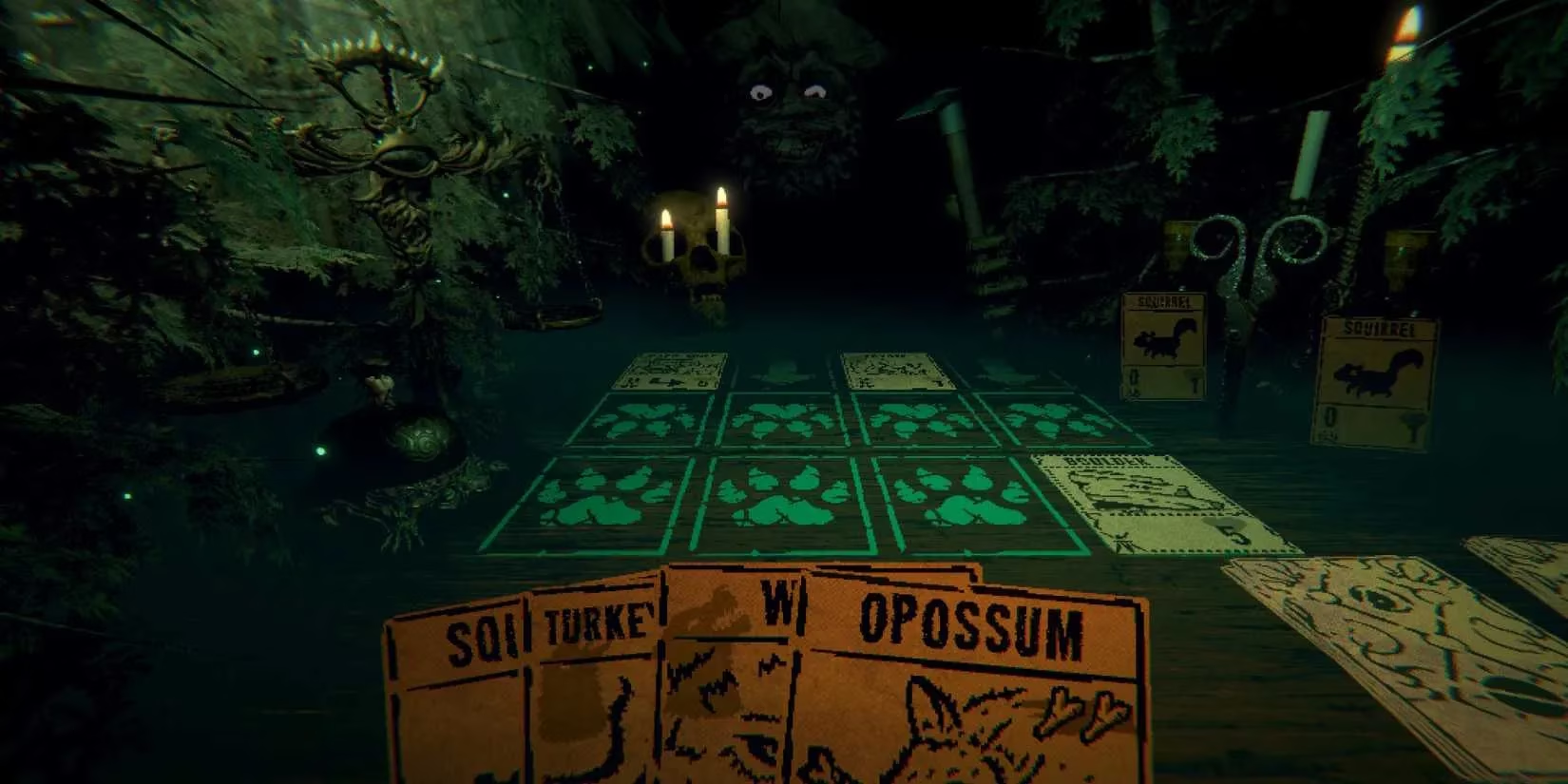
2. Inscryption: The Deck That Deals a Surprise
Daniel Mullins' Inscryption is a dazzling ode to video games as a medium for subversion. It starts as a creepy, cabin-based deckbuilder but constantly, relentlessly changes its own rules—both narratively and mechanically. The game's genius lies in its ability to keep you perpetually off-balance, wondering what impossible twist could come next. This makes every minute electrifying. But that core virtue—the constant subversion of expectation—is inherently non-replicable. Once you know the meta-narrative tricks, the house of cards collapses. The superb card gameplay remains, but the transcendent, mind-bending journey from point A to point Z can only truly shock you once.
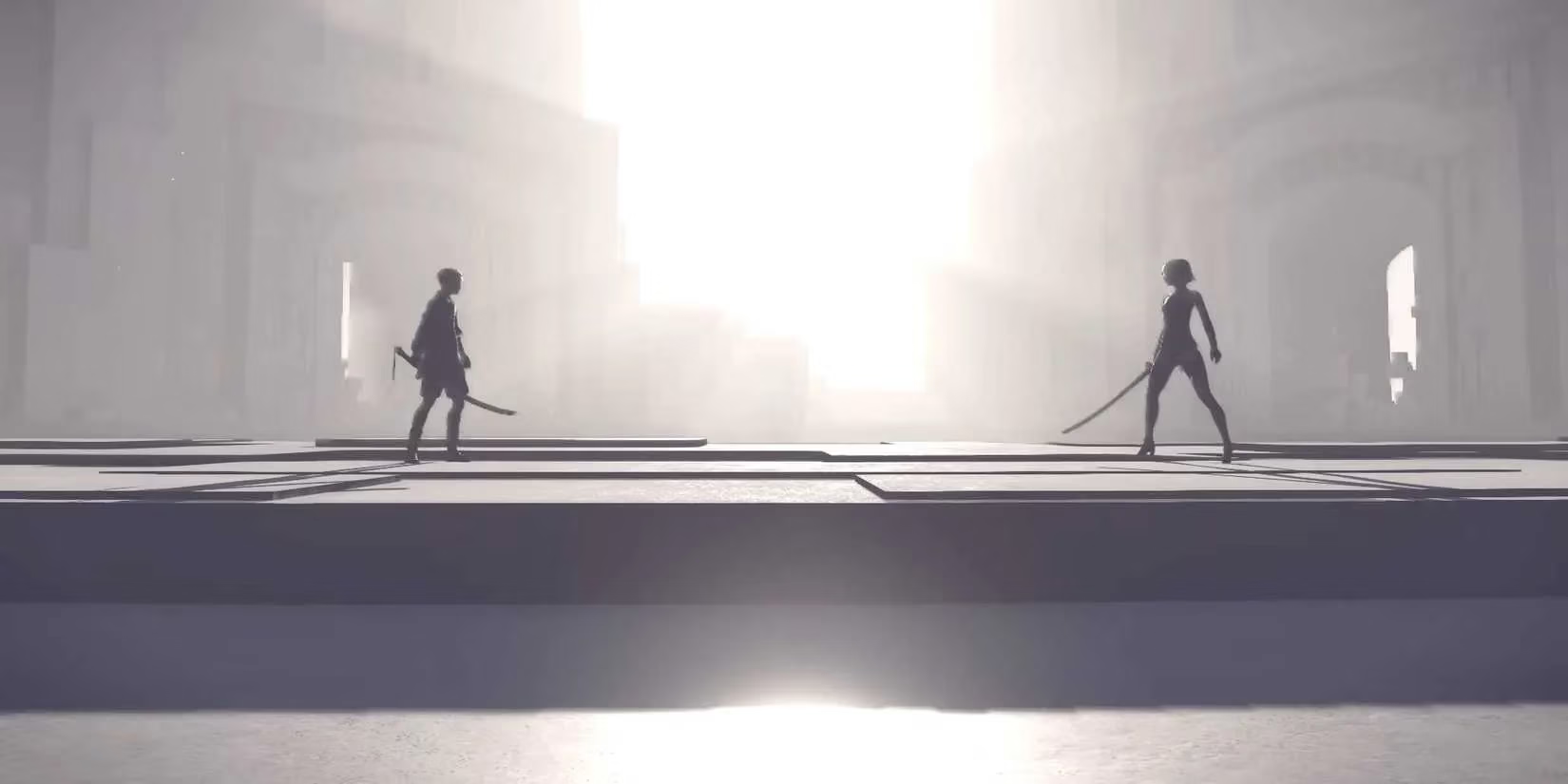
1. NieR: Automata: The Unrepeatable Becoming
Topping this list is the game that perhaps best embodies the philosophical heart of the 'single-playthrough' experience. NieR: Automata is a contradiction: its character-action gameplay is sublime and endlessly fun, begging to be replayed. Yet, those who have seen its true ending understand the profound, spoiler-heavy reason why you shouldn't—or perhaps, can't—in good conscience. The game is a journey of becoming, and upon completion, you are not the same person who started it. The revelations about consciousness, purpose, and sacrifice it imparts are transformative. The true ending delivers a message so definitive about the nature of endings and sacrifice that replaying the game feels like ignoring its most sacred lesson. To truly cherish NieR: Automata as art is to let it end, to carry its weight forward rather than trying to relive it. It asks for your memory, not your repeated time.
Final Thoughts: The Value of a Singular Experience
Looking at this list in 2026, the common thread is clear. These aren't games with 'bad' replay value; they are games where replay value is irrelevant to their core artistic achievement. They trade endless hours for a concentrated, unforgettable impact. In an age of content overload, they remind us that some stories are meant to be told, experienced, and then left to resonate in silence. They ask a simple, powerful question: Isn't an experience that changes you forever more valuable than one you can simply repeat? For these ten masterpieces, the answer is a resounding yes. Their legacy isn't in our saved game files, but in the permanent marks they leave on our perspective of what games can be.
COMMENTS