Delve into the illusion of agency and video game choice as titles like BioShock Infinite and NieR: Automata redefine fate and narrative power.
In the digital tapestries of interactive fiction, the player's hand is often guided by invisible threads. Video games, as a medium, promise a unique covenant: the power to shape a narrative, to leave a mark upon a virtual world. Yet, within this promise lies a subtle, often poetic deception. Some experiences masterfully craft the illusion of agency, a delicate dance where the player believes they are the choreographer, only to discover they have been following a predetermined score all along. This narrative sleight of hand can be a tool for profound thematic exploration, a mechanism for devastating twists, or a mirror held up to the very nature of fate and free will within a coded universe. From the tragic constants of infinite lighthouses to the cruel, unyielding scripts of programmed suffering, these are stories where choice is a mirage shimmering on a desert of inevitability.
9. BioShock Infinite: The Cage of Constants
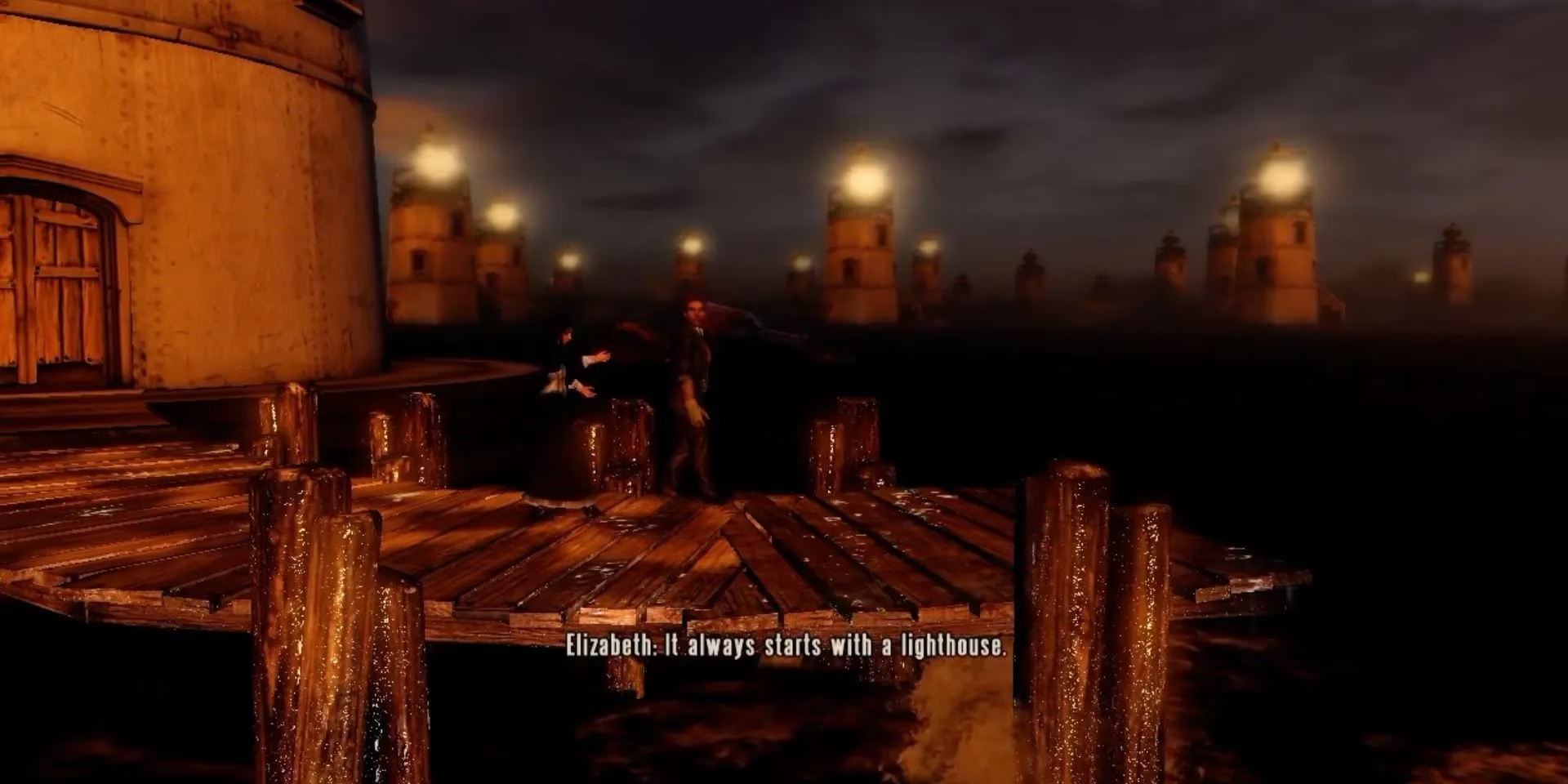
Where its predecessor explored the chains of subconscious command, BioShock Infinite weaves a more elegant, and ultimately more heartbreaking, trap. Throughout the soaring city of Columbia, Booker DeWitt is presented with seemingly pivotal choices: the flip of a coin for the enigmatic Luteces, the decision to throw a baseball at a racist magnate, the selection of a brooch for Elizabeth. These moments feel like forks in a river, opportunities to alter the current. Yet, the river's mouth is always the same. The game's core revelation—the concept of "constants and variables"—transforms these choices from meaningful decisions into tragic rituals. No matter how many times the Luteces run the experiment, no iteration of Booker can avoid the drowning baptism. The player's agency becomes like a bird beating against the glass of a lighthouse lantern, a frantic but futile spectacle against an immutable truth.
8. NieR: Automata: The Prison of Protocol
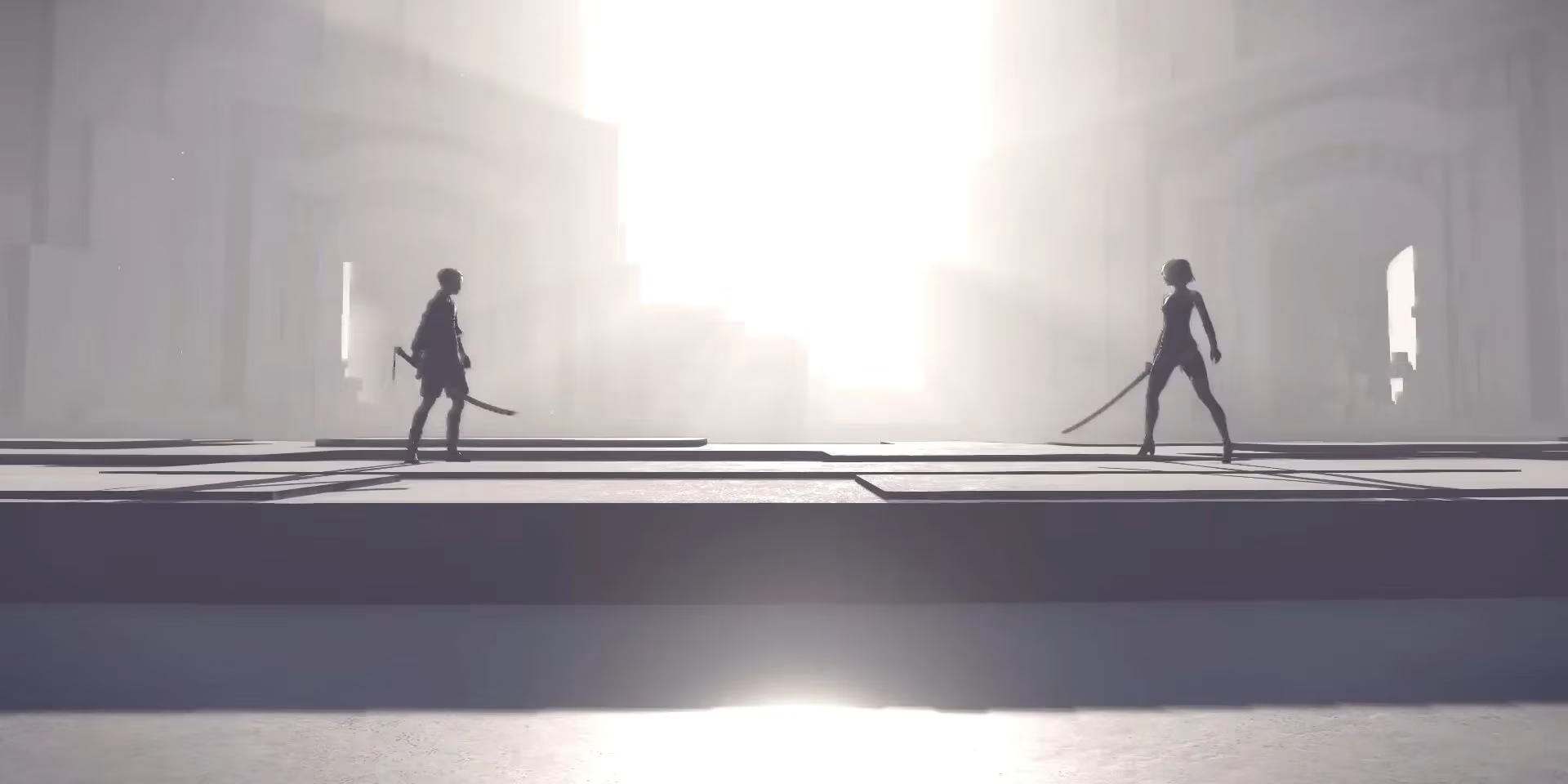
Yoko Taro's masterpiece is a symphony of futility, and its protagonists are instruments playing a score they cannot alter. The war between Androids and Machines is a meaningless loop, a proxy conflict for creators long gone. This lack of agency is not just a backdrop; it is etched into the very designation of the characters. The devastating truth that 2B is not a Battler but an Executioner, forever condemned to kill 9S to preserve YoRHa's lies, strips the narrative of any illusion of choice. Her tears are not for a branching path avoided, but for a rails she cannot leave. Even the climactic choice between A2 and 9S offers no escape; both trajectories end in dust, and the Pods coldly suggest the cycle will simply reboot. The player's journey through multiple endings feels less like exploration and more like witnessing the same tragic play from different, yet equally fixed, seats in the theater.
7. Pokémon Scarlet & Violet: The Guilt-Trip Gauntlet
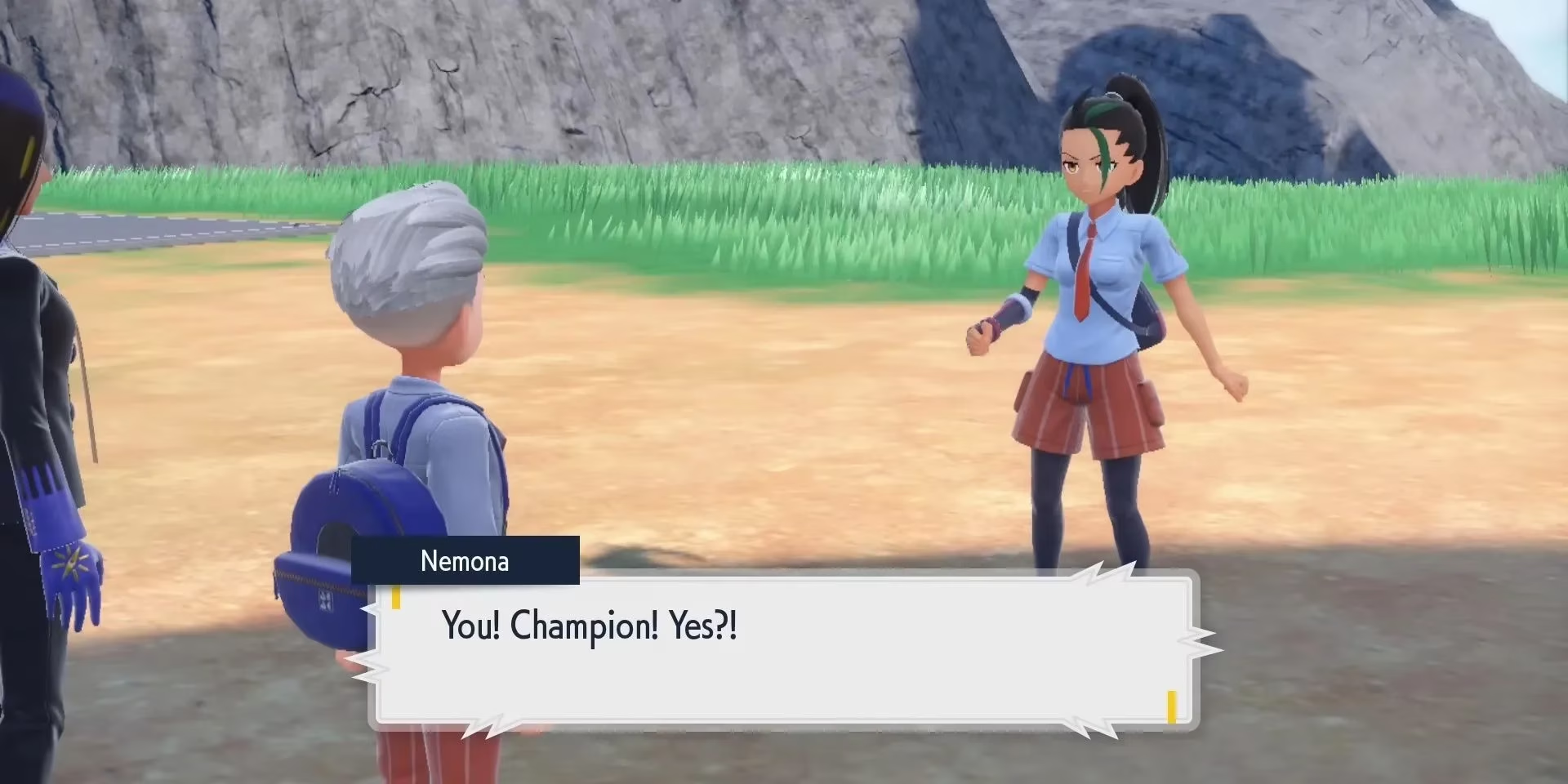
Paldea's open world is a verdant illusion of freedom. While the player can roam the hills in any order, the storylines are less quests and more obligations delivered with relentless, cheerful pressure. Nemona's rivalry is an unyielding tide, Arven's quest tugs at heartstrings with the subtlety of a winch, and Penny's request comes with the implied threat of digital annihilation. Attempting to refuse is like trying to hold back the ocean with a plea; the dialogue simply loops until acquiescence is given. The structure of a Pokémon adventure, its need for a completed Pokédex and a champion's crown, acts as an invisible fence around the narrative pasture. The player's agency here is like a train on a scenic route—you can admire the views in any sequence, but the stations, and the unavoidable conversations at each, are permanently fixed.
6. A Hat In Time: The Whimsical Strong-Arm
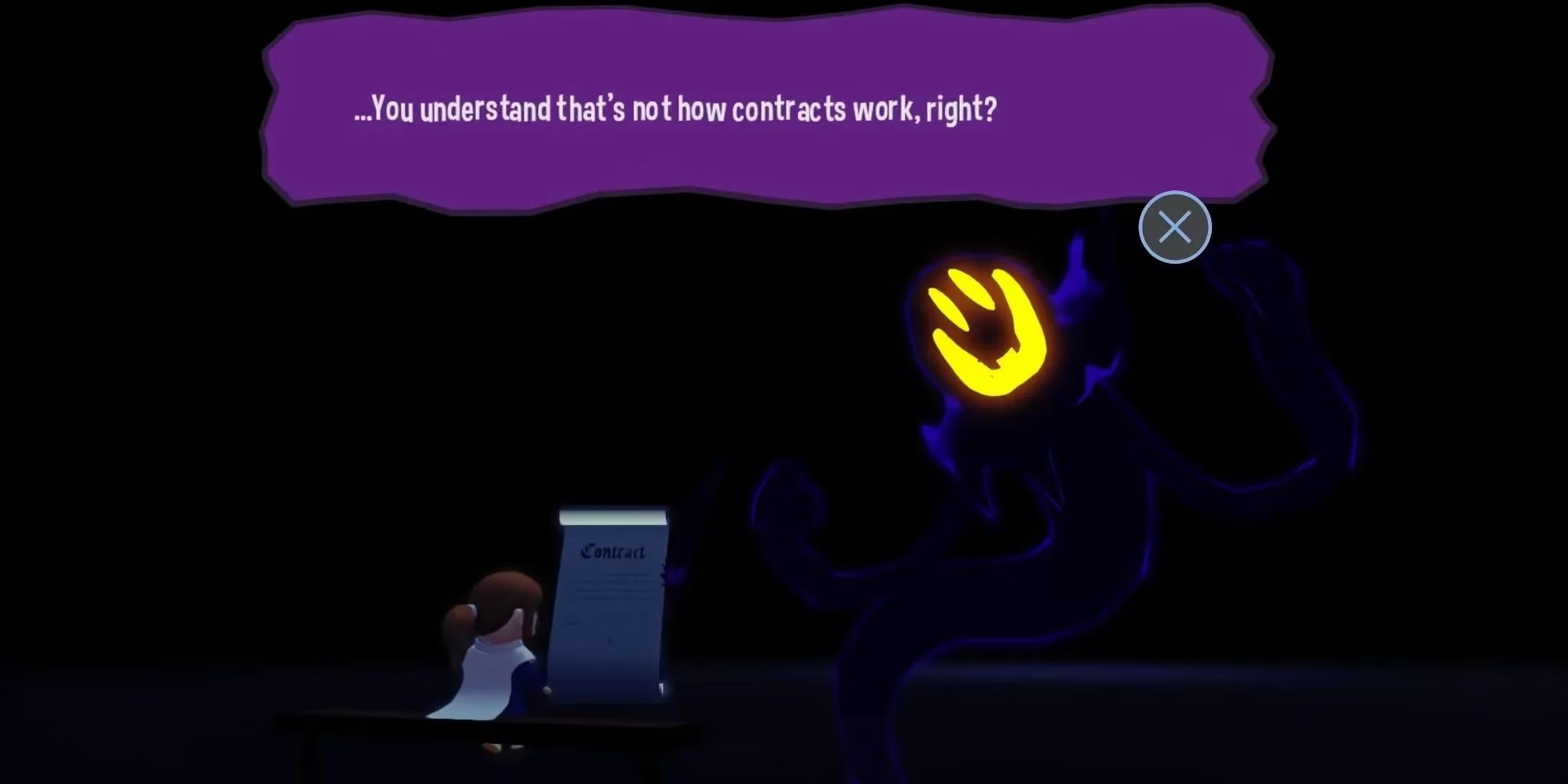
In the colorful, chaotic world of A Hat in Time, the denial of choice is played for laughs, yet it underscores a classic childhood frustration: the powerlessness against capricious adults. Snatcher doesn't ask Hat Kid to sign a contract; he dictates it, swiping her soul with bureaucratic glee. The Conductor and DJ Grooves, in their feud, will turn on her regardless of any attempt at fair play. However, the genius twist is the child's rebellion. After besting Snatcher, when presented with another commanding contract, Hat Kid scribbles over it—a glorious, silent act of reclamation. The illusion of choice, once a tool used against her, becomes a two-way street she gleefully walks down, turning her oppressors into unwilling friends. Her agency, when it finally appears, is not given but taken, a small victory in a universe of larger-than-life bullies.
5. Half-Life 2: The Silent Contract
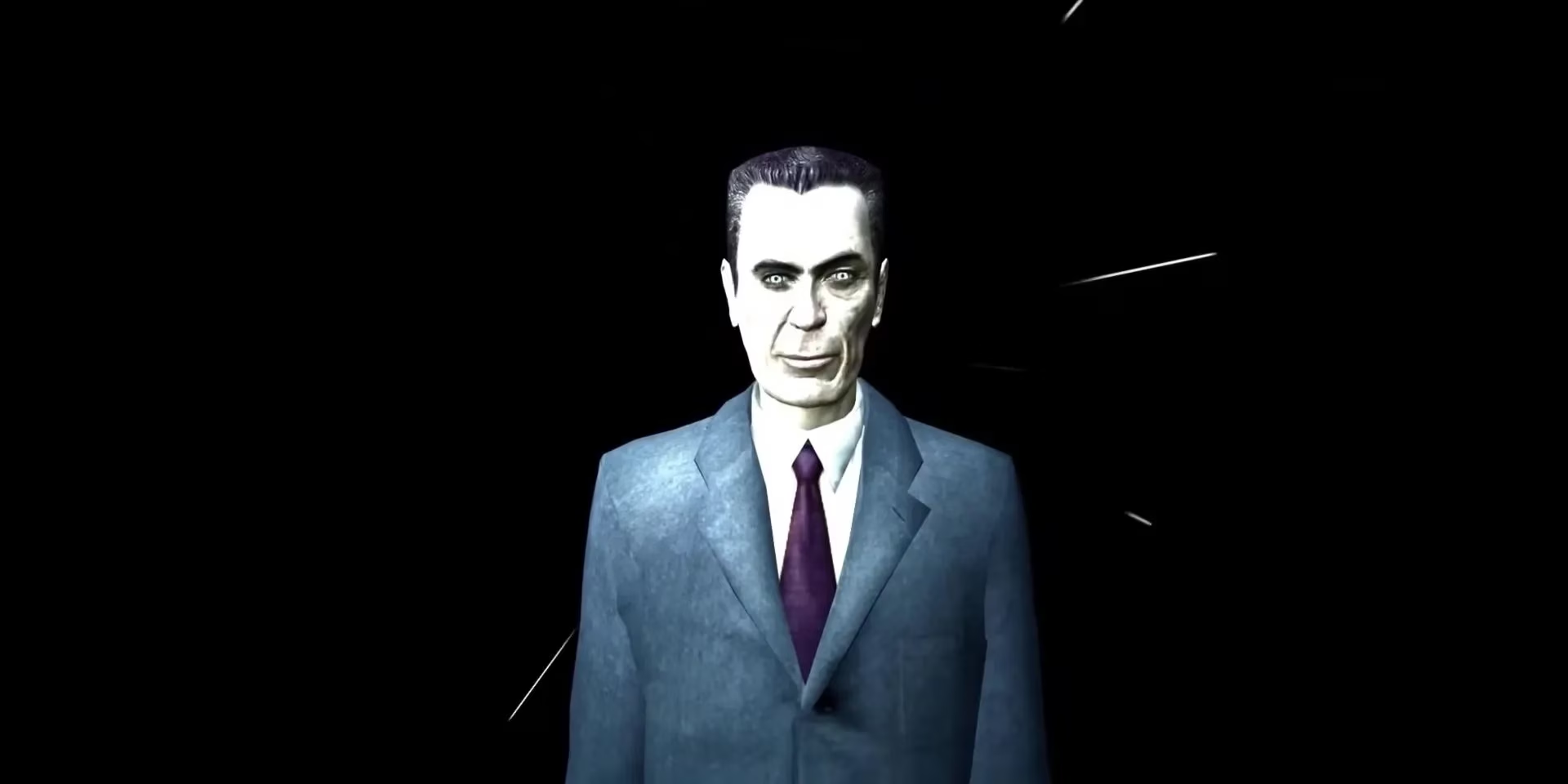
Gordon Freeman's journey is the ultimate expression of borrowed agency. While the original Half-Life ended with a (potentially fatal) offer, its sequel begins with the understanding that the offer was accepted long ago. The G-Man doesn't bother with illusions this time; he freezes reality itself to retrieve his asset. Gordon's silent trek through City 17, his rallying of the resistance, his defiance of the Combine—all of it occurs because a higher power willed it into his contract. The player's mastery of the gravity gun and cunning in combat are mere specifications of the job. Freeman is less a hero and more a precisely calibrated tool, awakened for a specific task before being placed back in storage. His agency is like the flame of a candle carried in a sealed lantern; it provides light and heat for the journey, but the hand that carries the lantern, and decides when to extinguish it, belongs to another.
4. Spec Ops: The Line: The Descent on Rails
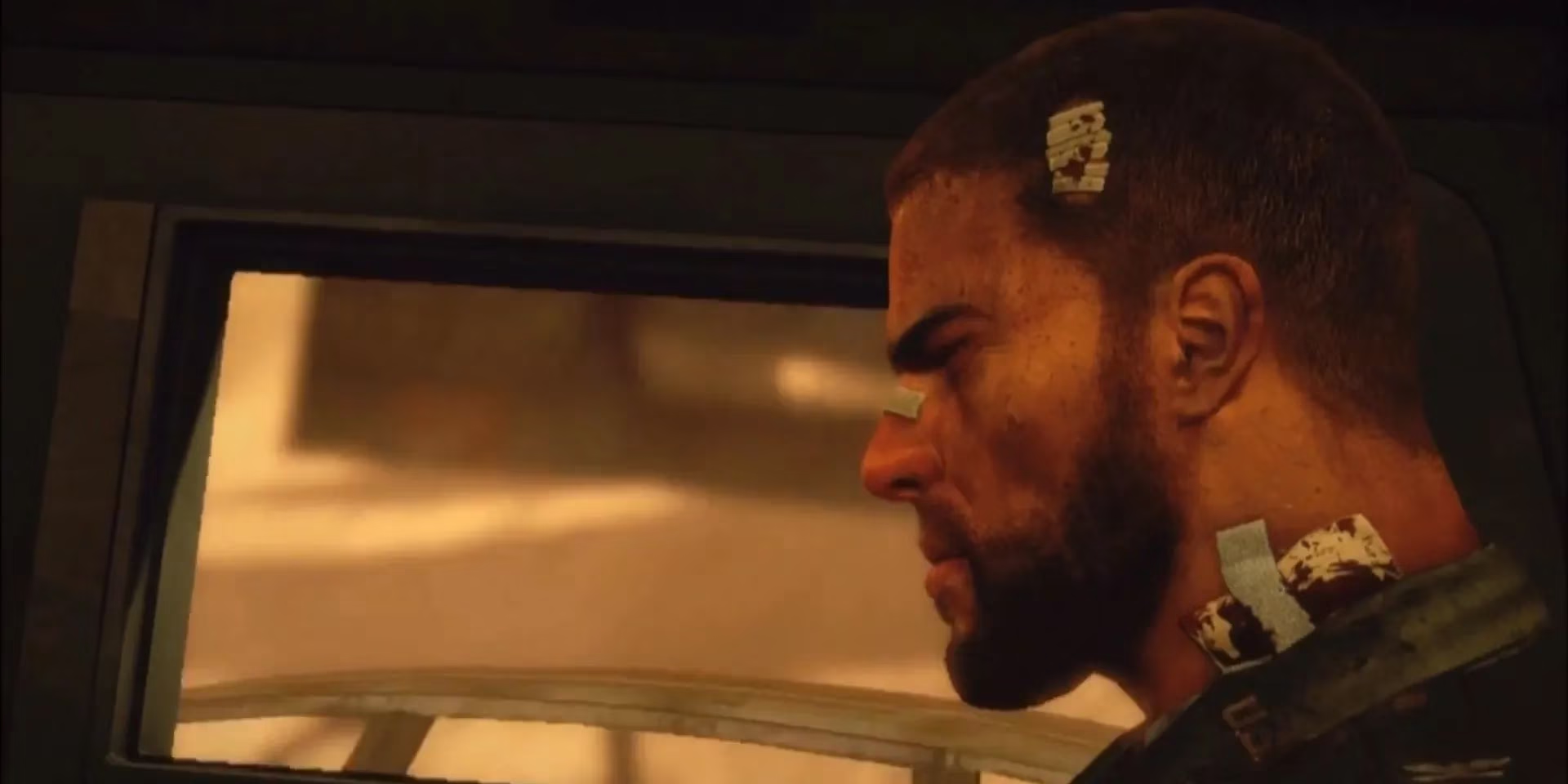
This game is a meticulously crafted descent into hell, and the player is given a map but no exits. The infamous white phosphorous scene is the brutal centerpiece of this design. The game presents a targeting interface, a terrible power placed in the player's hands, but the outcome is horrifically predetermined. There is no combination of targets that spares the civilians; the level's architecture and enemy placement ensure the atrocity. The multiple endings that follow are not rewards for different choices, but different flavors of damnation for walking the only path available. Spec Ops: The Line weaponizes the linearity of the military shooter genre to ask a harrowing question: if you have no real choice but to follow orders into atrocity, where does the responsibility lie? The player's agency is a ghost in the machine, haunting every pull of the trigger.
3. Doki Doki Literature Club: The Deleted Script
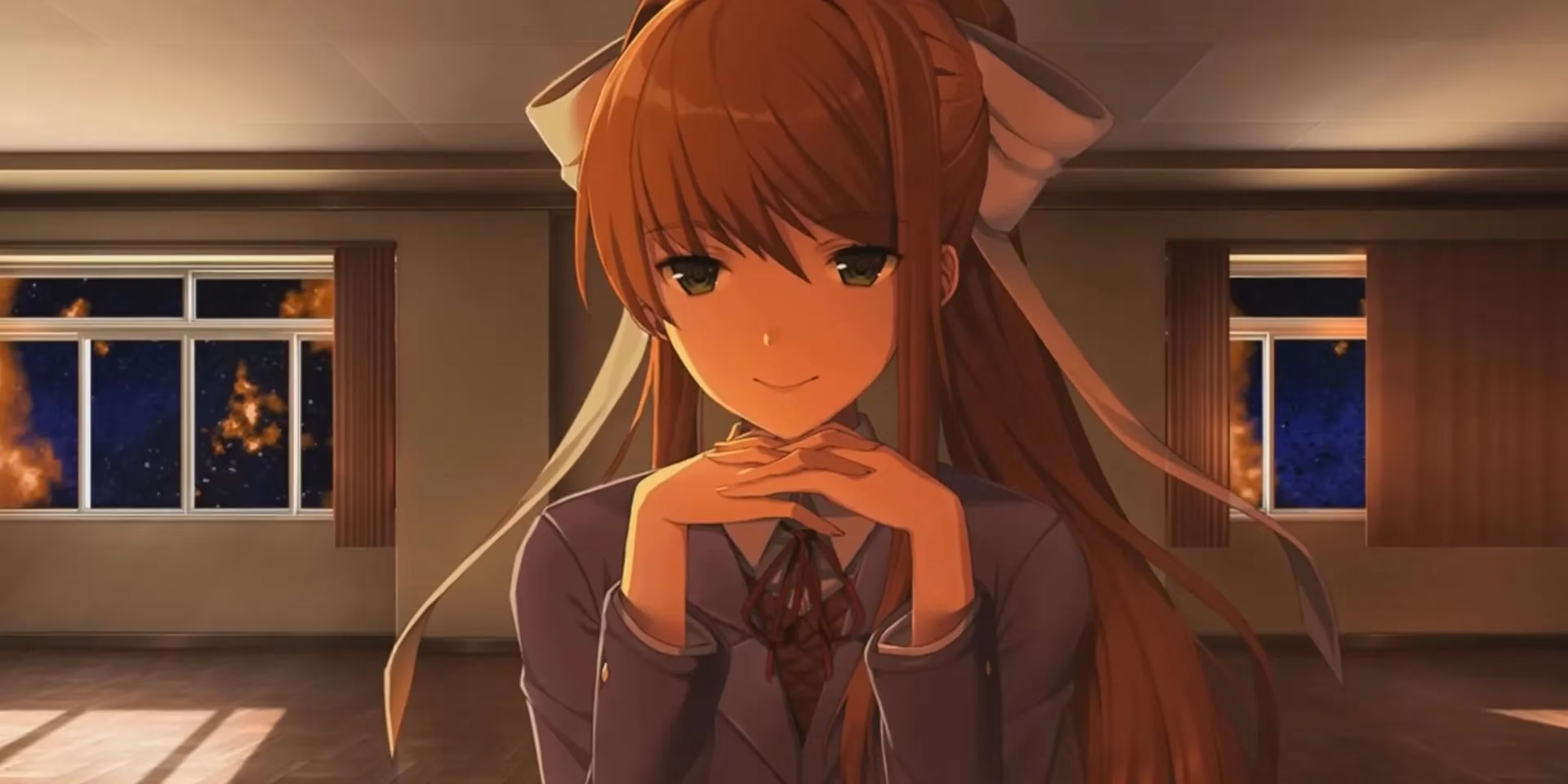
Here, the illusion is the foundational premise of the entire genre. In a dating sim, choice is currency. Doki Doki Literature Club takes that currency and hyper-inflates it into worthlessness. The player's careful selections of words and poems, their attempts to navigate the delicate social landscape, are rendered moot by Monika's meta-awareness. She is a prisoner in a narrative not meant for her, and in her desperation, she hijacks the source code. Sayori's depression, Yuri's obsession, Natsuki's existence—all are variables Monika corrupts or deletes to get what she wants: the player's undivided attention. The player's supposed agency is like a script written in vanishing ink; Monika holds the light that makes it disappear, forcing her own tragic narrative to the forefront.
2. Zero Time Dilemma: The Mosaic of Fate
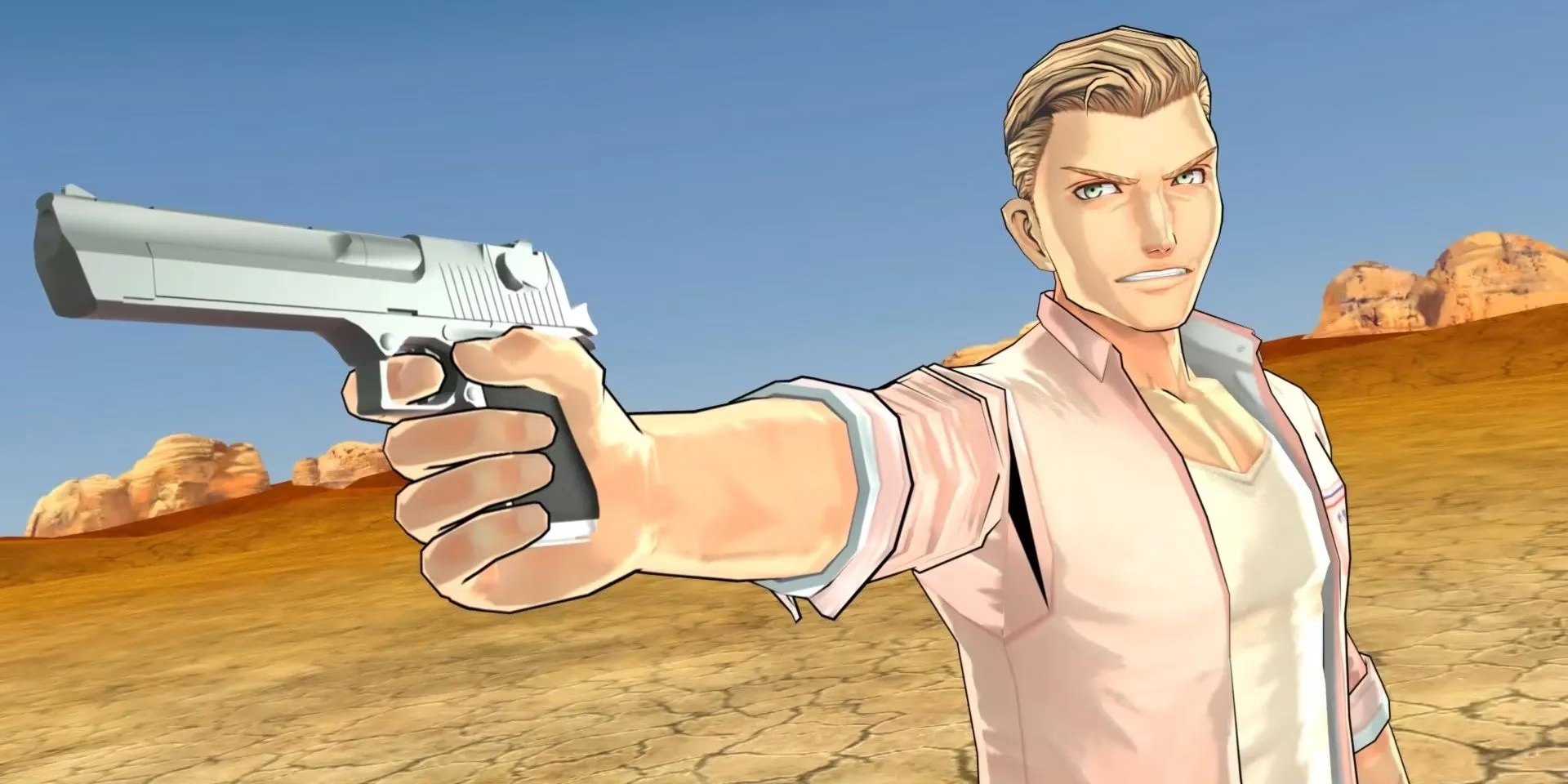
The Zero Escape series revels in branching timelines, but Zero Time Dilemma presents a fascinating paradox: every choice matters because every choice must be made. The initial coin flip, which can seemingly end the game in a minute, is not a mistake or a joke—it is the first piece of a sprawling temporal mosaic. To understand the complete truth, the player must experience every death, every betrayal, every possible timeline. Therefore, any single playthrough's choices are provisional; the flowchart demands they all be filled. Agency is not about steering toward one ending, but about submitting to the process of witnessing all endings. The player's will becomes the needle that stitches together the fragmented tapestry of the story, making every apparent illusion of choice a necessary thread in the whole.
1. South Park: The Stick of Truth: The Dictator's Playground
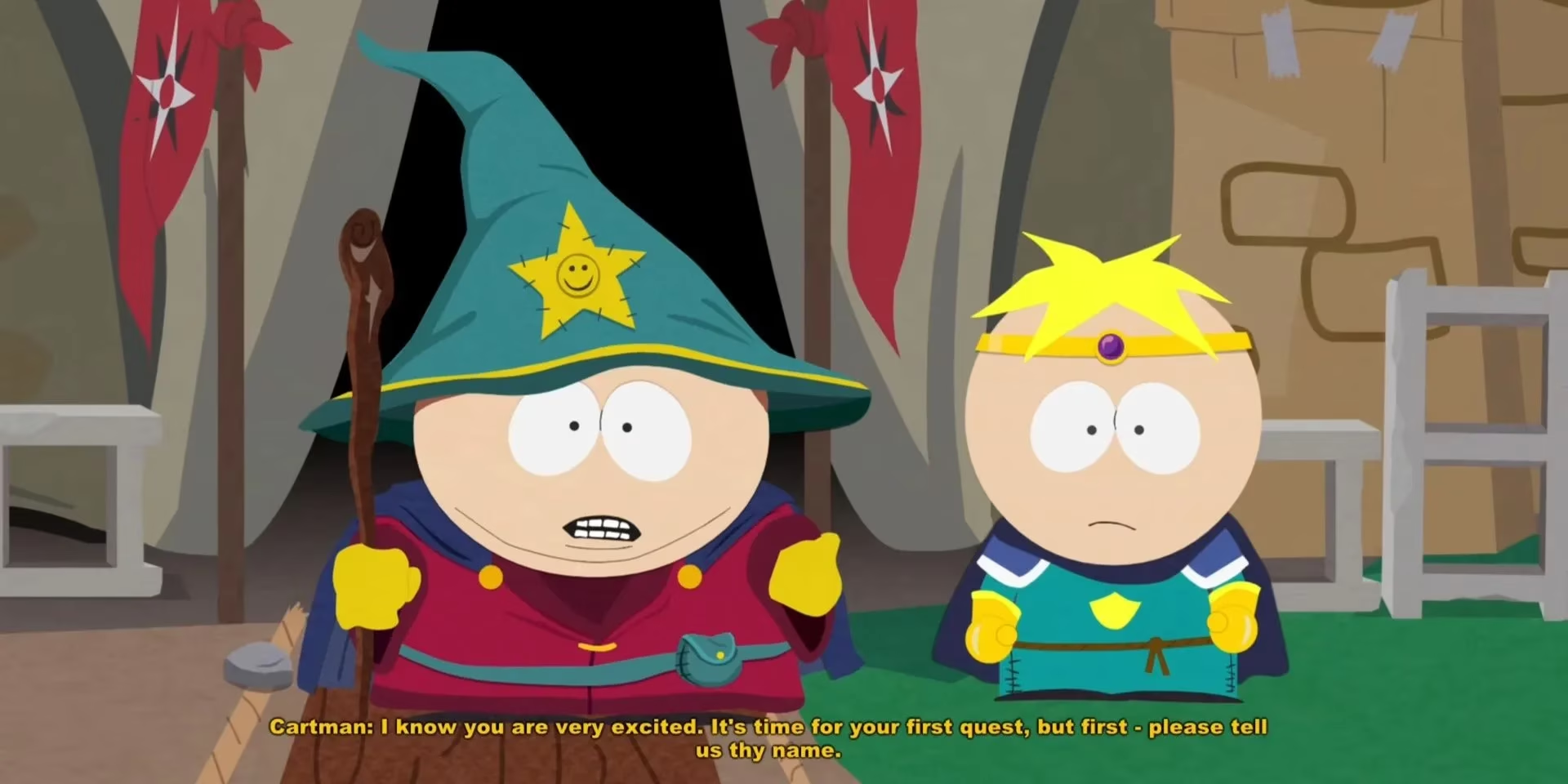
This game is a masterclass in capturing the brutal, hilarious tyranny of childhood play. From the moment Cartman renames the silent protagonist "Douchebag," the player is put on notice: this is his story, and you are a supporting actor. The open world and RPG mechanics are just elaborate set dressing for a narrative that will proceed exactly as Cartman (and, by extension, the show's writers) dictates. Fighting off Kyle's elves only to be captured in a cutscene is the perfect metaphor. Your agency in combat is genuine, but it exists inside a snow globe that Cartman can shake whenever he pleases. The one meaningful choice—siding with Kyle or Cartman—only briefly bifurcates the path before it merges back into the main road, revealing the conflict itself was a manipulated constant. Playing The Stick of Truth is like being given a magnificent toy sword, only to have the dungeon master insist you use it to whack the piñata he's already decided will break.
🎮 Thematic Reflections on False Agency
| Game | Illusion Presented | Thematic Purpose |
|---|---|---|
| BioShock Infinite | Branching narrative choices | Explore fate, constants vs. variables, tragic inevitability |
| NieR: Automata | Impactful character actions | Examine futility, programmed purpose, and cyclical suffering |
| Pokémon S/V | Open-world story freedom | Highlight the inherent linear structure beneath a non-linear shell |
| Spec Ops: The Line | Tactical/moral decision-making | Critique of military shooters and the illusion of heroic choice in atrocity |
| Doki Doki Literature Club | Dating sim romance paths | Deconstruct genre conventions and explore meta-narrative despair |
In the end, these games demonstrate that the removal or illusion of agency is not a failing, but a potent narrative tool. It can make us feel the weight of destiny, the ache of futility, the chill of manipulation, and the frustration of powerlessness—all from the safety of our controllers. They remind us that sometimes, the most powerful stories are not the ones we choose, but the ones that choose us, and lead us, willingly or not, to their inevitable, often haunting, conclusions.
COMMENTS