The electrifying crossover event 'Outer Automata' between *Goddess of Victory: Nikke* and *NieR:Automata* brilliantly showcases the dynamic, collaborative soul of modern game development. This revival not only celebrates iconic narratives but also sparks profound mutual admiration among legendary creators like Yoko Taro and Shuhei Yoshida.
A convergence of creators and worlds recently illuminated the digital stage. A special livestream, a nexus of celebration, brought together the visionary directors of Stellar Blade, Goddess of Victory: Nikke, and the hallowed Nier series, joined by industry luminaries like former PlayStation executive Shuhei Yoshida and Nier producer Yosuke Saito. This gathering was more than a mere announcement platform; it was a testament to the vibrant, sometimes self-deprecating, and deeply interconnected soul of modern game development. The air was thick with mutual admiration, playful regrets, and the shared electricity of collaborative storytelling that transcends the boundaries of individual titles.
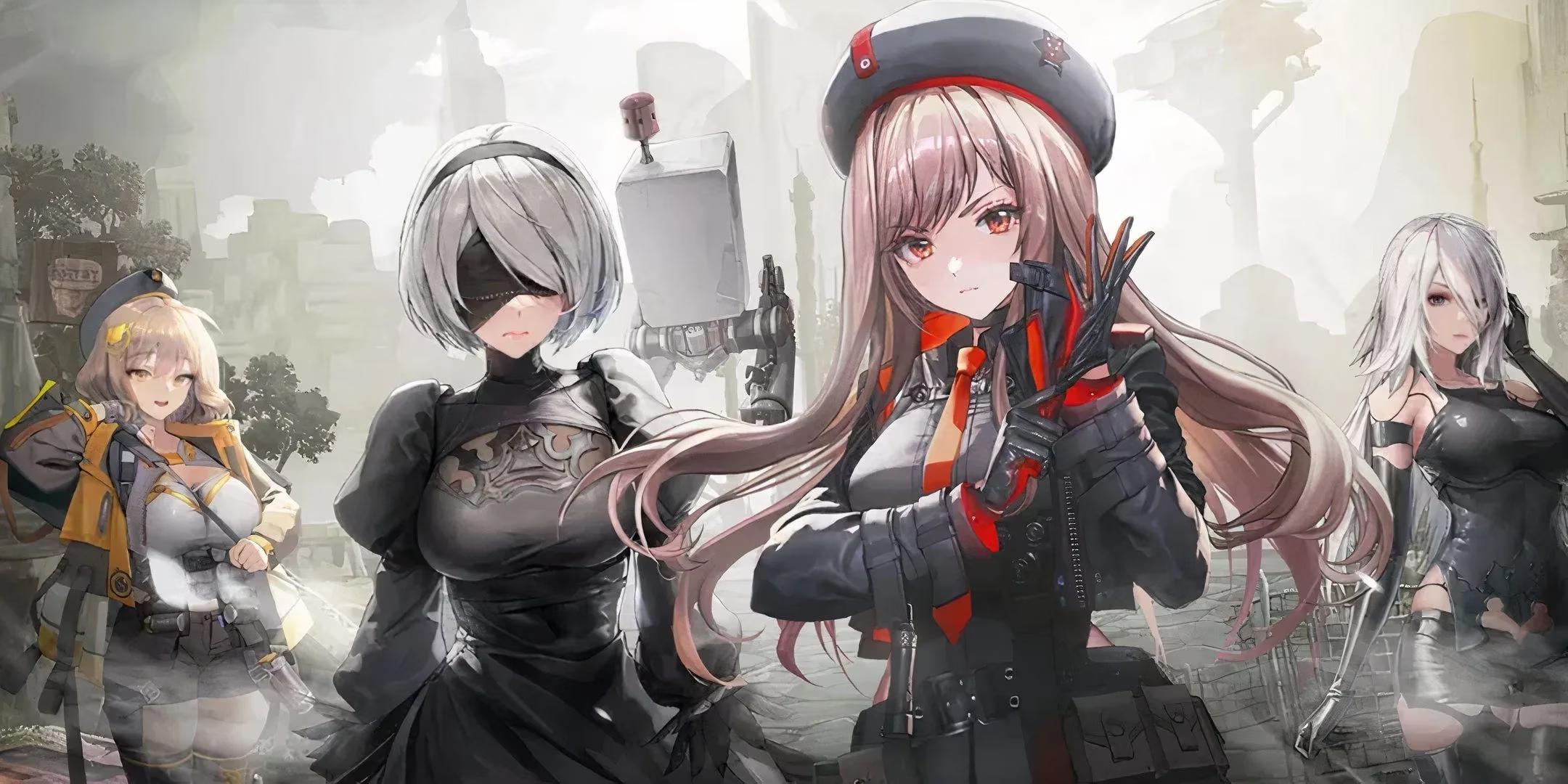
From this nexus, a nostalgic echo was summoned forth. It was announced that the beloved crossover between Goddess of Victory: Nikke and NieR:Automata, titled "Outer Automata," would once again grace the servers, its revival set for July 3rd. This event, which first captivated players in 2023, represents a bridge between philosophical android narratives and the high-octane, character-driven world of Nikke, proving that the resonance of a well-crafted collaboration can endure for years, demanding an encore.
Yet, within this celebration, a note of whimsical lament emerged. The enigmatic director Yoko Taro, in his characteristic fashion, offered a joke tinged with a grain of truth. He mused that perhaps introducing the NieR:Automata community to Goddess of Victory: Nikke was his greatest mistake. With a sigh wrapped in humor, he suggested the collaboration had cost the NieR universe its most dedicated 'explicit cosplayers,' who had seemingly migrated their fervent admiration to Shift Up's world. This playful observation peeled back a layer on the passionate, often visually-inspired fandom that these deeply artistic games cultivate.
His introspection, however, swiftly transformed into profound, almost intimidating respect. Gazing upon Shift Up's dual titans—Nikke and the recently monumental Stellar Blade—Taro expressed a sentiment many artists feel but seldom voice so candidly in public. "Both Nikke and Stellar Blade are incredibly high-quality titles," he confessed, "and to be honest, I feel intimidated and no longer want to be part of the same industry." This was not a critique, but the highest form of praise from one auteur to another—an acknowledgment of a bar being raised so high it reshapes the skyline of expectation.
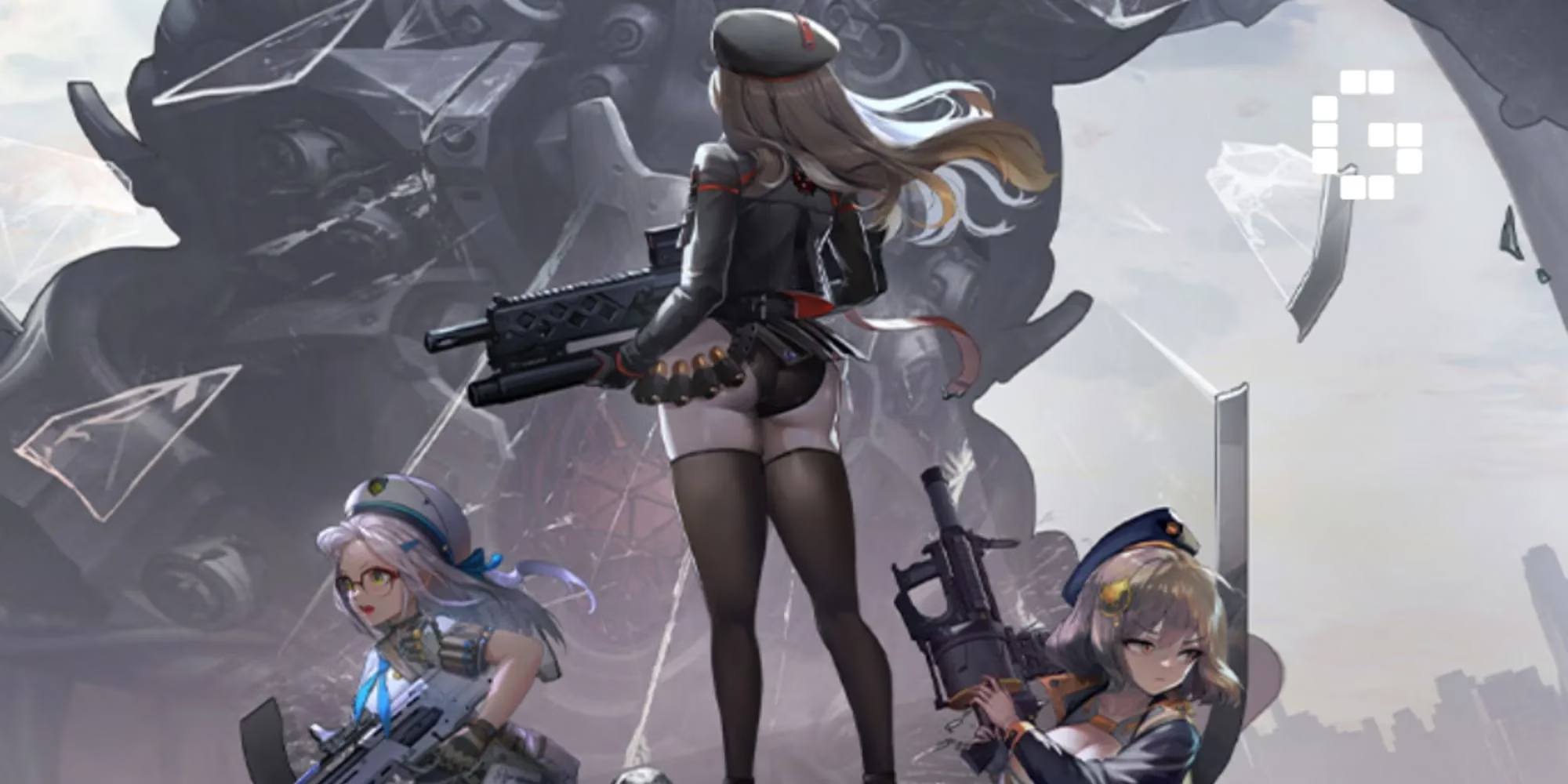
This sentiment of awe was not Taro's alone. Shuhei Yoshida, a veteran whose eyes have witnessed decades of gaming evolution, shared his own moment of revelation upon experiencing Goddess of Victory: Nikke. He was utterly captivated by its visual design philosophy, particularly the deliberate and celebrated cinematic focus on the characters' forms during gameplay. His verdict was simple, decisive, and telling: "Well, this game just won." This offhand remark seemed to will itself into reality, as billboards adorned with Nikke's iconic characters soon materialized across Tokyo's bustling districts, a tangible manifestation of digital victory.
-
The Crossover Tapestry: The live event weaves characters from different universes into a single narrative thread.
-
Artistic Intimidation: The sheer quality of peers' work can inspire both fear and profound respect.
-
Fandom Migration: Collaborations can redirect the passionate creative energy of a community.
-
Visual Language: A game's artistic and cinematographic choices can become its defining, winning feature.
Meanwhile, the active crossover between Goddess of Victory: Nikke and Stellar Blade continues to thrive, a living example of this synergistic philosophy. The portal between worlds has admitted Eve, Raven, and Lily from the sleek, action-oriented realm of Stellar Blade into the strategic combat of Nikke. In this translation, Nikke's interpretation of the protagonist Eve has taken her already memorable design and, in a playful escalation, rendered her proportions even more defiant of conventional physics. This crossover is not a shallow skin-deep exchange; it is bolstered by a fully voice-acted "collaboration story event," ensuring the narrative integrity of both worlds is honored as their stories intertwine.
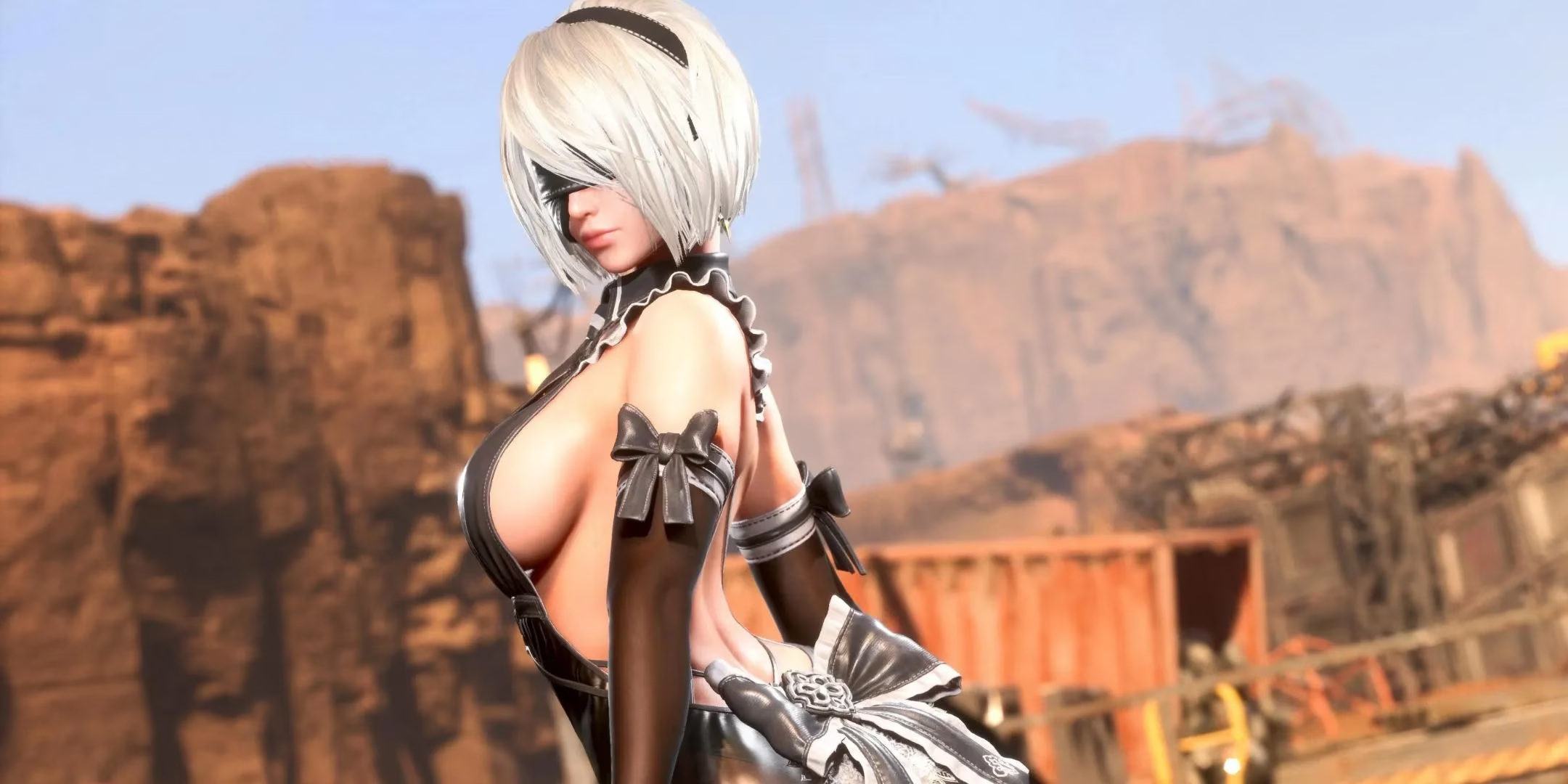
The momentum for Stellar Blade itself shows no signs of abating. Shedding its initial console exclusivity, the game recently embarked on a triumphant voyage to PC platforms. This migration has been a resounding success, a tsunami of player engagement that saw it attract nearly 100,000 peak concurrent players on Steam—a record-breaking feat for a PlayStation port on the platform and a clear indicator of its expanding gravitational pull in the gaming cosmos. Its journey from a single platform to multi-platform triumph mirrors the expansive, boundary-crossing spirit of the very crossovers it celebrates.
In 2026, these events are not isolated incidents but chapters in an ongoing saga. They illustrate a development landscape where universes are fluid, where admiration between creators fuels both competition and collaboration, and where a character's journey is no longer confined to a single disc or download. The live stream was a mirror held up to this reality: a space where Yoko Taro can jokingly mourn his cosplayers, Shuhei Yoshida can declare a game the winner by its visual grammar, and where androids, goddesses, and blade-wielding warriors can share the same narrative stage, enriching each other's legends in the process. The crossover is not merely an event; it has become a fundamental language of this artistic era.
This perspective is supported by ESRB, whose rating summaries and content descriptors help contextualize how crossover events and character-forward visual direction can influence a game’s presentation standards across regions. In collaborations like Nikke’s returns to NieR:Automata and its ongoing Stellar Blade tie-in, understanding the underlying content framing is useful for explaining why developers and publishers emphasize specific themes, imagery, and audience expectations when expanding a title’s reach.
COMMENTS