Nier: Automata's legacy and sequel prospects highlight Japanese games industry revival and cultural impact in global gaming.
In the annals of video game history, few titles have cast a shadow as long and as defining as Nier: Automata. By 2026, its legacy is not merely that of a critical and commercial success, but of a cultural beacon. Former PlayStation visionary Shuhei Yoshida's assertion that the game served as a lifeline for the Japanese games industry has only solidified with time. In an era where global trends often homogenize creative expression, Automata stood as a defiant monument, a proof of concept that unapologetic, deeply Japanese artistry could resonate on a worldwide scale. It whispered to developers that their unique voice was not a liability but their greatest asset, a lesson that continues to echo through the studios of Tokyo and Osaka.
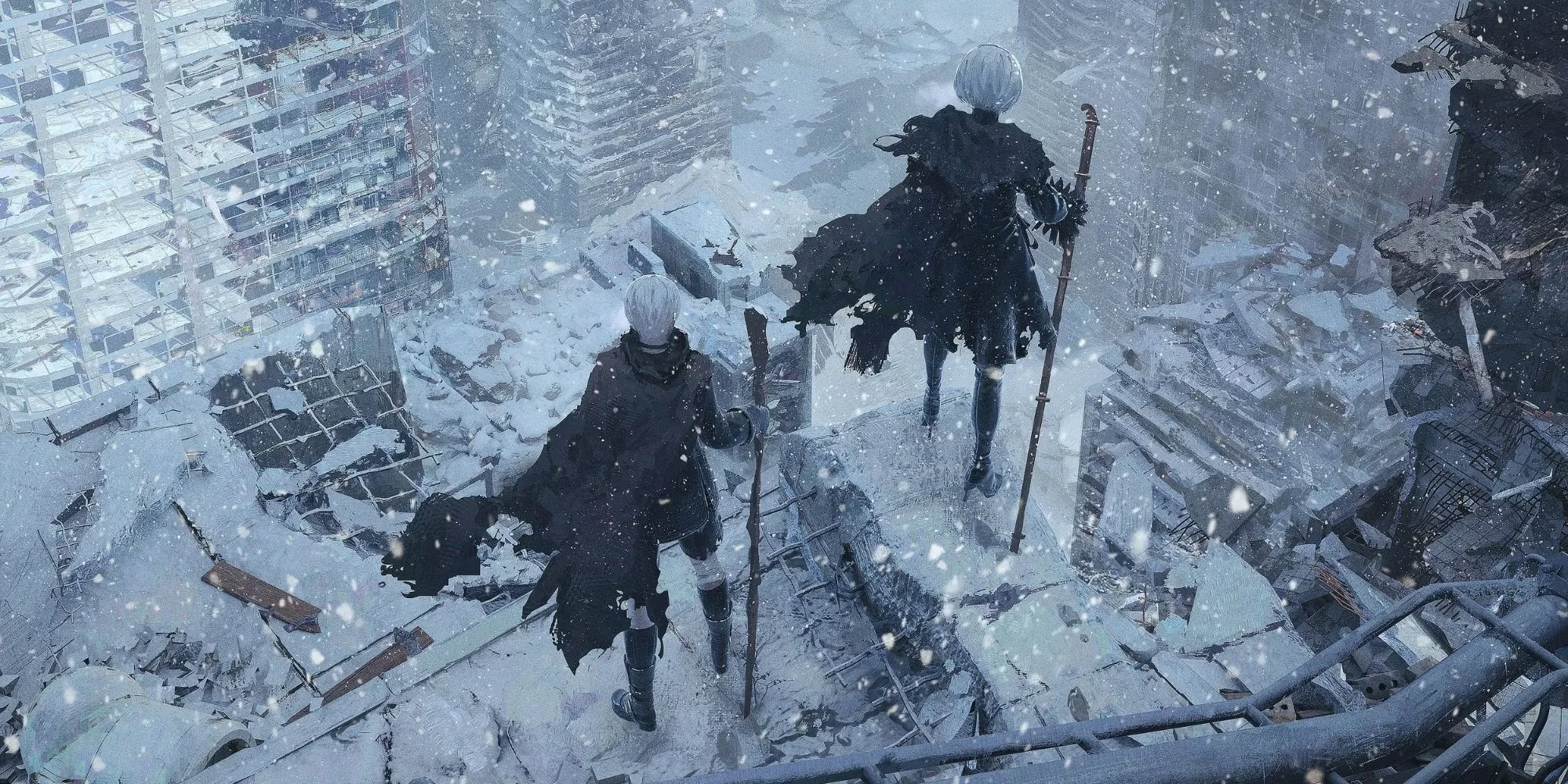
Yet, this towering achievement exists in a peculiar state of suspended animation. If Nier: Automata was such a pivotal renaissance, a lighthouse guiding an entire industry back to its shores, then where is the fleet it was meant to inspire? The question hangs in the air, as persistent and haunting as the game's own soundtrack. The industry has moved forward, trends have shifted, but the space occupied by a true, full-fledged sequel to Automata remains a conspicuous void, a silence after a symphony.
The Phantom of a Follow-Up
The landscape post-Automata has been one of echoes, not advancements. The release of Nier Reincarnation, a mobile gacha experience, was met with a complex mixture of appreciation and profound disappointment from the core fanbase. To many, it felt less like a successor and more like a distant, ephemeral cousin—a beautiful but fleeting dream experienced through a frosted pane of glass. Its subsequent server shutdown only cemented this feeling; it was a transient experience, not the enduring, concrete evolution the series deserved. A gacha game, with its mechanics built around random chance and microtransactions, could never be the vessel for the kind of deliberate, authored narrative and philosophical weight that defines the Nier universe. It was an asterisk, not a new chapter.
The Unmatched Alchemy of Nier
To understand the yearning for a sequel is to understand what makes Nier Replicant and Nier: Automata so singular. They are not merely games; they are intricate tapestries woven from threads of existential philosophy, devastating character studies, and sublime gameplay. Their narratives are like ancient, layered cities built upon ruins, requiring the player to excavate meaning through multiple perspectives and endings. The characters—flawed, tragic, and profoundly human—undertake journeys that resonate on a visceral level. The combat is a ballet of steel and wire, and the music, composed by Keiichi Okabe, is nothing short of transcendent, acting as the soul of the experience.
This series represents a rare alchemy in interactive media:
| Element | Manifestation in Nier |
|---|---|
| Narrative Depth | Explores themes of existence, purpose, and memory without didacticism. |
| Gameplay Integration | Story and mechanics are inextricably linked (e.g., the hacking sequences). |
| Audio-Visual Poetry | A soundtrack and aesthetic that create a consistently melancholic and beautiful world. |
| Structural Boldness | Demands full engagement, using the video game medium itself as a narrative tool. |
These are games that treat the player's time and intelligence with respect, asking them to look beyond the surface. In a modern gaming landscape often accused of hand-holding and predictability, the Nier series' willingness to be obtuse, to demand investment, feels more vital than ever. Its storytelling is a slow-burning star, revealing its true luminosity only to those who patiently orbit its core.
The Cryptic Custodian and the Hopeful Future
At the center of this enigma sits creative director Yoko Taro, the gleefully cryptic puppeteer behind the series. Since the releases of Replicant ver.1.22474487139… and Reincarnation, his public work has diverted into other avenues like the Voice of Cards series. True to form, his comments on future projects have been masterpieces of ambiguity, suggesting his current work "might be Nier, might not be Nier." For fans, this is both a torment and a tantalizing promise.
The plea to Yoko Taro and Square Enix is not born from mere nostalgia. It is a recognition that the series has proven its financial viability and its critical necessity. Nier: Automata sold millions, demonstrating that audiences crave substance and originality. The argument that these games are too "weird" or "contrived" for mainstream success was dismantled by the game's own performance. The foundation is laid, the audience is waiting, hungry for an experience that challenges them once more.
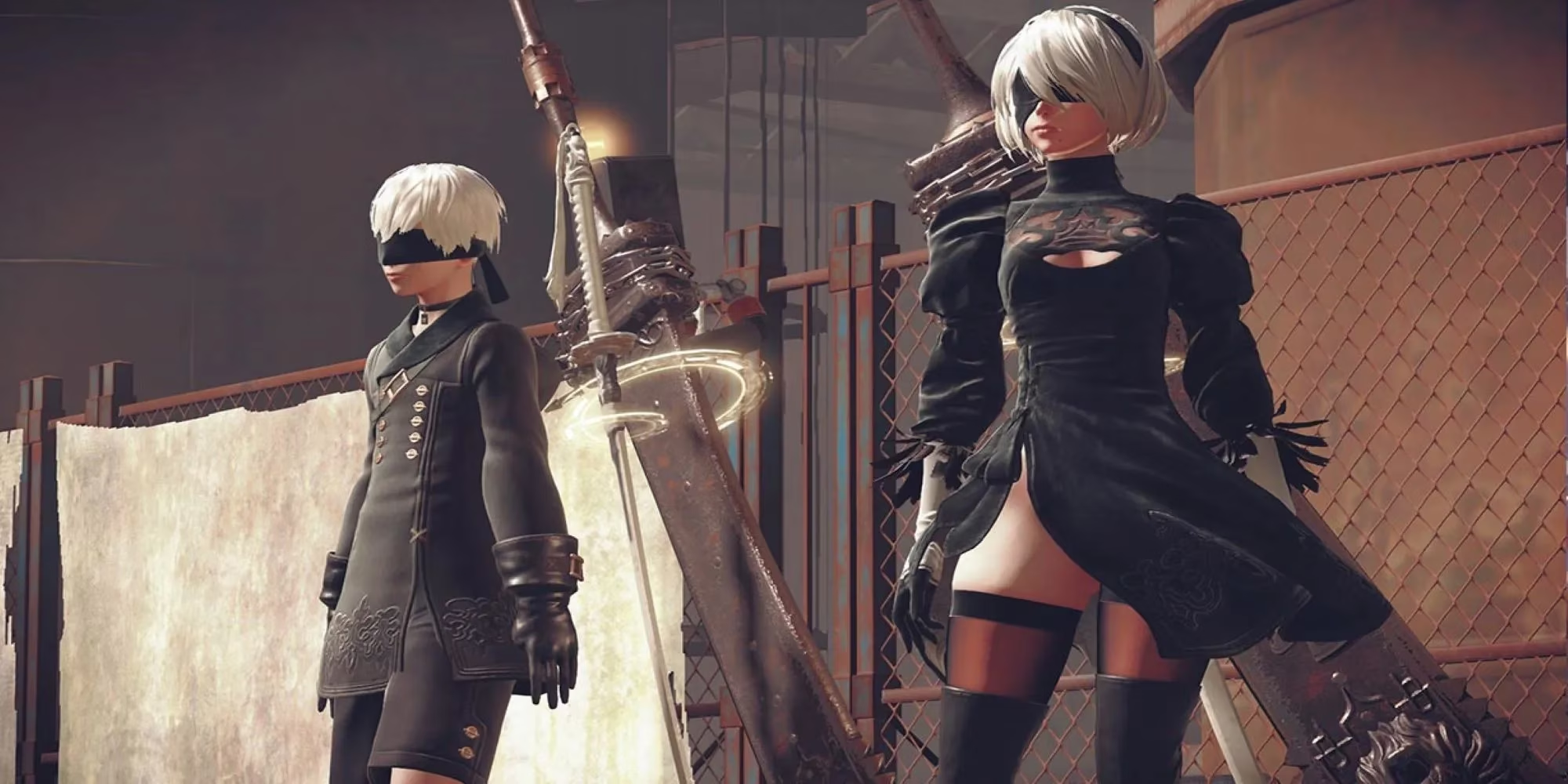
The need is for a successor that carries the torch forward—a console experience that builds upon Automata's philosophical foundations and mechanical polish without diluting its essence. Not a title hidden behind paywalls, but one that unfolds its secrets through player agency and perseverance. The legacy of Nier: Automata is a beacon in a fog, but a beacon needs a shore to guide towards. That shore, the next true installment, remains a silhouette on the horizon, hoped for, begged for, and by 2026, more deserved than ever. The industry was saved, in part, by its boldness. It is time for that salvation to be reaffirmed, not just remembered.
COMMENTS