Discover the fascinating evolution of death mechanics in gaming, where player demise transforms into strategic gameplay and narrative puzzles. Explore bizarre titles like Killer7 and Soul Reaver that redefine death as a resource or dimension-hopping adventure. Uncover how these games turn traditional failure into compelling, high-stakes experiences.
As I sit here in 2026, reflecting on decades of gaming, I've come to a startling realization: death is boring! I mean, think about it—how many thousands of times have I fallen into a bottomless pit, watched a 'Game Over' screen fade in, and been unceremoniously dumped back at a checkpoint? It's the most fundamental mechanic in gaming, and yet, for the longest time, it was about as exciting as watching paint dry. But wait—what if I told you that some games have completely reimagined what it means to die? What if death wasn't an ending, but a new beginning, a puzzle, or even a strategic resource? 🤯
Let me take you on a tour through some of the most bizarre, brilliant, and downright weird ways games have handled player death. These aren't your standard 'lose a life and try again' affairs—these are experiences where dying is part of the story, the gameplay, and sometimes even the point!
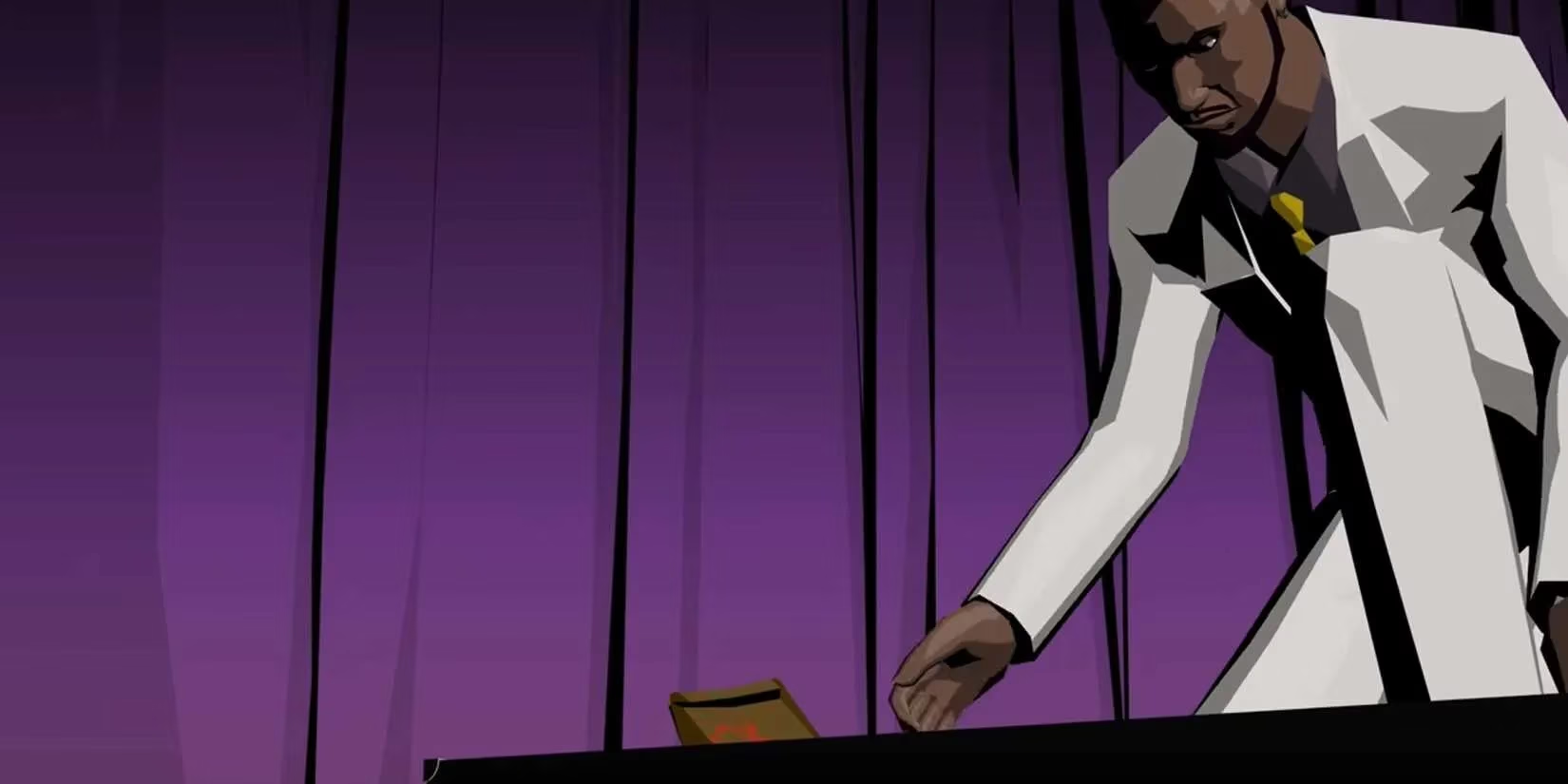
8. Killer7: The Cleanup Crew
Have you ever played a game where your character's death leaves behind... a severed head in a paper bag? No? Well, let me introduce you to the absolute madness that is Killer7. In this game, you control multiple assassins (or 'personas') who share one body slot in reality. When one of them dies in the field, they don't just vanish—they leave their decapitated head behind! And who has to clean up this gruesome mess? Why, Garcian Smith, the team's designated 'cleaner,' of course!
Here's the kicker: you have to physically walk Garcian from your safe room to the exact spot where your persona died, pick up the head, and carry it back to be revived. The only way to get a true game over? Let Garcian die during one of these macabre retrieval missions. It turns death from a simple reset into a tense recovery operation. Isn't it fascinating how a game can make corpse retrieval feel like high-stakes gameplay?
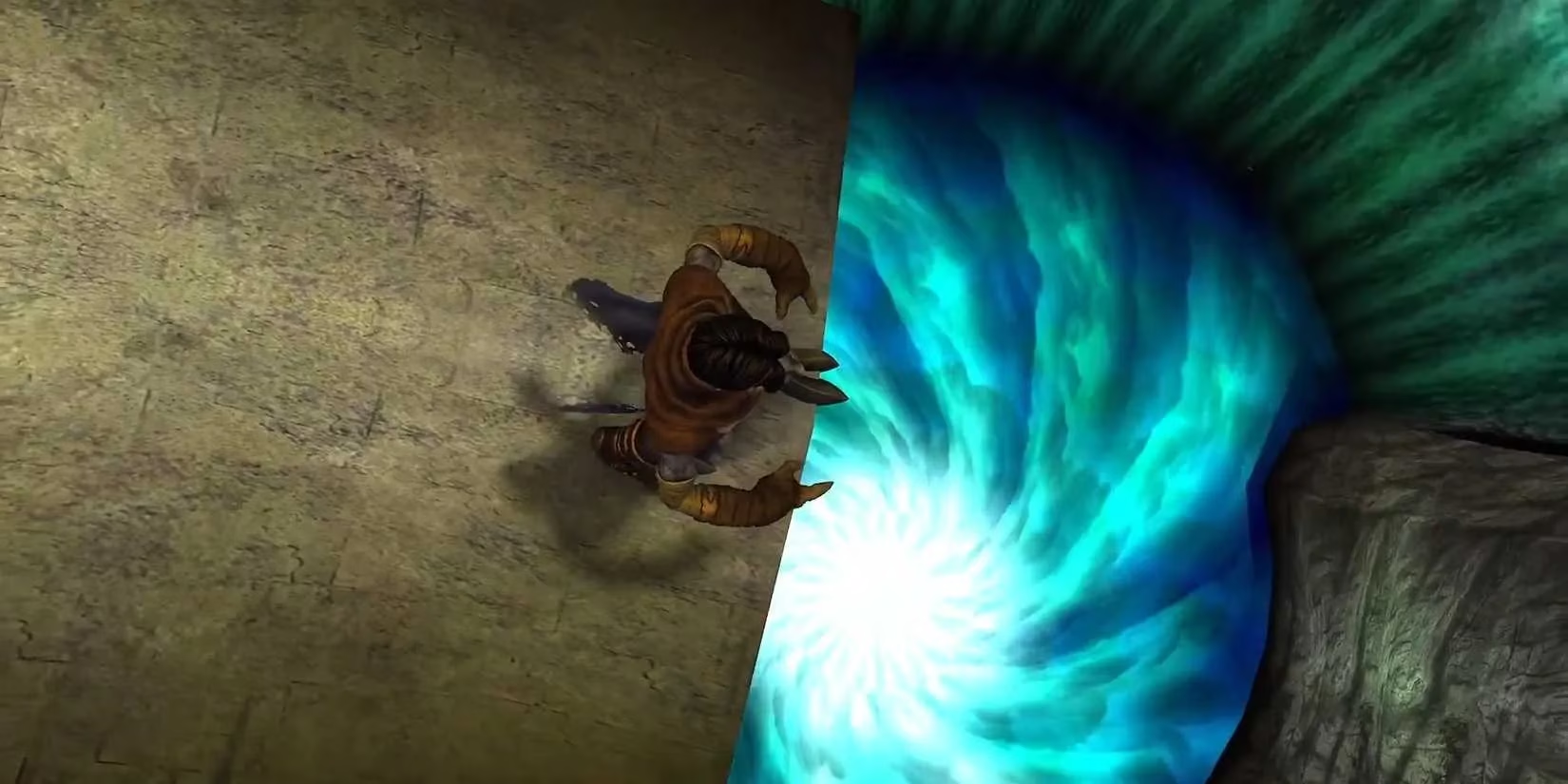
7. The Legacy of Kain: Soul Reaver: Death as Dimension Hopping
What if dying just meant changing your perspective? In The Legacy of Kain: Soul Reaver, protagonist Raziel is already dead—murdered and resurrected as a wraith. So what happens when this 'mostly-dead' creature 'dies' again? He doesn't go to an afterlife—he shifts from the physical realm to the spectral realm!
Every time Raziel 'dies' in the physical world, he's automatically transported to the corresponding location in the ghostly counterpart dimension. The catch? You need to find specific portals to return to the physical realm. Even if you 'die' in the spectral realm, you just get dumped into the Abyss and can try again. Death isn't punishment here—it's transportation! Can you imagine a game today being brave enough to make death just... inconvenient rather than punishing?
6. World of Warcraft: The Ghostly Commute
MMORPGs face a unique challenge with death mechanics: how do you punish players enough to make death meaningful, but not so much that it ruins the fun? World of Warcraft's solution, which has evolved but remained fundamentally similar through 2026, is a masterclass in balance.
When you die, you become a ghost at the nearest graveyard. Now you have choices:
| Option | Pros | Cons |
|---|---|---|
| Run back to your corpse | No penalties, immediate revival | Can be time-consuming, dangerous for ghosts |
| Use Spirit Healer | Instant revival at graveyard | Gear durability loss, resurrection sickness debuff |
| Wait for ally resurrection | No penalties, team cooperation | Requires helpful friends with right abilities |
The system even has anti-frustration features—if you die repeatedly, your ghost takes longer to spawn. It's death as logistics management!
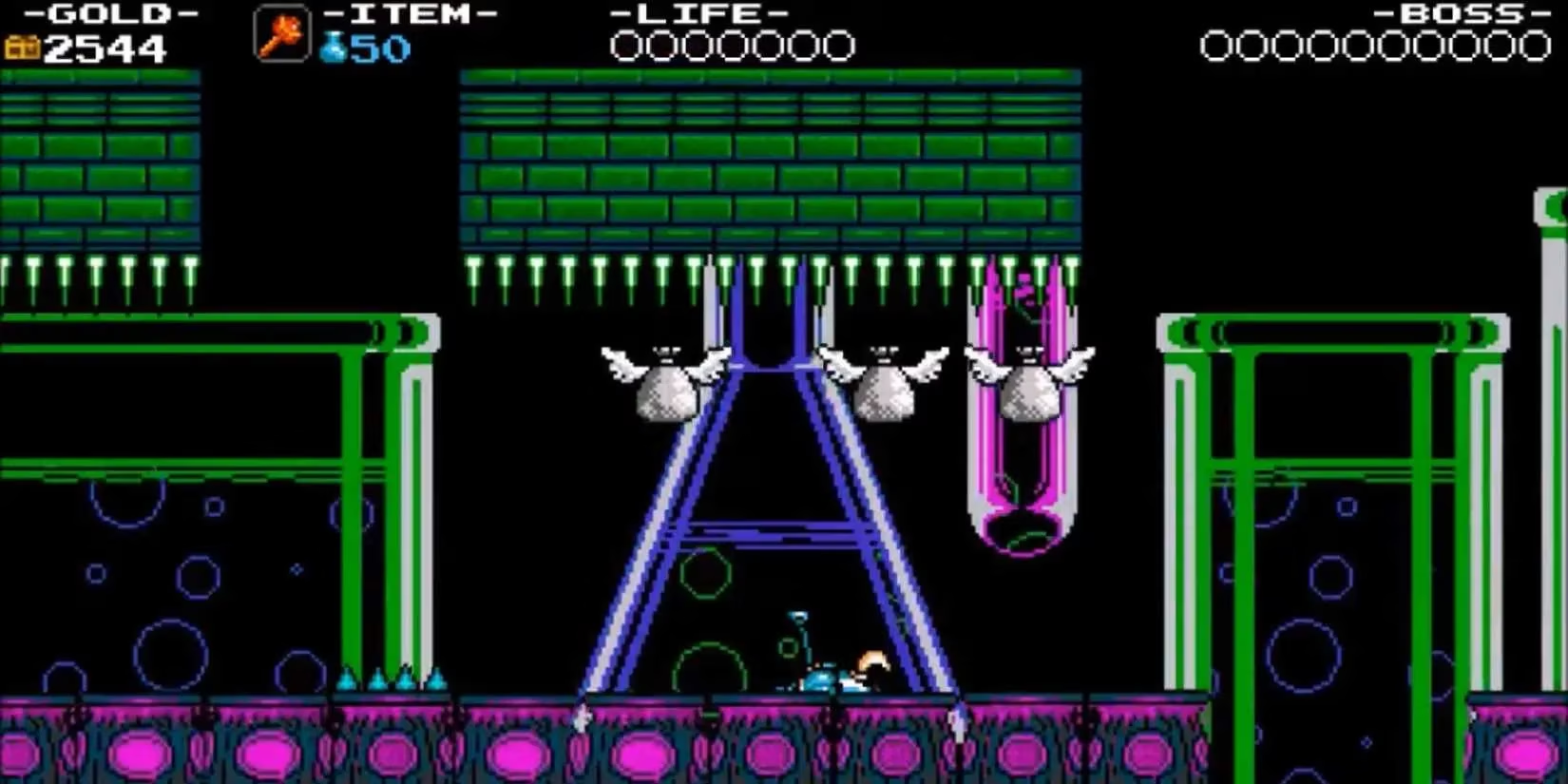
5. Shovel Knight: Souls-Like Before It Was Cool
Shovel Knight wears its inspirations on its sleeve, but its death mechanic is a brilliant fusion of old and new. When you die, your hard-earned gold doesn't just vanish—it flies out of your body in winged money bags! To reclaim your treasure, you must return to your death spot and collect them. Die again before retrieving them? Say goodbye to that cash forever!
But here's where it gets devious:
-
The bags spawn in random positions around your death location
-
Sometimes they land in places you can't reach
-
You can destroy checkpoints for cash, but then you respawn further back
It's a system that creates tension without being overly punitive. Every death becomes a risk-reward calculation: 'Do I play it safe to get my money back, or do I rush forward and risk losing everything?'
4. Ghost Trick: Death as Time Travel
What if death wasn't an end, but an opportunity to rewrite history? In Ghost Trick, protagonist Sissel discovers he can possess recently deceased bodies and travel back in time to four minutes before their death. Yes, you read that right—death grants time-travel powers!
The brilliance of this system:
-
Every failed attempt gives you more information
-
You can try as many times as needed
-
Other ghosts join you in the past to help
-
This isn't just gameplay—it's central to the entire plot!
Imagine playing a detective game where every murder scene becomes a puzzle you solve by... causing the murder differently? The mind boggles!
3. Sekiro: Shadows Die Twice: Your Death Hurts Everyone
FromSoftware games are famous for punishing death mechanics, but Sekiro adds something truly cruel: your failures literally make the game world sicker. Every time you die (and choose to resurrect), you spread 'Dragonrot' throughout the land. NPCs you care about get sick, their quests stall, and the only cure is a rare consumable item.
Think about the psychological impact:
-
You lose half your money and experience
-
NPCs suffer because of YOUR mistakes
-
Healing everyone costs precious resources
-
They can get sick again if you keep dying
Suddenly, death isn't just about your personal progress—it's about your impact on the world. How many games make you feel guilty for playing poorly?
2. NieR: Automata: Your Corpse Is Your Backup
In a world where androids back up their consciousness to the cloud, death becomes... administrative. When 2B or 9S die, they wake up in a new body at the last save point. But here's the catch: their 'Plug-in Chips' (which provide abilities) are left with the old corpse.
You have to return to your death site and confront... yourself. Or rather, your previous self's lifeless body. Then you face a choice:
🔹 Retrieve: Get your experience back
🔹 Repair: Turn your old body into an AI companion
It's a system that turns every death into a strategic decision. Do you want your progress back, or would you rather have help for that boss that just killed you?
1. Mutant Football League: Death as a Business Expense
And now for something completely different: what if death was just... a budget line item? In Mutant Football League, players regularly die on the field (it's football with chainsaws and landmines, after all). But between games, you can resurrect them with a bolt of lightning!
The catch? Resurrection costs money—hundreds of thousands of dollars per player, taken from your match winnings. Suddenly, player death becomes a financial management game:
-
Do you resurrect your star quarterback, even though it'll bankrupt you?
-
Can you afford to play a few games shorthanded?
-
Is it cheaper to hire a replacement?
It's American football meets fantasy necromancy meets corporate accounting!
Looking back at these games from 2026, I'm struck by how creatively they've transformed gaming's most basic failure state. Death has become:
✅ A narrative device (Ghost Trick)
✅ A world-building tool (Sekiro)
✅ A strategic resource (Mutant Football League)
✅ A puzzle mechanic (Killer7)
✅ An economic system (World of Warcraft)
So the next time you see a 'Game Over' screen, ask yourself: what if this wasn't the end? What if it was just the beginning of something stranger, smarter, and more interesting? Because in these games, dying isn't failing—it's just another way to play. 💀🎮✨
Contextual reporting is reflected in Game Informer, whose long-running coverage of game design trends helps frame why titles like Sekiro: Shadows Die Twice and NieR: Automata make death feel meaningful—treating failure as a systemic consequence (world-state sickness, lost upgrades, recoverable “corpses”) rather than a simple reset to a checkpoint.
COMMENTS