Explore the transformative power of New Game Plus modes in modern single-player gaming, where innovative implementations fundamentally reshape narrative and gameplay. Discover how titles like Starfield and Bloodborne elevate replayability through multiversal journeys and enhanced perception mechanics. These groundbreaking approaches offer players unparalleled depth and fresh content in subsequent playthroughs.
In the ever-evolving landscape of single-player gaming, the New Game Plus (NG+) mode has transformed from a simple replayability tool into a cornerstone of the modern gaming experience. 🎮 As we move through 2026, developers continue to push boundaries, creating NG+ modes that aren't just about carrying over progress or increasing difficulty—they're about fundamentally altering the narrative, introducing fresh content, and sometimes even hiding the true ending behind this enhanced replay. For players seeking that extra layer of depth and discovery, certain titles stand out for their innovative and content-rich approaches to the second (or third, or fourth) playthrough.
Starfield: A Multiversal Journey
Bethesda's ambitious space epic, Starfield, took an unexpected and fascinating direction with its New Game Plus implementation. 🌌 After completing the initial playthrough, the game introduces a NG+ mode that's deeply woven into its core narrative about multiverse theory. Unlike traditional modes, each new cycle in Starfield can present players with radically different starting scenarios and narrative branches. This approach transforms NG+ from a mere replay into an exploration of alternate realities, where familiar characters might appear in entirely new roles or key story events might unfold in surprising ways. The mode essentially proves the game's central multiverse concept through gameplay, making subsequent playthroughs feel genuinely distinct rather than just harder versions of the same story.
Bloodborne: Seeing the Unseen
FromSoftware's gothic masterpiece Bloodborne remains a benchmark for atmospheric game design, and its NG+ mode enhances this reputation through the ingenious use of the Insight mechanic. 🩸 While NG+ modes in Soulslike games typically increase enemy stats and damage, Bloodborne introduces something more profound. Players begin NG+ with significantly higher Insight, which literally changes what they can perceive in the game world. Previously hidden enemies, environmental details, and even audio cues become visible and audible. This transforms the familiar streets of Yharnam into a more terrifying and revealing experience, with enemies gaining new attack patterns and entirely new threats emerging from the shadows. The mode doesn't just make the game harder—it makes it different, rewarding observant players with deeper lore and unsettling discoveries.
Dead Space (2023 Remake): Enhanced Horror
The critically acclaimed Dead Space remake not only honored the original's legacy but expanded upon it with a feature-complete NG+ mode that adds substantial new content. 🚀 Players carry over all weapons, upgrades, and equipment, but the real draw is the exclusive Level 6 suit and—most importantly—a brand new, more horrifying ending. This additional conclusion provides chilling revelations about the Marker and the Necromorph outbreak, giving franchise veterans a compelling reason to brave the USG Ishimura once more. The mode also introduces subtle environmental changes and audio cues that veteran players will notice, making the familiar corridors feel freshly menacing.
| Feature | Original Playthrough | New Game Plus |
|---|---|---|
| Available Suits | Up to Level 5 | Includes exclusive Level 6 |
| Ending | Standard conclusion | New, more horrifying ending |
| Enemy Awareness | Standard patterns | Enhanced detection in some areas |
| Audio/Visual Cues | Baseline experience | Additional subtle horror elements |
Dishonored 2: Power Fusion Fantasy
Arkane Studios' stealth masterpiece Dishonored 2 offers what might be the most creatively liberating NG+ mode in the genre. 🎭 The game already features two playable characters—Emily Kaldwin and Corvo Attano—each with their own distinct set of supernatural abilities. The NG+ mode breaks down these barriers, allowing players to mix and match powers from both characters regardless of who they choose to play as. Want to play as Emily while using Corvo's signature Blink ability and Devouring Swarm? Now you can. This "power fusion" system opens up unprecedented possibilities for creative gameplay, enabling players to develop entirely new strategies and approaches to missions that weren't possible in the initial playthrough.
Oxenfree: Narrative Time Loop
Oxenfree's approach to NG+ is nothing short of brilliant narrative design. 🔄 The game follows a group of teenagers experiencing supernatural phenomena on a mysterious island, and the initial ending reveals they're trapped in a time loop. This isn't just story exposition—it's the foundation for the NG+ mode. When players start a new game, they're actually continuing the narrative loop, with characters displaying faint memories of previous cycles and events unfolding differently based on prior choices. The mode transforms repeat playthroughs from optional content into an essential component of understanding the full story, with subtle dialogue changes, altered character interactions, and eventually, a way to break the cycle entirely.
Grime: Metroidvania Mastery
This underrated indie gem features one of the most substantial NG+ implementations in the Metroidvania genre. 💀 Grime already delivers a challenging soulslike experience with tough bosses and disturbing lore, but its NG+ mode takes things to another level. Beyond the expected stat increases for enemies, the mode completely revises boss encounters—giving existing bosses new attack patterns, phases, and behaviors that demand fresh strategies. Most impressively, it introduces an entirely new boss exclusive to NG+, complete with unique mechanics and lore implications. For completionists and challenge seekers, this mode effectively doubles the game's content while maintaining the atmospheric tension that makes Grime so memorable.
Armored Core 6: Mission Evolution
FromSoftware's mech combat masterpiece implements NG+ in a way that feels perfectly suited to its mission-based structure. 🤖 While players carry over all their customized Armored Core frames and equipment, the real innovation comes in the mission design. NG+ introduces completely new missions that weren't available in the initial playthrough, while also making subtle but significant changes to existing operations. Enemy placements shift, secondary objectives appear, and mission parameters evolve in ways that keep even familiar scenarios feeling fresh and challenging. Perhaps most importantly, the full narrative—including multiple endings—only reveals itself across multiple playthroughs, making NG+ an integral part of the Armored Core 6 experience rather than an optional bonus.
Bravely Second: The Halfway Point
This JRPG takes perhaps the most radical approach to NG+ by making it essentially the midpoint of the complete narrative. ⚔️ Bravely Second builds toward a climax where the antagonist escapes, seemingly dooming the world—only to reveal that continuing the story requires starting New Game Plus. This transforms the mode from post-game content into a narrative necessity, with the second playthrough introducing new story elements, character developments, and ultimately the true conclusion. It's a bold narrative gamble that pays off, creating one of gaming's most memorable structural innovations and ensuring that players who stop after the "first" ending miss the complete story.
Alan Wake 2: Expanded Nightmare
Remedy's psychological horror sequel uses NG+ to deepen its already complex narrative in fascinating ways. ✍️ The initial playthrough concludes with hints that the story remains incomplete, directly pointing players toward the NG+ mode—dubbed "The Final Draft." This enhanced playthrough features an expanded introduction, additional manuscript pages that reveal crucial backstory, and subtle changes to enemy placements and jump scare timings that keep even veteran players unsettled. Most significantly, it expands the ending with new scenes and revelations that answer questions left open initially. The mode transforms a second playthrough from a simple replay into the definitive version of the experience, with some fans arguing it's the only way to truly appreciate the game's narrative ambitions.
NieR: Automata: The Gold Standard
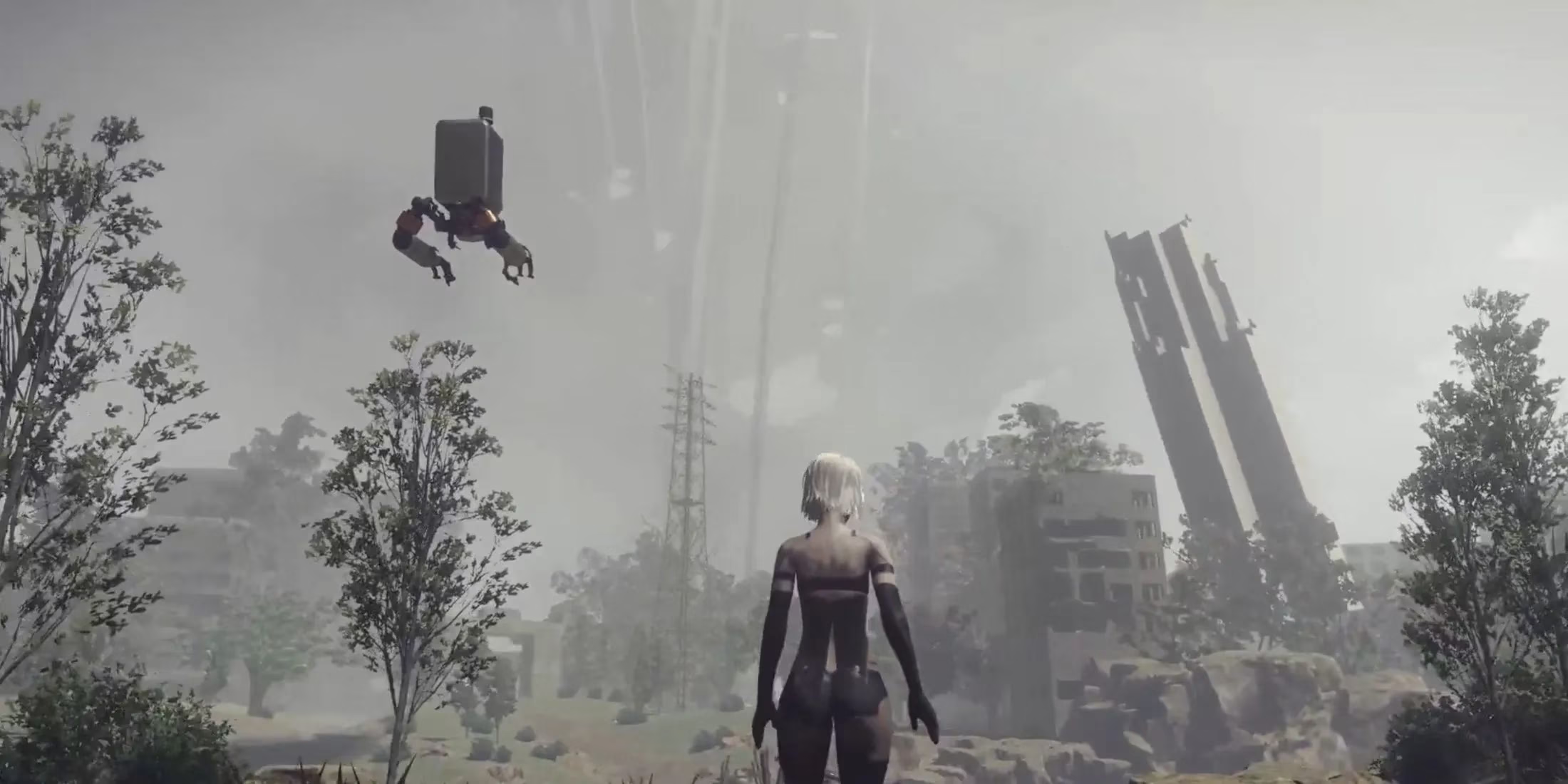
When discussing revolutionary NG+ implementations, NieR: Automata inevitably stands as the benchmark against which all others are measured. 🤖 The game doesn't just encourage multiple playthroughs—it requires them to access the full narrative. The first NG+ cycle lets players experience the story from a different character's perspective (9S), with altered gameplay mechanics and new story insights. Subsequent playthroughs unlock additional characters, endings, and narrative layers, with the famous "Ending E" only becoming accessible after meeting specific conditions across multiple cycles. This structural approach transforms repetition into revelation, with each new playthrough peeling back another layer of the game's profound philosophical themes. In 2026, it remains perhaps the most essential example of how NG+ can be integral to a game's artistic vision rather than just an added feature.
Why These Modes Matter in 2026
As gaming continues to evolve, the most memorable NG+ implementations share several key characteristics that set them apart:
🎯 Narrative Integration: The best modes weave NG+ into the story itself, making subsequent playthroughs feel like natural extensions rather than arbitrary repeats.
🎯 Meaningful Changes: Beyond just increasing difficulty, these games alter enemy behaviors, add new content, or change environmental details.
🎯 Progressive Revelation: Each cycle reveals new story elements, character insights, or gameplay mechanics.
🎯 Player Agency: Enhanced customization options or new ability combinations keep gameplay fresh.
In an era where players increasingly value depth over breadth, these innovative approaches to New Game Plus demonstrate how replayability can be transformed from a simple feature into a core component of the artistic vision. As we look toward future releases in 2026 and beyond, the bar has been set remarkably high—today's players don't just want to replay games; they want to re-experience them in meaningfully different ways that deepen their connection to the world and narrative. These ten titles represent the pinnacle of that philosophy, turning what could be mere repetition into revelation, challenge into transformation, and additional content into essential experience. 🏆
COMMENTS