Discover the most remarkable game sequels nobody asked for that ended up being incredible, as they shatter expectations and redefine gaming experiences. These unexpected follow-ups deliver unparalleled adventures that surpass their predecessors.
In today's gaming landscape where franchises and multiverses dominate, I often find myself appreciating developers who dare to take risks beyond established formulas. While some series like Darksiders or Assassin's Creed are designed from the ground up to continue, I've come to realize that the most remarkable sequels are often those nobody asked for. These unexpected follow-ups don't just meet expectations—they shatter them, delivering experiences that redefine what we thought possible from their predecessors. As I reflect on the games that have surprised me most, I'm reminded that sometimes the best gifts are those we never thought to request.
10. Dying Light: The Beast - A Return I Never Expected
Isn't it fascinating how time changes our expectations? After so many years had passed since The Following, I had completely lost hope of ever seeing Kyle Crane again. Yet here we are in 2025, with Techland delivering what might be the best adventure in the entire series. The paradox is delicious—while many felt the original ending was too open, after enough time passed, we stopped asking for closure. And that's precisely when they gave it to us.
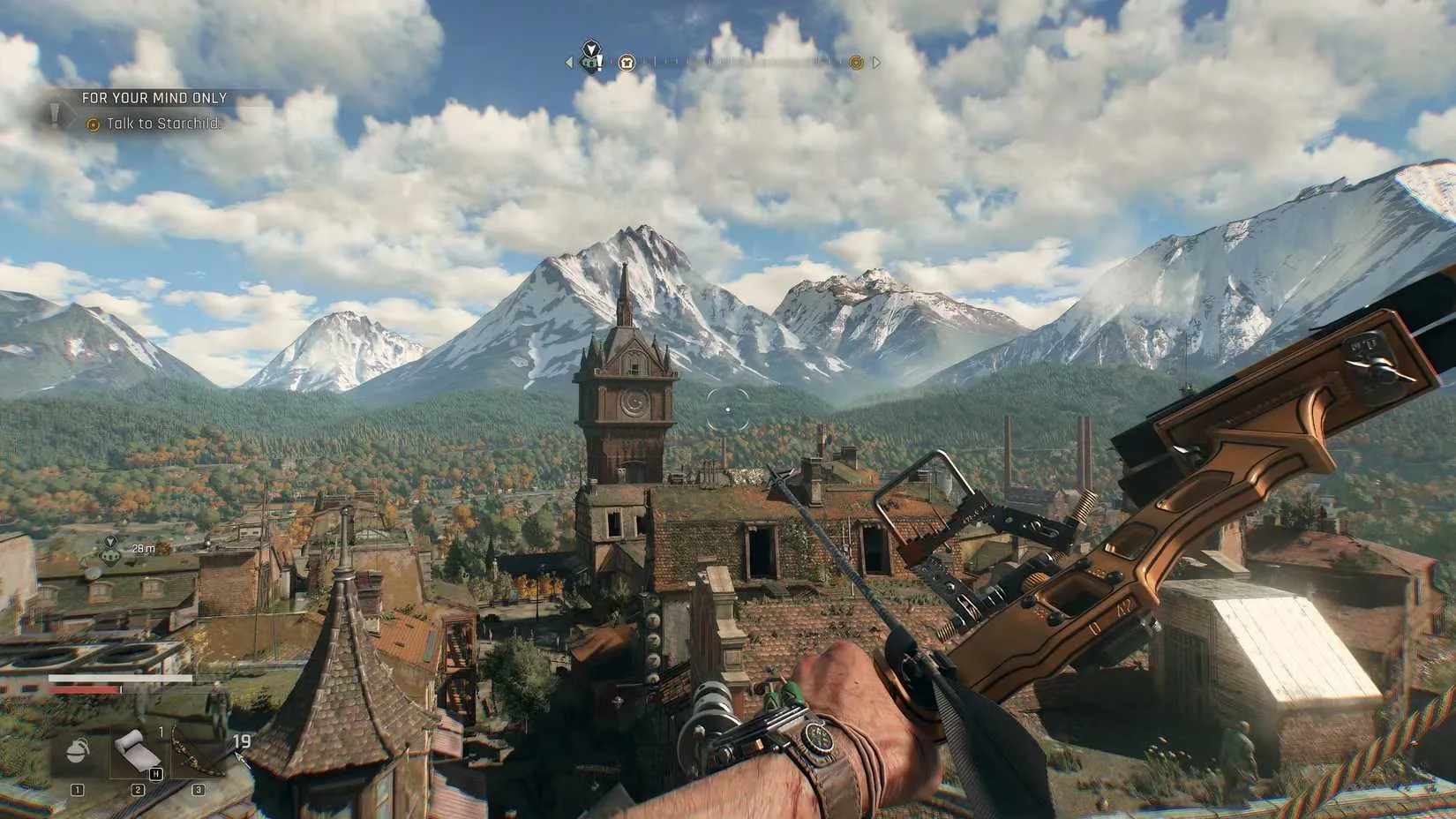
What makes The Beast so special? Let me count the ways:
-
🏙️ The most atmospheric world in the series
-
🏃 The smoothest parkour mechanics to date
-
🔫 Perfectly balanced gunplay
-
🌙 Truly terrifying night sequences
-
🎵 An unforgettable soundtrack
It's as if Techland took every lesson from their previous work and refined it to perfection. While I'll place it last on this list acknowledging there was technically demand once, I honor the new opportunity they gave Kyle Crane to find peace—and allowed us to accompany him on this final journey.
9. Sludge Life 2 - The Sequel That Shouldn't Exist
Those of us who experienced the original Sludge Life know two things: first, that predicting what you'll encounter is impossible, and second, that imagining a sequel was even more impossible. Yet here we are with Sludge Life 2, a sequel as unnecessary as it is wonderful. Who in their right mind would have asked for this? And yet, now that it exists, all we can do is appreciate it as the hilarious gem it is.
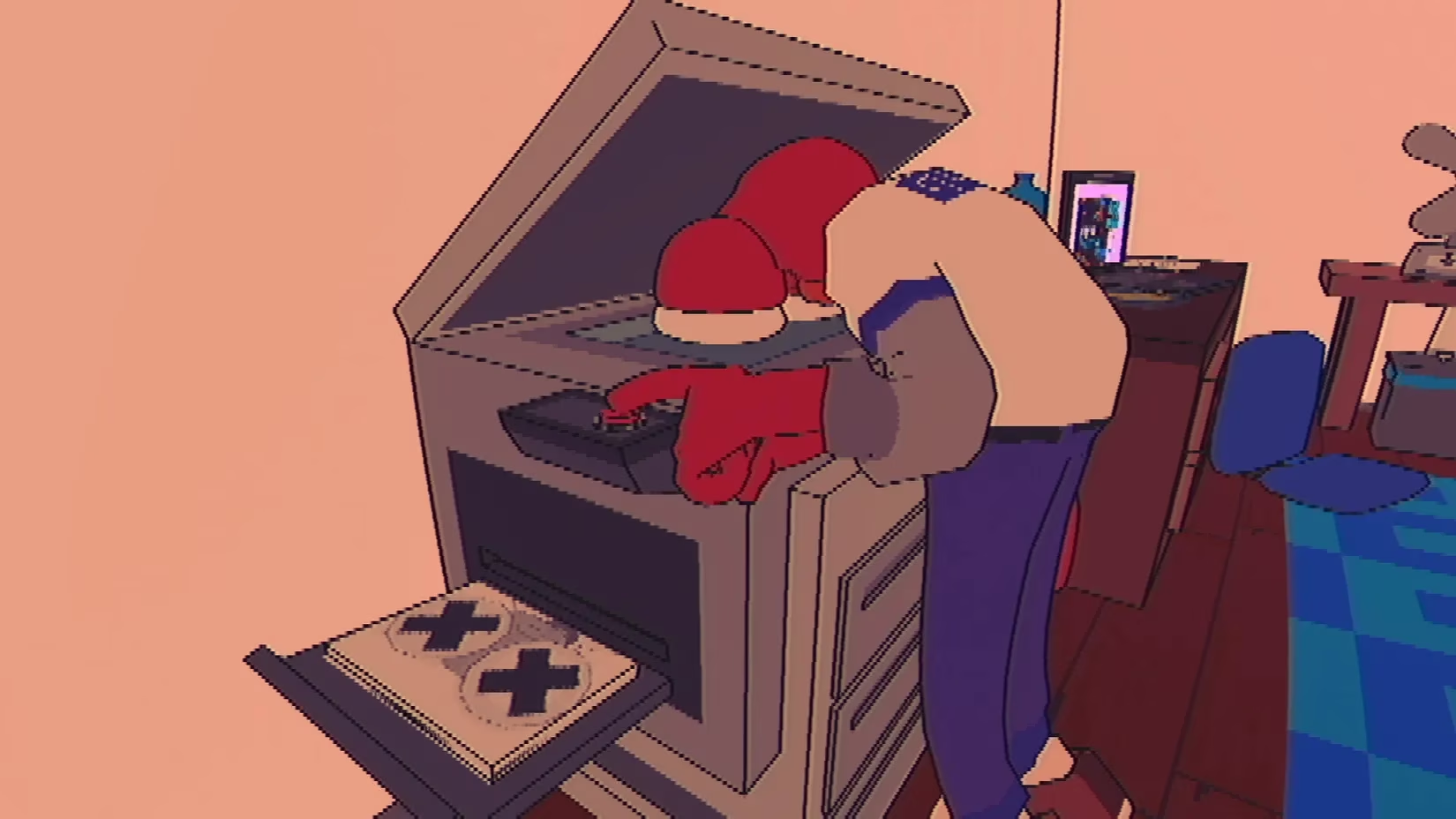
What makes this sequel work despite its apparent redundancy? Both games revolve around:
-
😄 Sharp comedy and social commentary
-
🏛️ Political and economic satire
-
🎨 Cultural observations
-
🌍 A uniquely murky world
Sludge Life 2 delivers its message in an even more compelling way than its predecessor, making it a delight to get lost in its bizarre universe. Sometimes, the best creative decisions come from ignoring what the community isn't asking for.
8. The Evil Within 2 - When Developers Are Given Freedom
Given Tango Gameworks' status as one of the most underrated studios of the last decade, I'm not surprised that The Evil Within went largely unnoticed. But I am shocked it received a sequel—and absolutely astounded by how superior The Evil Within 2 turned out to be. After the first game's ambiguous ending, how could they possibly expand this universe? Yet they did, and they did it masterfully.
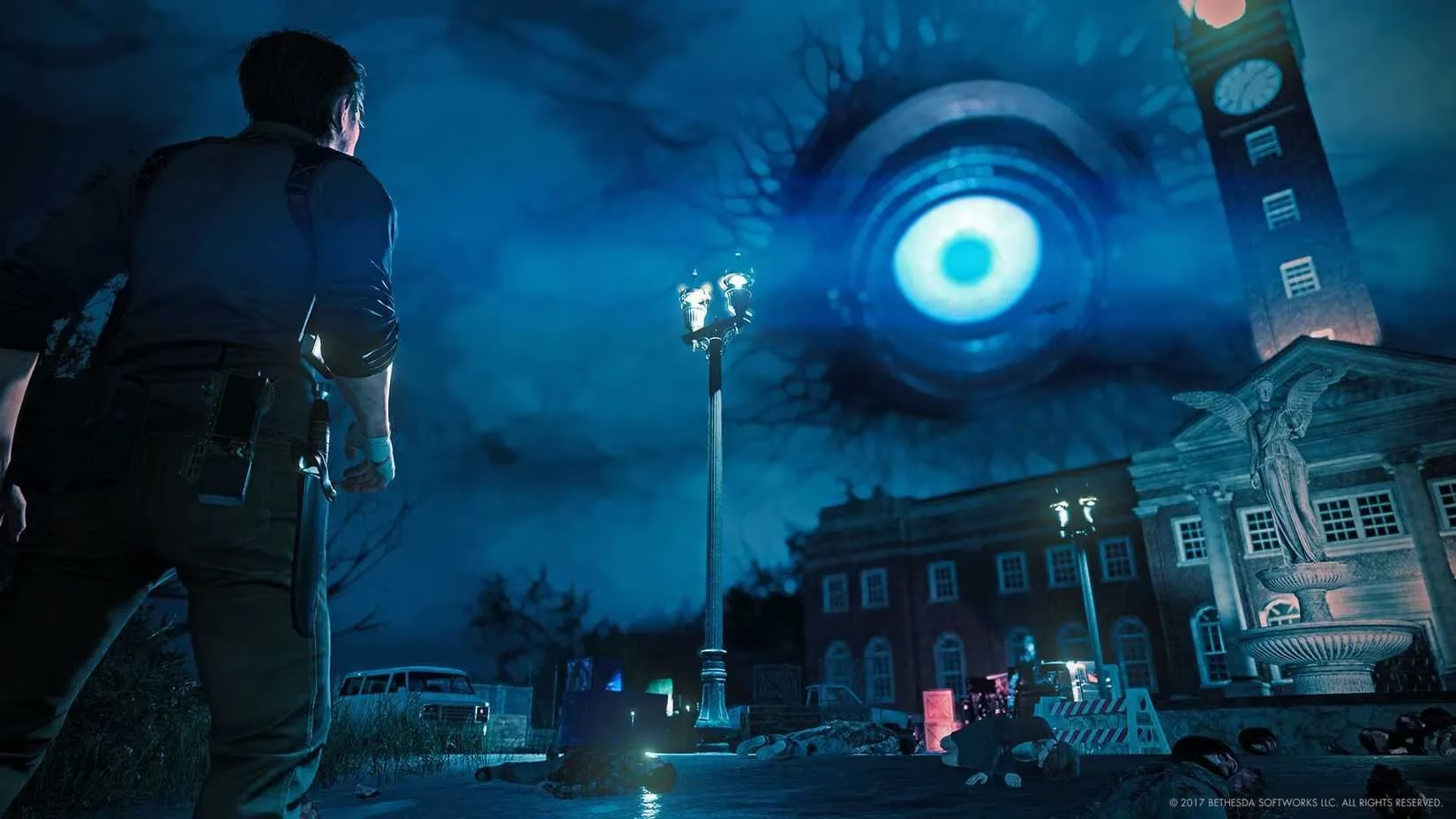
Consider every aspect:
| Aspect | Improvement Over Original |
|---|---|
| Story | More coherent and compelling |
| Exploration | Vastly expanded and rewarding |
| Direction | Cinematic and focused |
| Combat | Refined and strategic |
| Puzzles | More integrated and creative |
I genuinely believe there's nothing in The Evil Within 2 that doesn't represent a comprehensive improvement. It's a testament to what happens when developers are allowed to cook without pressure from fan expectations.
7. Ender Magnolia: Bloom in the Mist - Expanding Perfection
Ender Lilies: Quietus of the Knights was supposed to be just another review assignment for me, but it became one of the best indie games I've ever played. With its specific, well-constructed journey, I never thought a sequel was possible, let alone necessary. Yet Ender Magnolia: Bloom in the Mist arrived and opened my eyes in the best possible way.
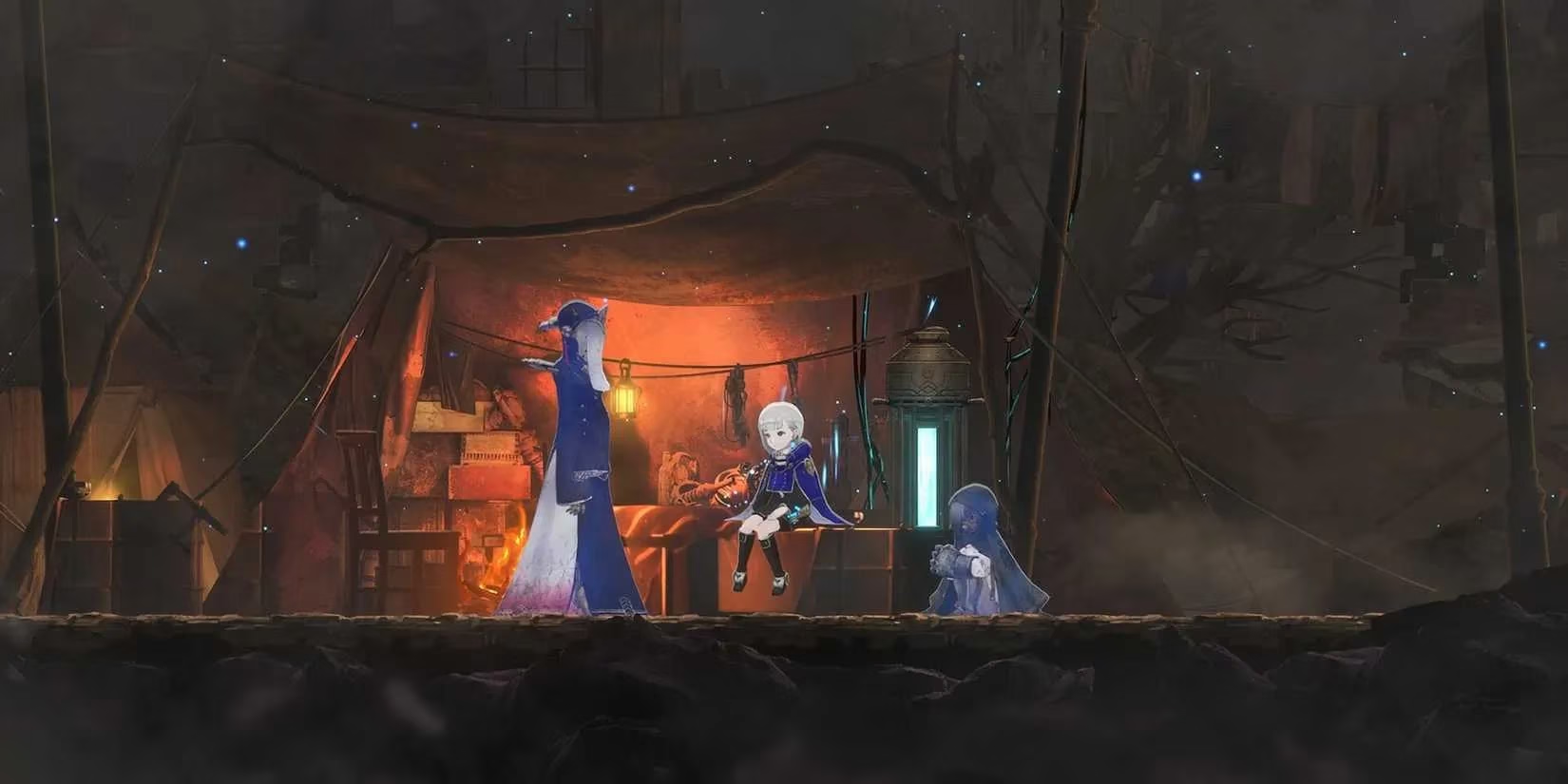
What makes this sequel work so well?
-
🔄 It updates everything that made Ender Lilies great
-
🌌 Expands the world to unimaginable horizons
-
🎨 Shows incredible creativity in worldbuilding
-
🎭 Maintains the melancholic beauty while refining it
While it didn't impress me quite as much as the first game (how could it, given the surprise factor?), Ender Magnolia amazed me in a much more challenging context—when I already knew what Binary Haze was capable of. Now I can talk about Ender as a series, and it's become one of my favorites.
6. Shinobi: Art of Vengeance - Resurrecting a Legend
How do you ask for a sequel to something that's been forgotten for years? Shinobi: Art of Vengeance stands as one of 2025's most pleasant surprises, not just because it modernizes a forgotten franchise, but because it's a marvel of game design that combines its 2D side-scrolling heritage with a Metroidvania structure that suits it perfectly.
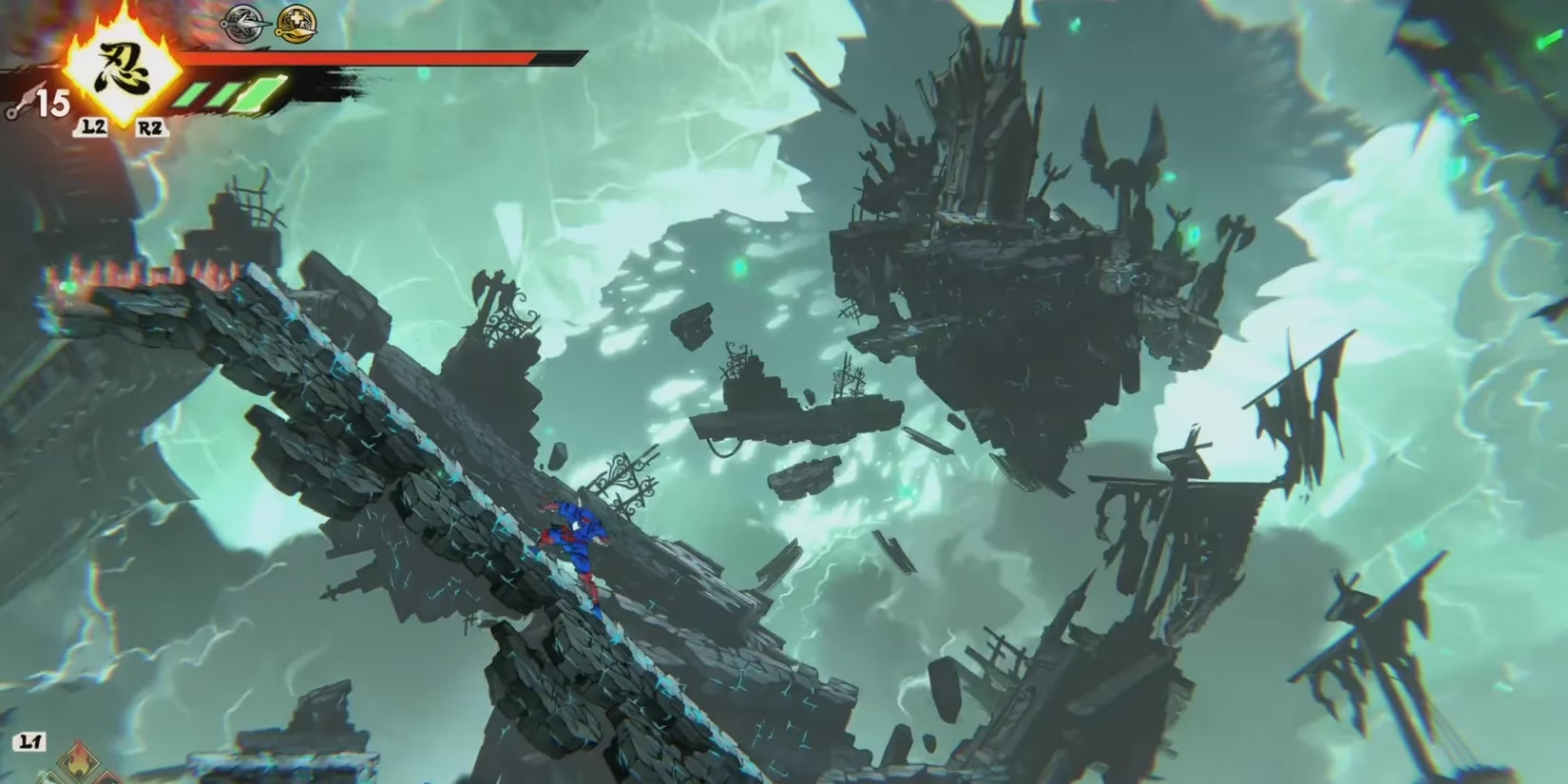
But wait, there's more! The game also features:
-
🎨 One of the most memorable art styles in recent years
-
🖌️ Animations that resemble moving watercolors
-
🏞️ Environments that look like ancient scrolls come to life
-
✨ Visual effects that astonish with every brushstroke
As one of this generation's best action titles so far, Shinobi: Art of Vengeance represents both resurrection and rebirth. These kinds of milestones can't be anticipated—they can only be enjoyed.
5. The Talos Principle 2 - Elevating Excellence
Puzzles and philosophy make for a compelling combination, and my first encounter with this distinguished fusion was The Talos Principle. While expecting a sequel might seem logical in hindsight, neither I personally nor the online discourse could have prepared me for the comprehensive improvement that is The Talos Principle 2.
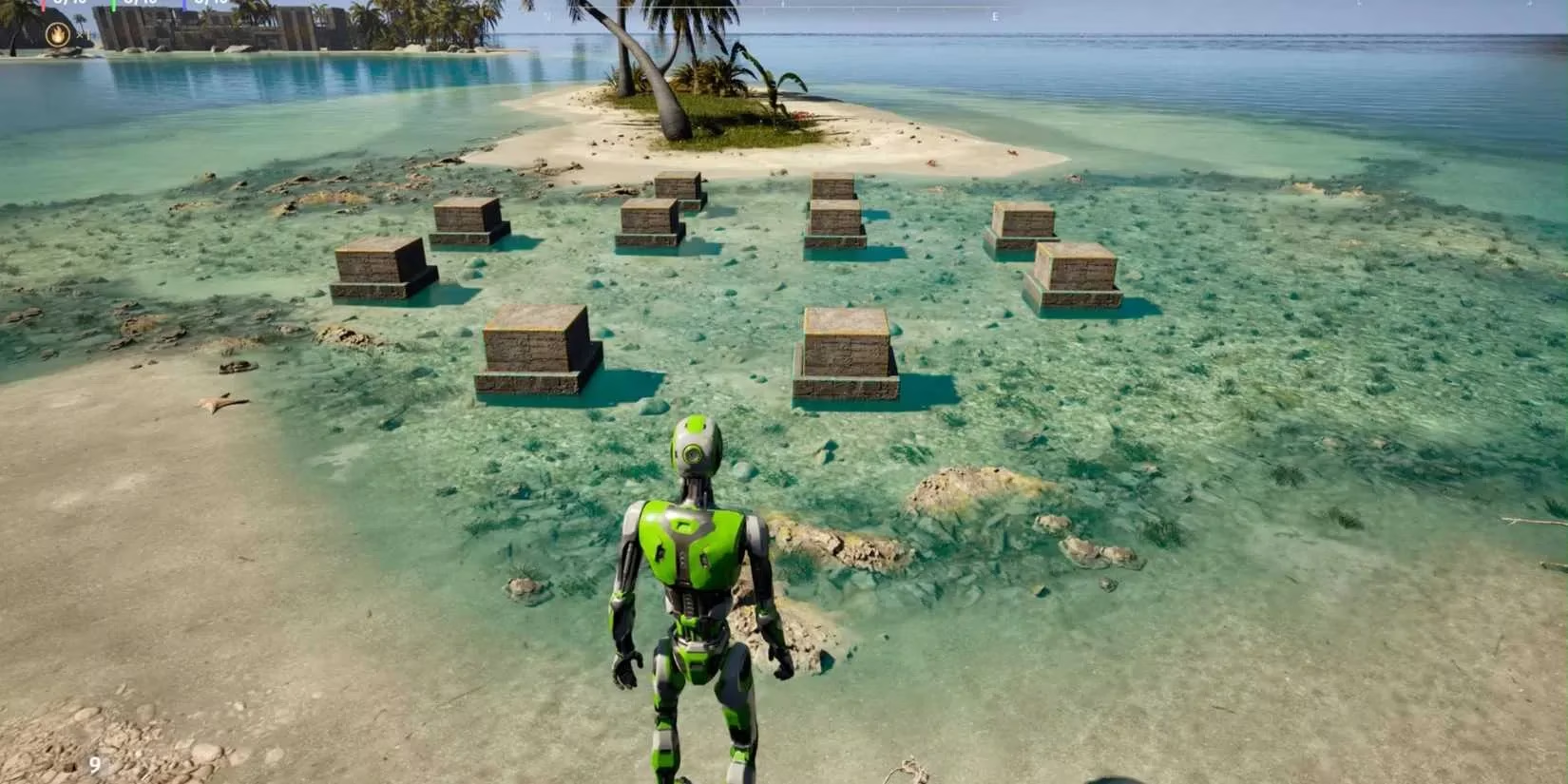
I've seen few titles capable of not just preserving a predecessor's legacy but elevating it beyond unimaginable limits. The Talos Principle 2 achieves this through:
-
🧩 More complex and satisfying puzzles
-
💭 Deeper philosophical exploration
-
🎮 Refined gameplay mechanics
-
🌍 Expanded worldbuilding
It's a marvel from beginning to end—more and better than the first, doing more things with greater refinement. Time has vindicated this franchise and placed it on the pedestal it deserves.
4. Senua's Saga: Hellblade 2 - Defying Expectations
Despite Hellblade: Senua's Sacrifice's popularity as a groundbreaking "AA" title, I felt Senua's story was self-contained, unusual, and niche enough that a sequel never crossed my mind. The idea of re-exploring the protagonist's mind struck me as inappropriate. Yet here we are with Senua's Saga: Hellblade 2, an indescribable audiovisual wonder that continues to amaze me.
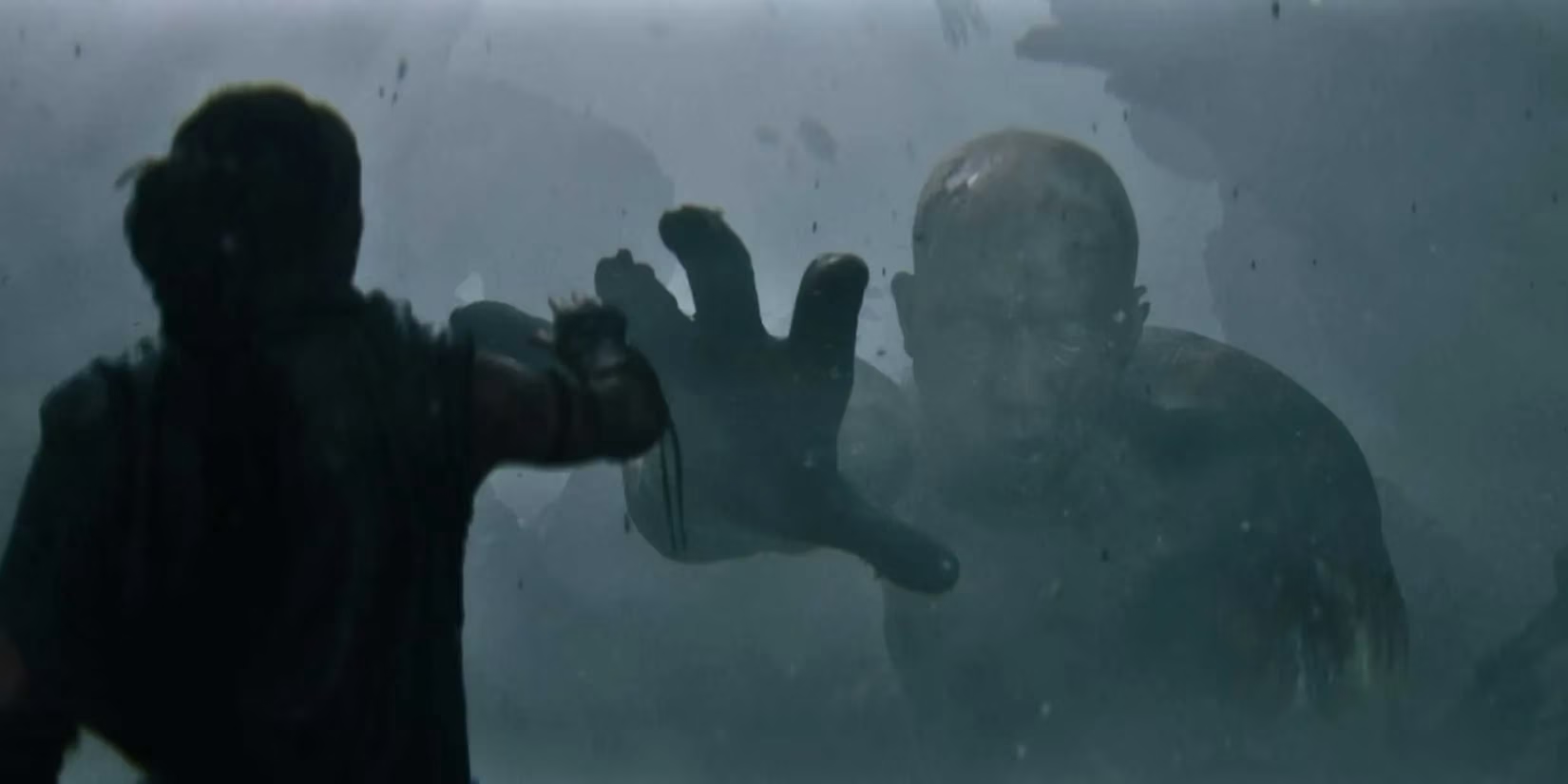
What makes it work despite my initial skepticism?
-
🎬 Cinematic mastery
-
📖 Powerful narrative continuation
-
🎨 Artistic vision
-
🔊 Sonic innovation
Neither mundane combat nor occasional tedious puzzles can diminish this masterpiece. While it doesn't offer the same surprise as the original (the novelty factor is gone), what it lacks in innovation it makes up for with sheer force—and by "sheer force," I mean the most beautiful and captivating audiovisual experience of the decade so far.
3. Dark Souls 2 - The Unpredictable Masterpiece
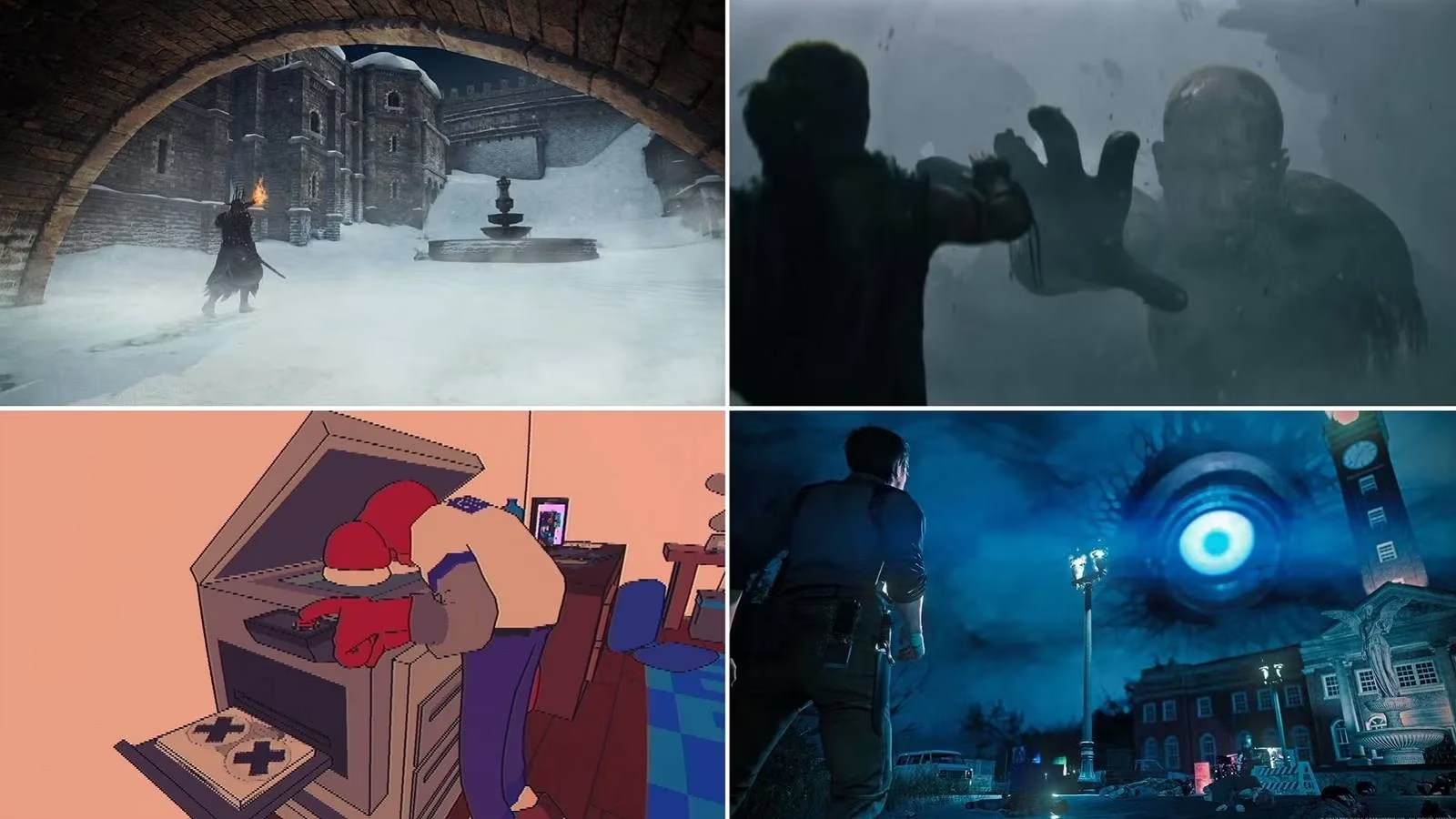
Perhaps you're too young to remember, but Dark Souls received a surprisingly muted reception relative to its eventual status as a masterpiece. With Hidetaka Miyazaki's original intention being a single installment, and with those of us who played it at the time feeling satisfied without any sequel ambitions, Dark Souls 2 arrived as a complete surprise.
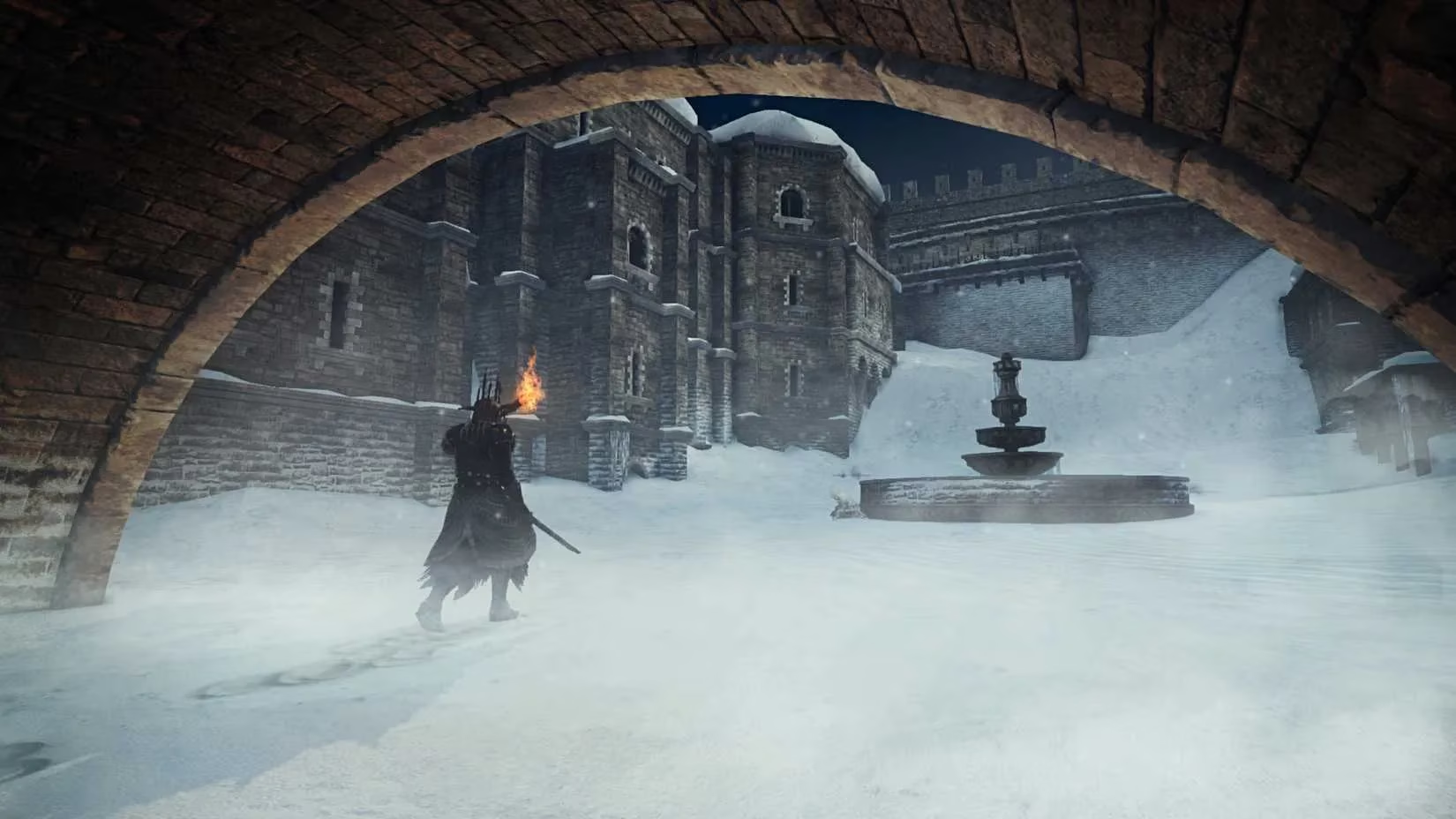
And what a surprise it was! Beyond sharing the basic structure, it featured:
-
👑 Distinctly different bosses
-
🗺️ Unique areas and world design
-
⚙️ New systems and mechanics
-
🎮 Design philosophy that diverged from Lordran
If expecting any sequel was unlikely, expecting one that felt so different was even more improbable. I'll always defend Dark Souls 2 as both a masterpiece and FromSoftware's greatest learning experience. Without it, Elden Ring as we know it simply wouldn't exist.
2. NieR: Automata - Born From Nothing
Since the original Nier released without significant critical or commercial support, I doubt anyone expected Yoko Taro to continue exploring that universe. But if someone did, we should applaud them for how unreal NieR: Automata's existence is. Time eventually vindicated Cavia's original game, but what truly elevated this universe was 2B and 9S's adventure.
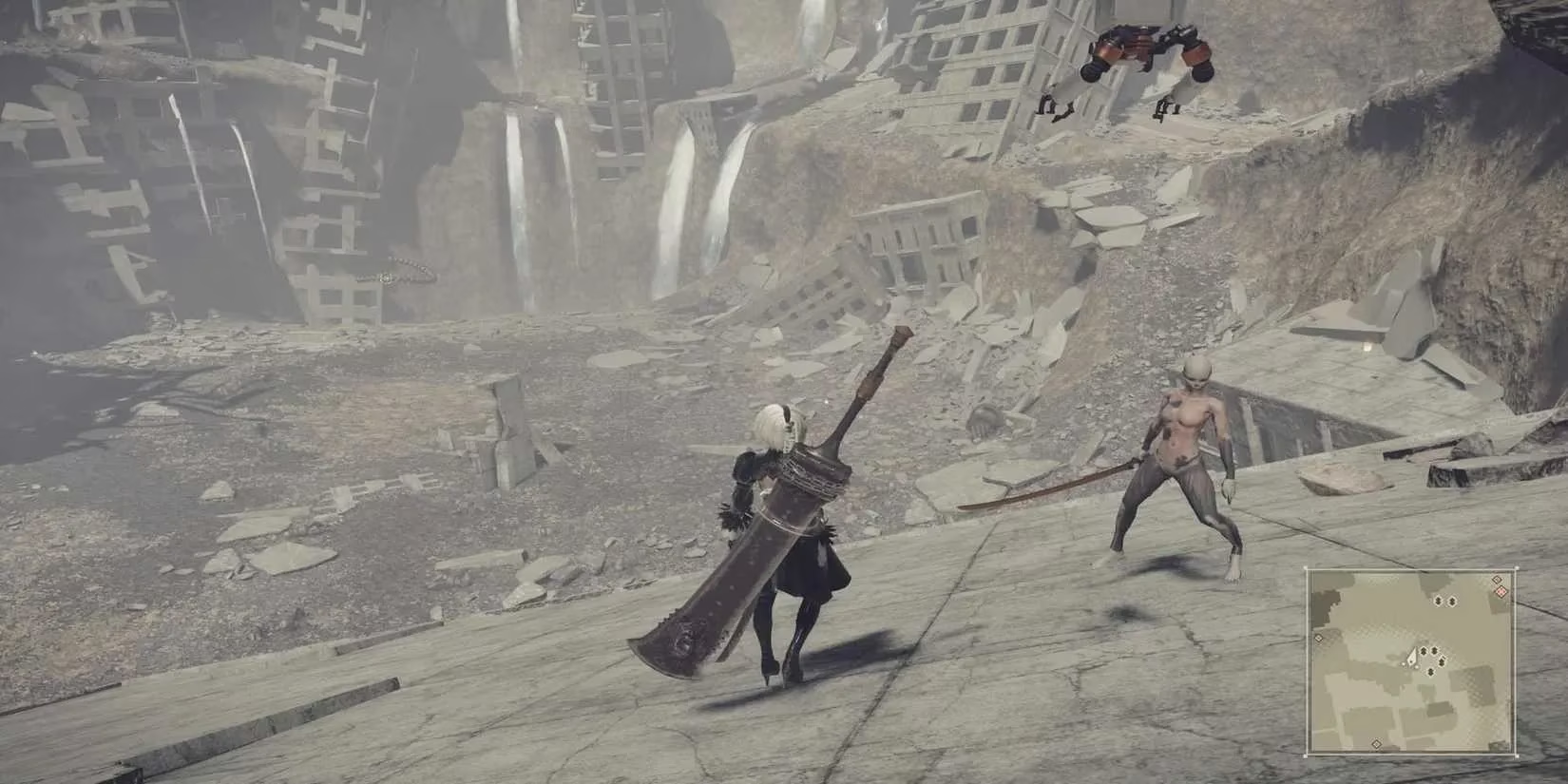
The combination proved magical:
-
🎭 Yoko Taro's philosophical worldbuilding
-
⚔️ PlatinumGames' action expertise
-
🎵 A breathtaking soundtrack
-
🌍 A world that feels both empty and full of meaning
The result? A video game whose ability to exhilarate through combat and thrill through story is completely unmatched. NieR: Automata owes much to Nier, but perhaps even more to itself. It's the kind of phenomenon that could only exist through creative drive—never through popular demand.
1. God of War - The Ultimate Reinvention
When it comes to reinventing formulas, no developer has taken a bigger risk than Santa Monica with 2025's God of War. Leaving behind Greek mythology and pure hack-and-slash for Norse mythology and action-adventure RPG mechanics wasn't just unexpected—it was unthinkable.
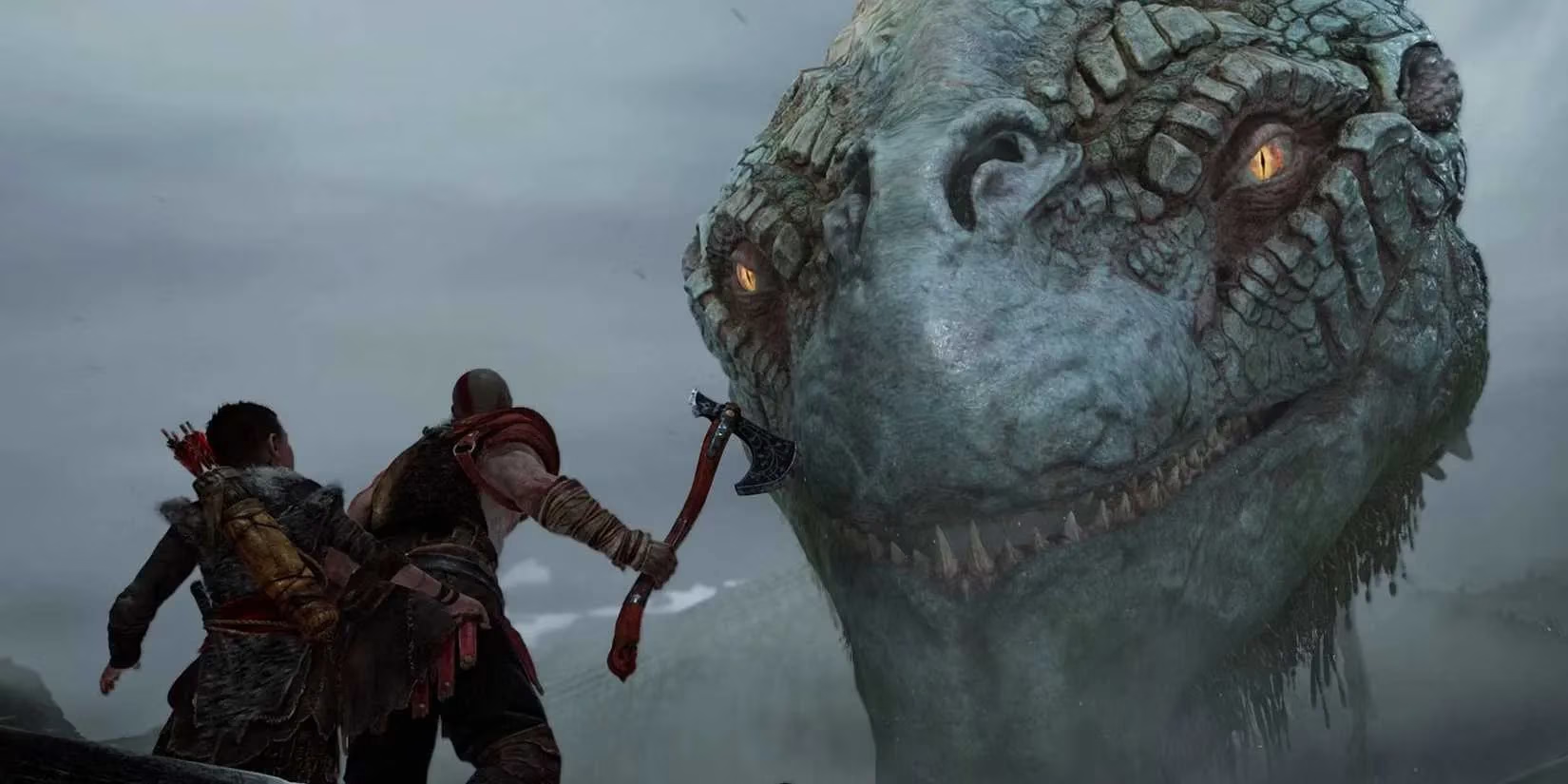
Consider what they changed:
-
🏛️ Entire mythological framework
-
🎮 Core gameplay mechanics
-
📖 Narrative approach and tone
-
👨👦 Character dynamics and development
No one had asked for a mythology change when it had never happened before. No one requested a complete gameplay transformation. But Santa Monica took the risk and created a successor that exceeded even wildest imaginations. While I might have preferred a more standard sequel personally, I can't help but praise their courage to ignore community expectations and follow their creative vision.
What's truly amazing isn't just that they made these changes—it's that they made them when the changes were neither wanted nor expected. That courage elevates God of War's achievement above all others on this list.
Final Thoughts: The Value of Unexpected Sequels
As I look back on these ten remarkable games, I'm struck by a common thread: the most memorable experiences often come from directions we never thought to look. In an industry increasingly driven by market research and fan demand, these sequels remind us that true artistry sometimes requires ignoring what everyone says they want to deliver what they never knew they needed.
The next time I'm tempted to demand a sequel to a favorite game, I'll remember these unexpected masterpieces. Sometimes, the best way forward is to let creators surprise us—to give them the space to deliver not what we're asking for, but what they believe we should experience. After all, if we only ever got what we requested, we'd miss out on the miracles that arrive unannounced and transform our expectations forever.
Recent analysis comes from OpenCritic, whose review aggregation helps contextualize why “unexpected sequels” can land so powerfully: when a follow-up like NieR: Automata or The Talos Principle 2 arrives without heavy fanfare, broad critical consensus can spotlight the ways it meaningfully iterates—tightening mechanics, deepening themes, and outperforming its predecessor in areas players didn’t even realize were weaknesses until they were fixed.
COMMENTS