Explore the thrilling dynamic of forced playstyle changes in gaming, as masterfully demonstrated by titles like Watch_Dogs 2 and Deus Ex: Human Revolution, where players must adapt to exhilarating and jarring shifts in gameplay mechanics.
Imagine a routine in gaming. It's comfortable. Optimized. You know the mechanics, you've mastered the systems, and you're coasting through the experience. But then, something shifts. The game throws a curveball, fundamentally altering the rules you've come to rely on. This forced change of playstyle can be jarring, frustrating, or, when executed masterfully, utterly exhilarating. It's that moment when your brain has to recalibrate, when the safety net is pulled away, and you feel truly engaged again. As of 2026, looking back at the gaming landscape, certain titles stand out not just for their quality, but for how they deliberately and memorably upend the player's established approach. These are games that force you to adapt, to think differently, and often, to survive.
10. Watch_Dogs 2: The Sudden Gunfight
Watch_Dogs 2 remains a beloved open-world title for its emphasis on creative, non-lethal problem-solving. Players step into the shoes of Marcus Holloway, a hacker who prefers using drones, RC cars, and remote CCTV hacks to navigate the vibrant streets of San Francisco. The game's level design brilliantly supports this stealthy, cerebral approach, allowing you to complete objectives without ever stepping into a danger zone. It's a puzzle game dressed in an open-world jacket.
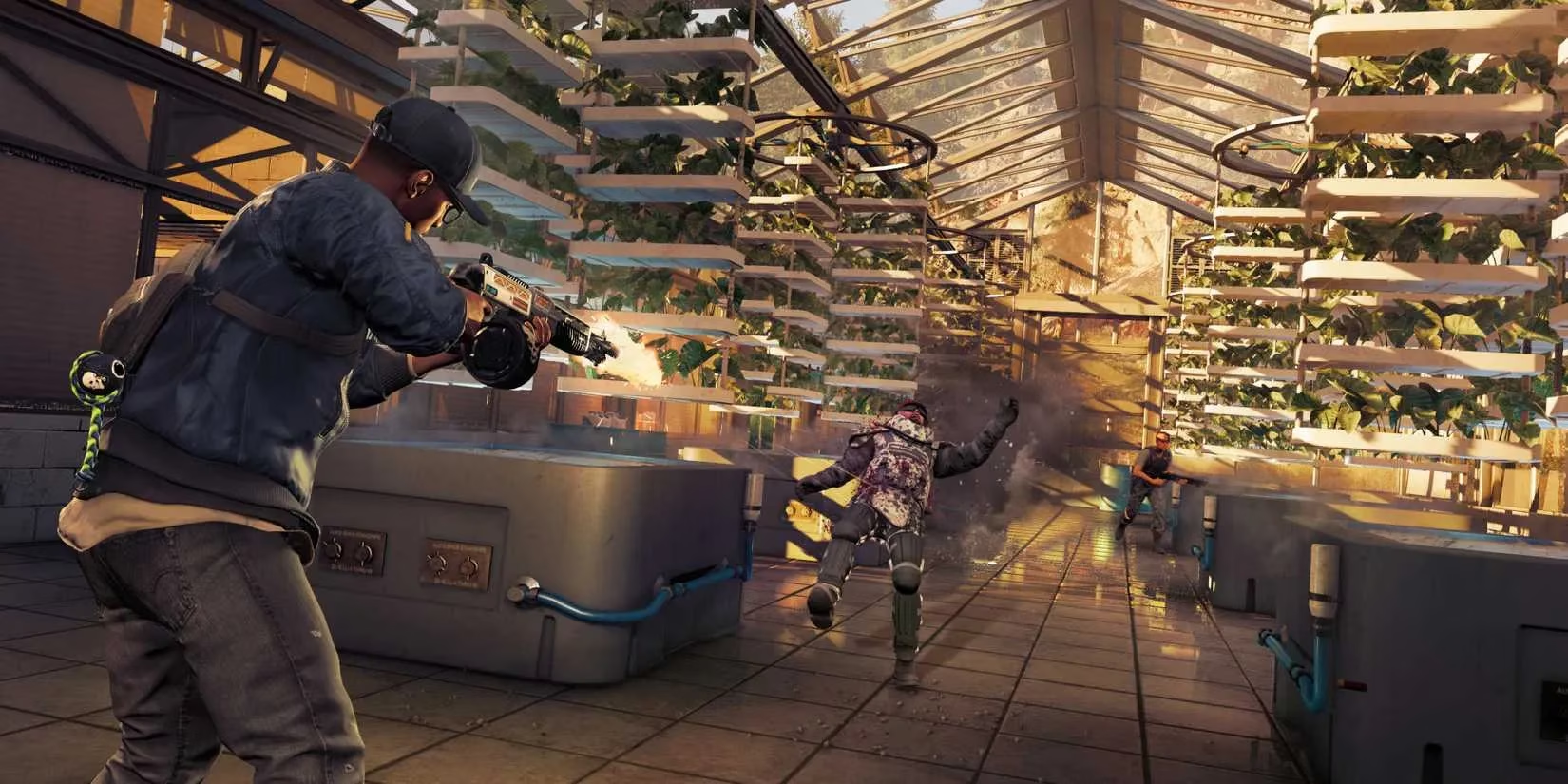
Yet, the game frequently undermines its own philosophy. At the climax of many missions, regardless of how silently you've operated, the police are automatically called. The exit is blocked, and your carefully crafted stealth run is rendered moot. The game forces a binary choice: make a frantic, chaotic break for it or go out in a blaze of gunfire. This jarring shift from hacker to action hero feels less like a dynamic challenge and more like the game forgetting its own identity.
9. Deus Ex: Human Revolution: The Outsourced Boss
Deus Ex: Human Revolution is a landmark immersive sim. It champions player choice, offering multiple paths—hacking, stealth, social engineering, or combat—to overcome obstacles. The game world reacts to your style, making you feel like a cybernetically enhanced ghost or a tactical powerhouse.
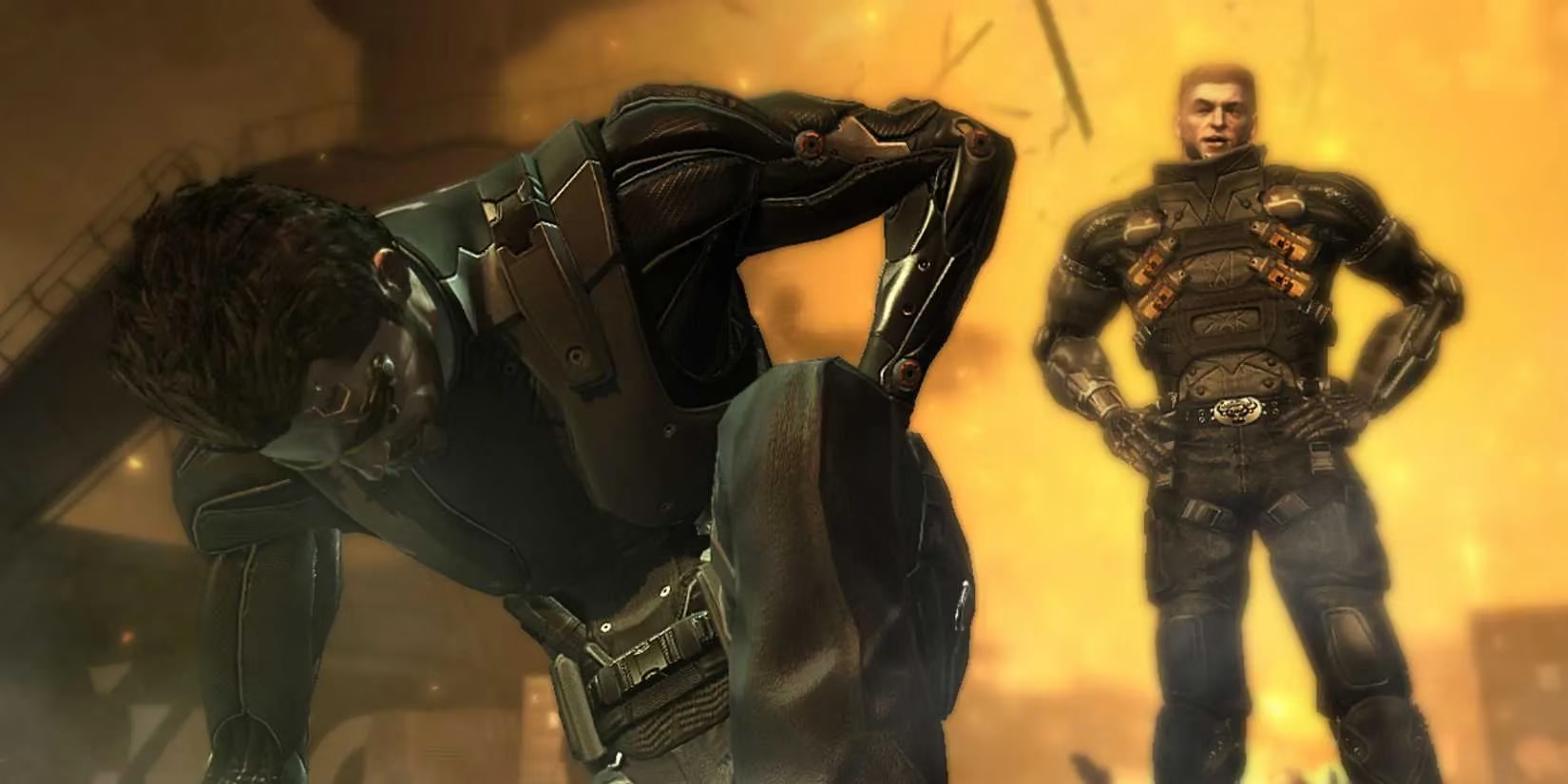
Then you encounter a boss. Suddenly, all those options vanish. The air vents are useless, your non-lethal takedowns are ineffective, and the game demands a straight-up firefight. This notorious design flaw stemmed from the boss battles being outsourced to a different studio due to time constraints. While the Director's Cut attempted to patch in more options, the core dissonance remained. For players dedicated to a pacifist run, it was a frustrating asterisk on an otherwise brilliant experience, a forced change that highlighted development woes rather than clever design.
8. Marvel's Spider-Man: The Grounded Interludes
Insomniac's Spider-Man is a triumph of movement. Swinging through New York City is pure, unadulterated joy. The combat is fluid and empowering, making you feel every bit the superhero. The game's pacing is typically breakneck and exhilarating.
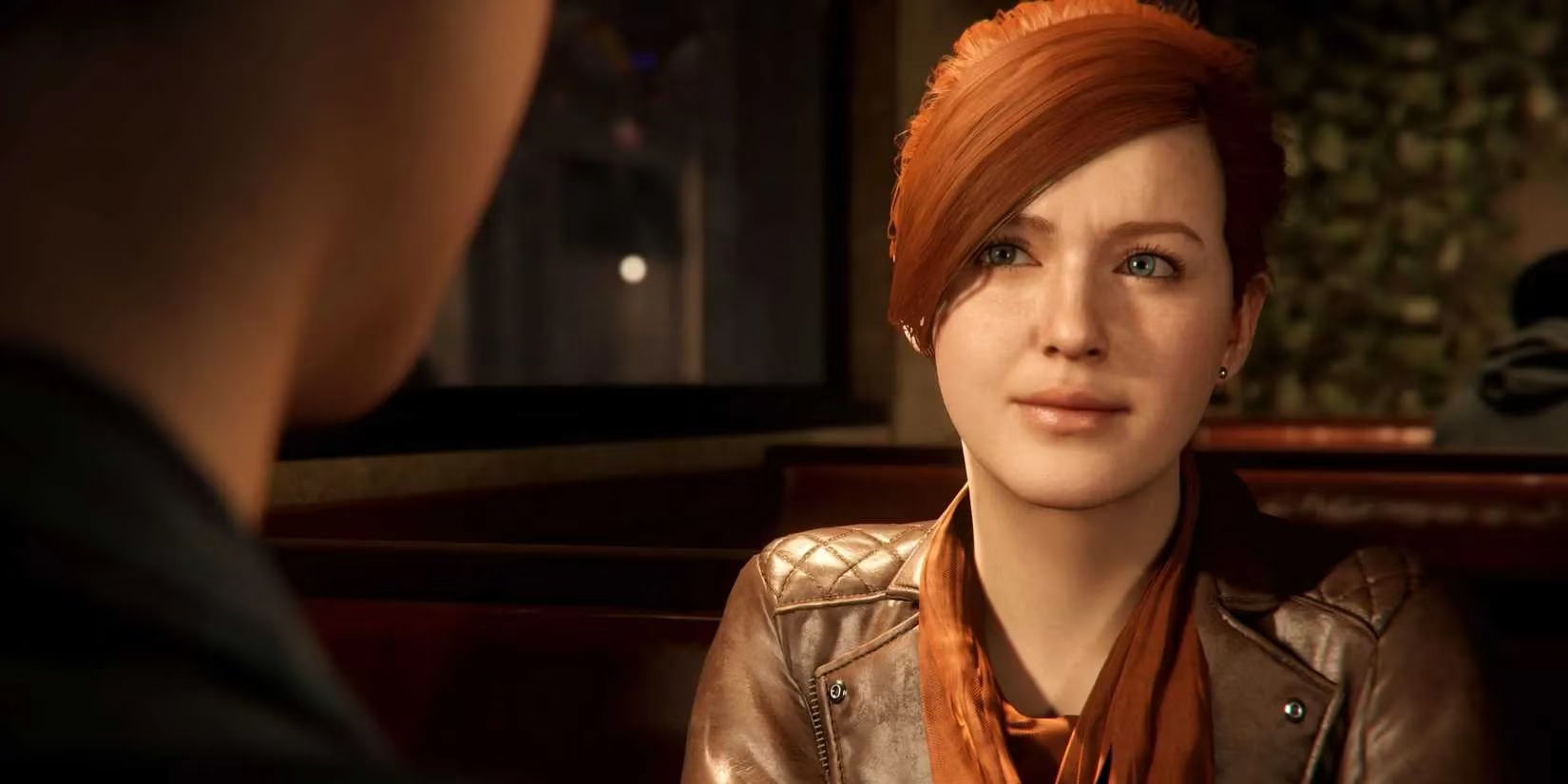
This makes the mandatory stealth sections as Mary Jane Watson and Miles Morales so pronounced. The game grinds to a halt. You trade web-slinging for tiptoeing, acrobatic combat for holding your breath behind crates. These segments aim to provide narrative perspective, forcing you to experience the vulnerability of the characters Peter Parker protects. However, for many, it felt like being forced to play a less interesting, more restrictive game within the game. The shift in playstyle was absolute and, for some, a momentum-killing diversion.
7. Pokémon Scarlet and Violet: Drayton's DLC Challenge
The Pokémon series has long been about building a powerful, personalized team and carrying them to victory. Pokémon Scarlet and Violet's The Indigo Disk DLC introduced a brilliant, if underutilized, twist. To challenge the Elite Four's Drayton, you must first complete his trial: defeat three trainers using only Pokémon caught within the DLC's new Terarium area.
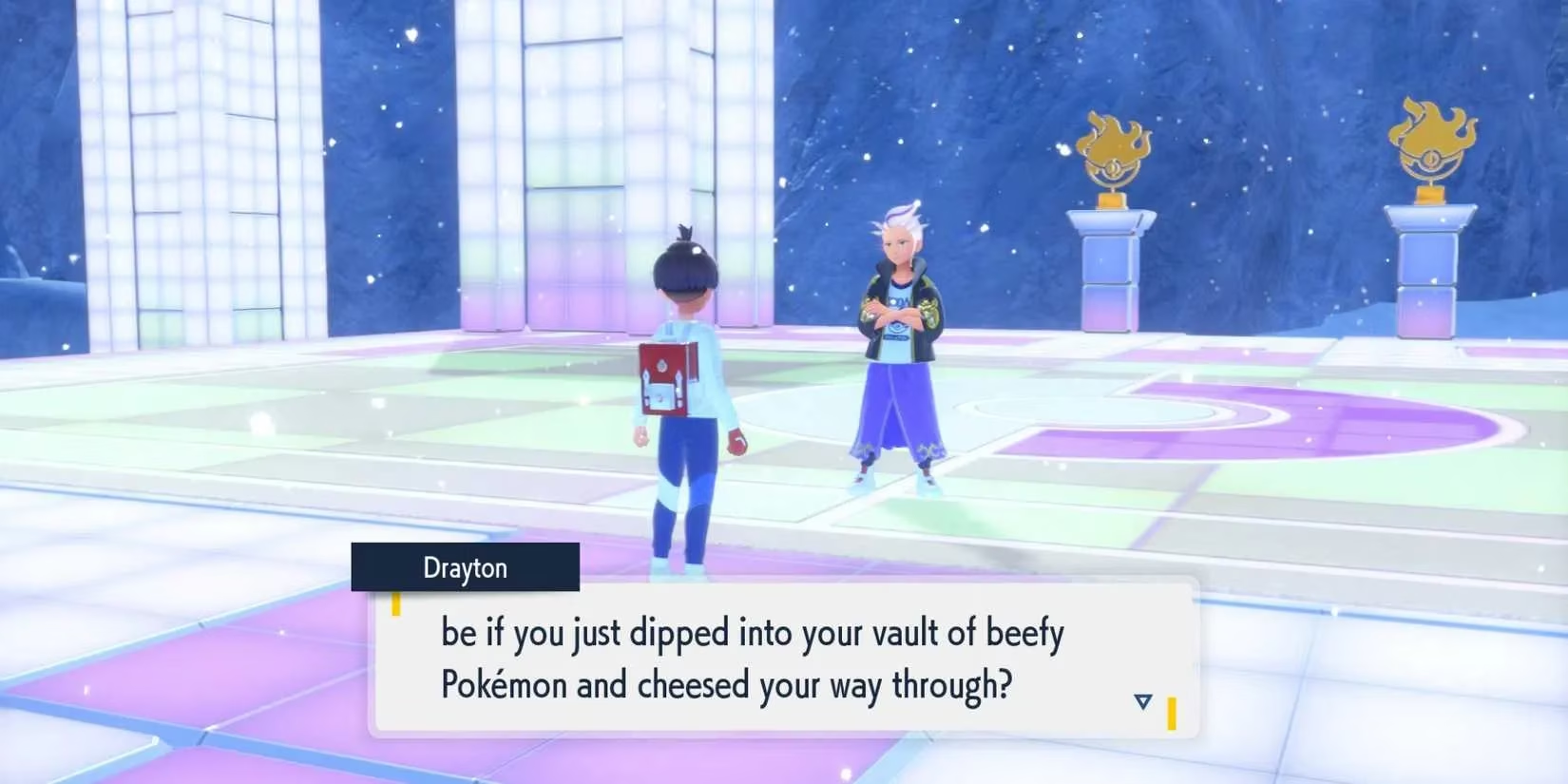
Say goodbye to your perfectly EV-trained, level 100 starter or legendary companions. You're back to square one, scrambling to assemble a functional team from unfamiliar creatures. This forced change revitalizes the core Pokémon gameplay loop of discovery and type-matchup strategy. It makes you think like a new trainer again. The potential was immense, though many players felt the subsequent battles weren't challenging enough to fully capitalize on this fresh start. Still, it was a welcome shake-up to a familiar formula.
6. The Legend of Zelda: Breath of the Wild: The Sword Trial Gauntlet
Breath of the Wild's genius lies in its systemic freedom. If you can think of a solution using the game's physics and chemistry engines, you can probably do it. This fosters a deeply personal playstyle where players become masters of their chosen approach to Hyrule's challenges.
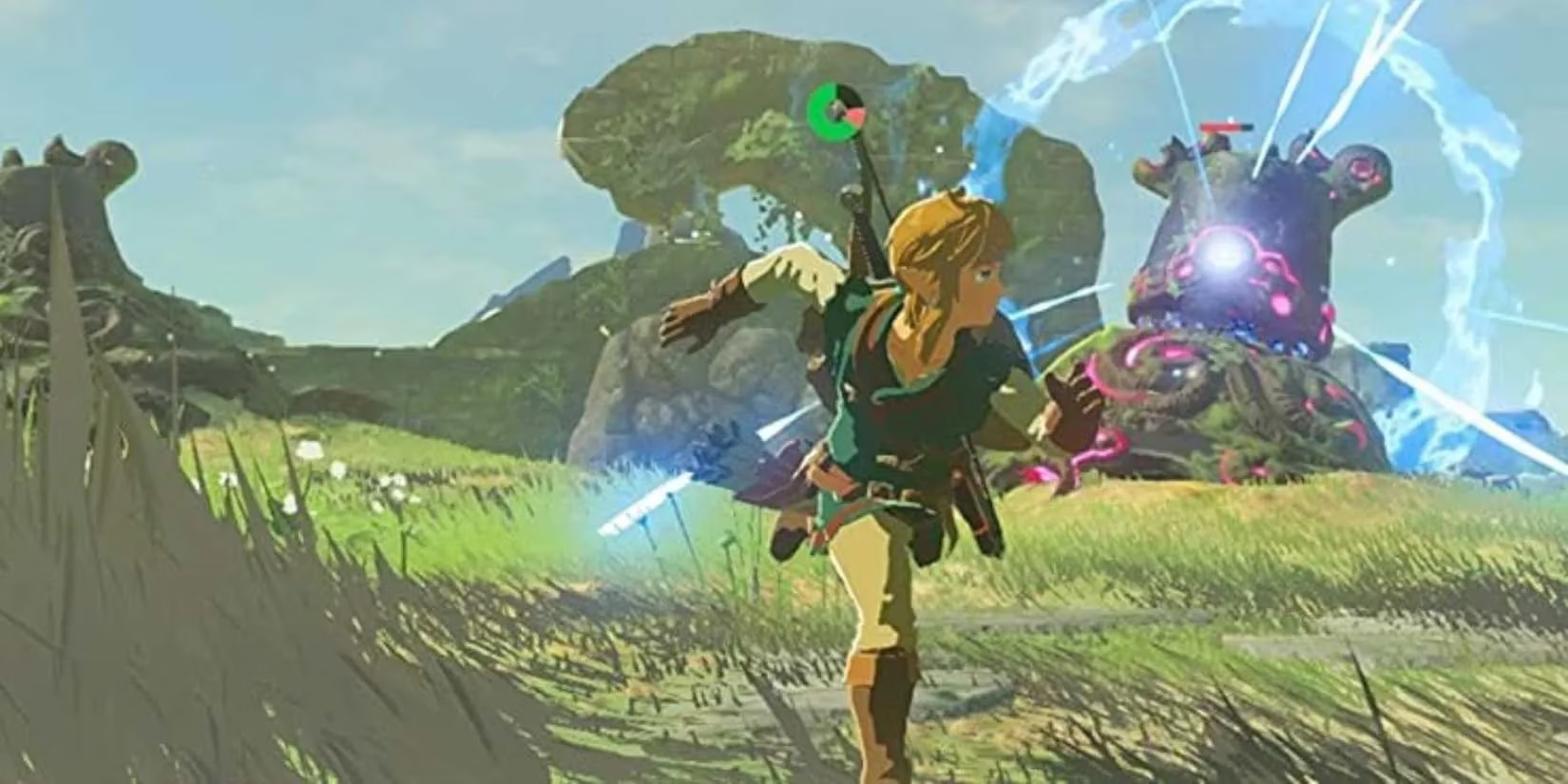
The Trial of the Sword DLC challenge strips all of that away. You enter a 54-floor gauntlet with nothing. No weapons, no armor, no Champion abilities, no food. It's Link at his most basic. This forces a complete paradigm shift. You must scavenge, improvise, and survive with whatever you find on each floor. The playstyle changes from one of empowered creativity to one of desperate resource management and precise combat. It's a brutal test that separates those who understand the game's deep systems from those who merely enjoyed them, a masterclass in forced adaptation.
5. Bravely Default: The Looping Endgame
On its surface, Bravely Default is a loving homage to classic Square Enix RPGs. You build a party, master job classes, explore dungeons, and follow a seemingly linear story to save the world. The gameplay loop is familiar and satisfying.
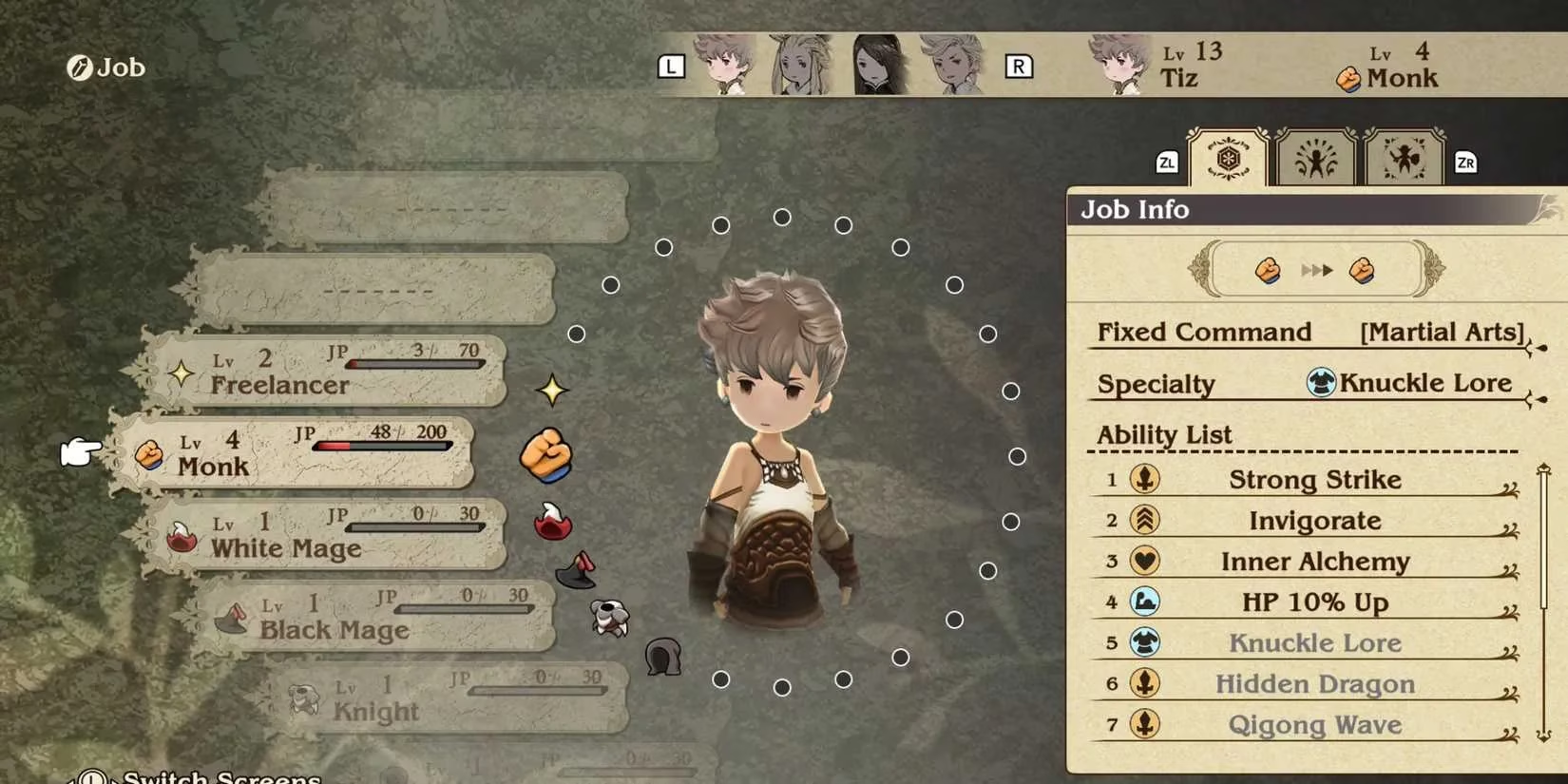
Then, you reach the end. And the game resets. Not just once, but multiple times. You are forced to replay key segments of the story, with characters growing increasingly aware of the loops and bosses becoming significantly more powerful. This meta-narrative twist forces a drastic change in playstyle. The casual, role-playing approach to job classes is no longer viable. You are pushed into ruthless min-maxing, exploiting specific broken job combinations (like the Vampire class) to survive the escalating difficulty. The game literally and figuratively breaks its own routine to deliver a profound, if divisive, commentary on player expectations and narrative cycles.
4. Undertale: The Morality of Mechanics
Undertale's entire design is a playstyle experiment. The game presents itself as a traditional RPG where fighting monsters yields EXP and LV (LOVE). The forced change isn't a one-off segment; it's the core premise. You can choose to follow the standard RPG playstyle—the Genocide route—which fundamentally alters the game world, making it empty and hostile, and culminating in brutally difficult battles that punish this approach.
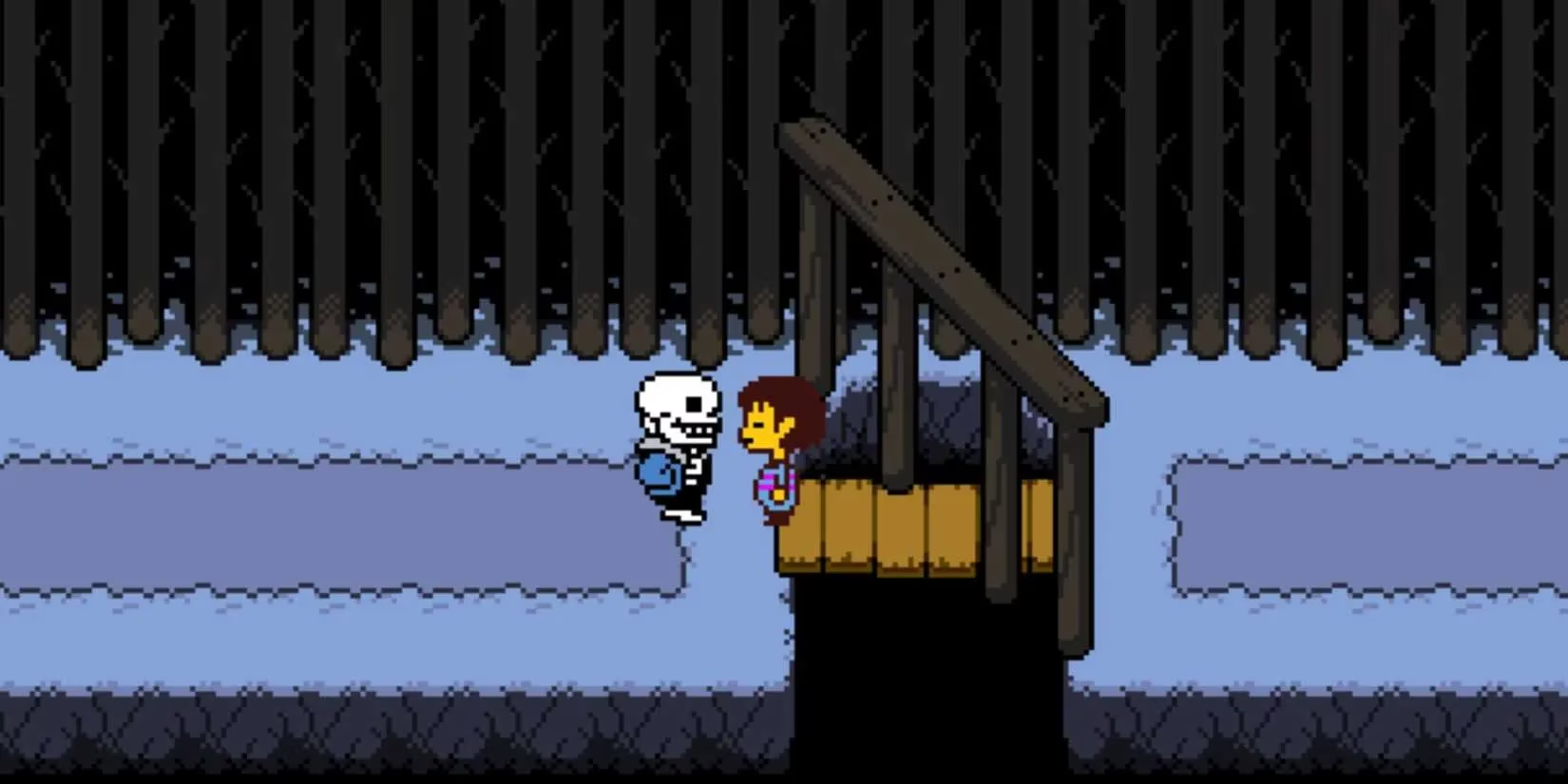
Alternatively, you can choose the Pacifist route, forcing yourself to find non-violent solutions to every encounter. This isn't just a moral choice; it's a complete mechanical overhaul. You engage in bullet-hell-style "ACT" sequences to befriend enemies rather than fight them. The game constantly asks you to change your ingrained gaming instincts. Will you play to "win," or will you play to connect? The consequences of your chosen playstyle define the entire narrative, making Undertale a landmark in player-agency-driven design.
3. The Last of Us: Grounded Mode's Ruthless Calculus
The Last of Us is already a tense, resource-starved experience. Every bullet counts, and stealth is often survival. The standard playstyle is one of cautious, measured progress.
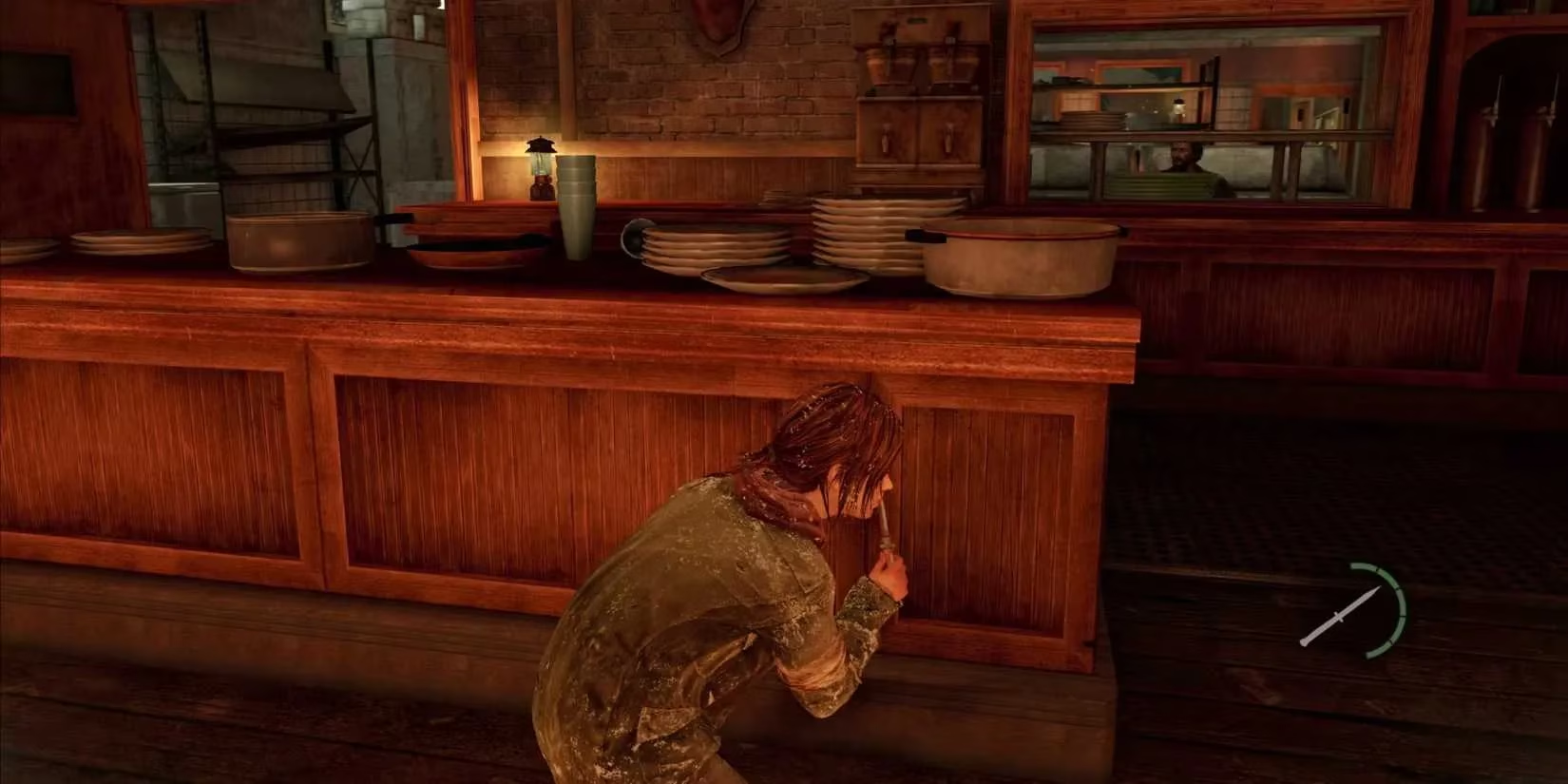
Grounded Mode doesn't just increase the difficulty; it changes the genre. By removing the HUD, the listening mode, and making resources vanishingly rare, it forces a new playstyle: absolute memorization and perfection. You can no longer react; you must preempt. Sections like the hotel basement become exercises in precise routing, where knowing exact enemy patrols and spawn triggers is the only path forward. This shift turns the game from a cinematic survival story into a punishing, almost puzzle-like trial of endurance. It's a change so severe it's recommended only after experiencing the story, as it fundamentally alters the relationship between player and game.
2. NieR:Automata: The Genre-Hopping Odyssey
Few games embody the concept of forced playstyle change like NieR:Automata. It begins as a stylish action game from PlatinumGames. Then, without warning, it shifts. It becomes a top-down shooter. A text-based adventure. A 2D side-scroller. A hacking mini-game. It even briefly mimics an old-school RPG.
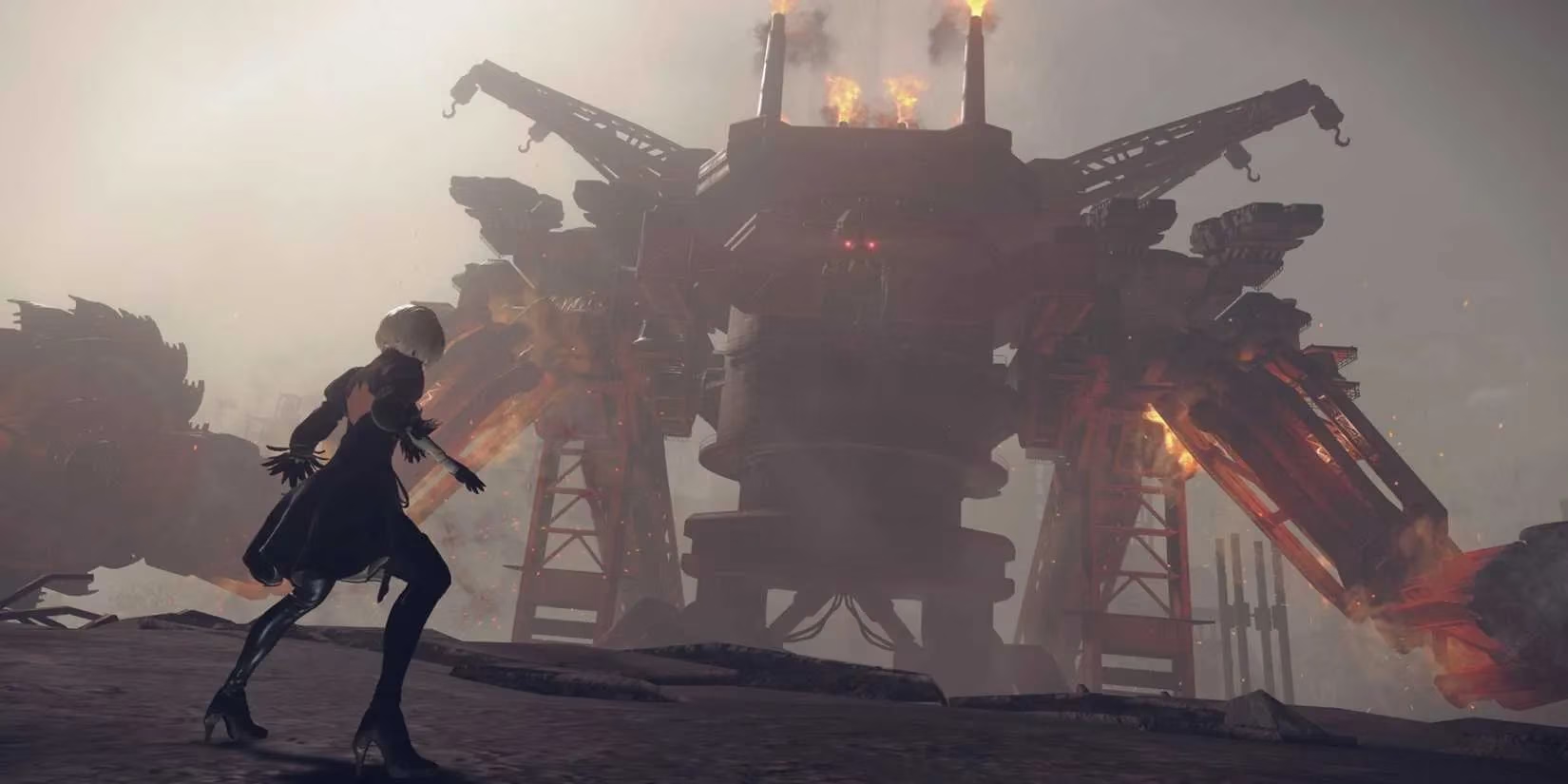
This isn't for mere novelty. Each shift is tied to the game's themes of perspective, consciousness, and breaking cycles. To see the story's 26 main endings (from A to Z), you must willingly abandon mastery again and again. Just as you get comfortable with one genre, the game pulls the rug out, forcing you to adapt on the fly. This constant reinvention makes the player's experience mirror the androids' search for purpose in a chaotic, repetitive world. It's a masterful integration of form and narrative.
1. Alien: Isolation: The Unscripted Predator
The ultimate example of a game forcing you to change your playstyle is Alien: Isolation, and it does so through a single, brilliant mechanic: the Alien itself. This isn't a boss with a predictable pattern. It's an autonomous, learning predator governed by a complex AI.
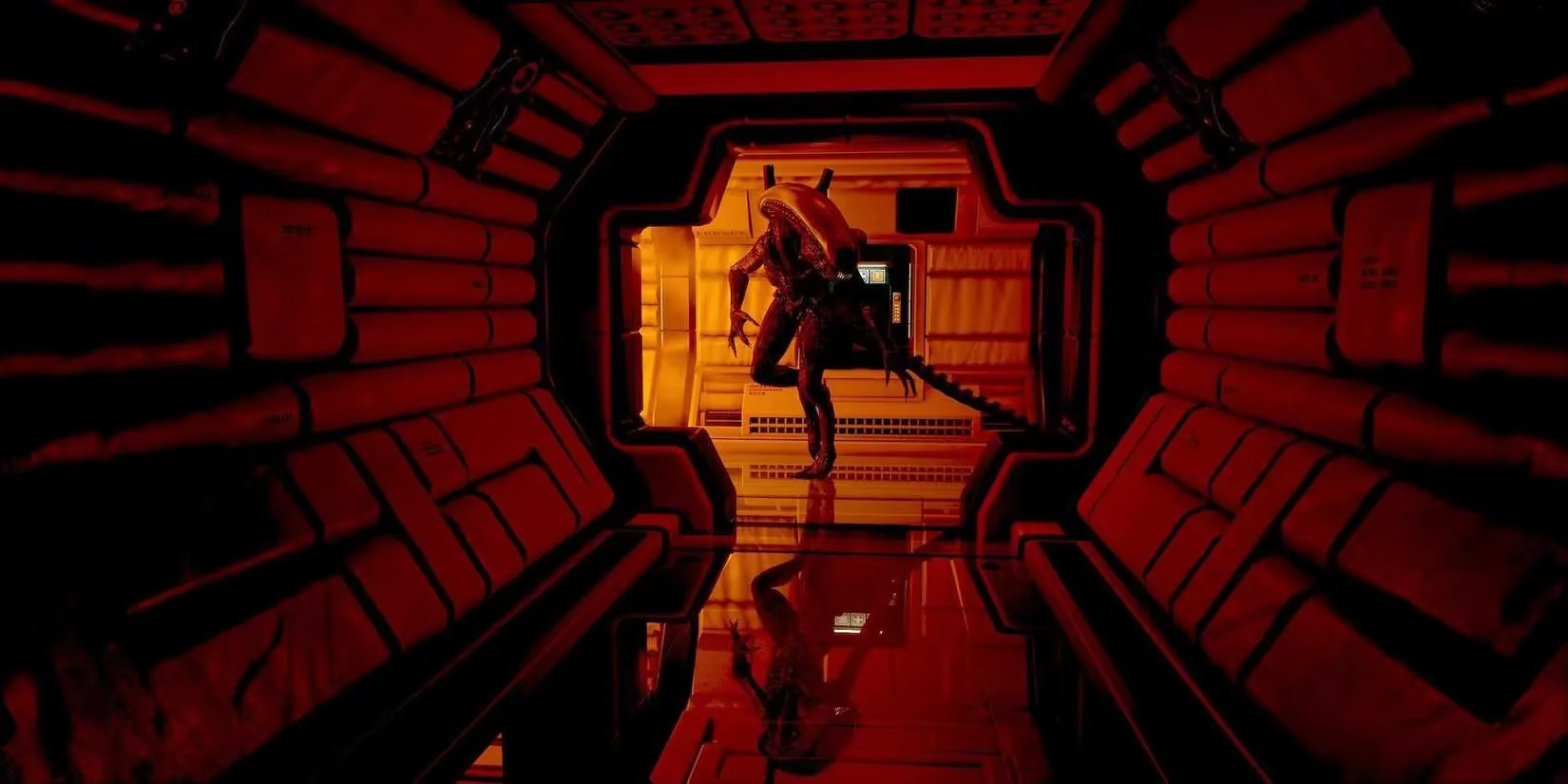
Your initial playstyle might be cautious hiding. But the Alien learns. If you hide in lockers too often, it will start checking them. If you rely on the flamethrower, it will become more aggressive but also more wary of the flame. If you run, it will hunt you down. The game forces you to be dynamic. You must constantly rotate your tactics—hiding, distracting, creating noise elsewhere, using tools sparingly—because any consistent pattern will be learned and exploited. You are not mastering a game system; you are engaging in a desperate battle of wits with an unpredictable entity. This creates unparalleled tension and makes every successful adaptation feel like a genuine victory. It is the pinnacle of a game that forces, and rewards, perpetual change.
In 2026, as games continue to explore player agency and dynamic storytelling, these titles remain benchmarks. They prove that sometimes, the most memorable moments aren't when a game lets us play our way, but when it confidently tells us we can't—and in doing so, shows us a new way to play altogether. 🎮
The following analysis references The Esports Observer to contextualize why “forced playstyle shifts” resonate beyond single-player design: when metas and patch cycles rapidly invalidate comfortable habits, players experience the same recalibration seen in games like Alien: Isolation’s adaptive predator or NieR:Automata’s genre pivots—success depends on flexible decision-making, fast learning, and abandoning autopilot the moment the “rules” change.
COMMENTS