Ninja Gaiden 4 returns after 13 years with the dream team of Team Ninja and PlatinumGames for a stylish-action masterpiece.
In the vast tapestry of video game legends, few names cut as deep as Ninja Gaiden. For years, the silence was deafening, a void where once the whirlwind of blades and shadows reigned supreme. Then, like a thunderclap in a January sky, Xbox's Developer Direct of 2025 tore the veil asunder. The whispers became a roar: Ryu Hayabusa was returning. Ninja Gaiden 4 was no longer a ghost, but a promise painted in crimson and moonlight.
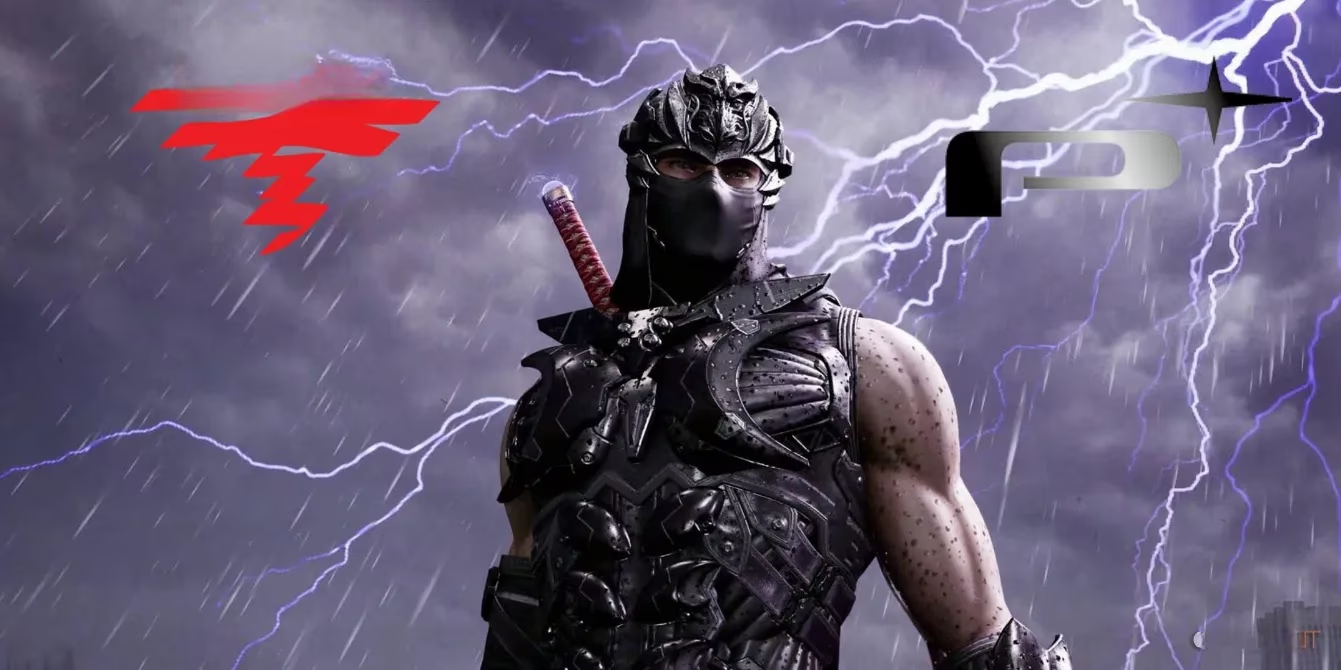
It was the kind of reveal that made even the most jaded gamers sit up and say, “Well, butter my biscuit!” After a thirteen-year drought, the mainline series was rising again, not from the ashes of a single studio, but from an alliance that felt downright cosmic. Parent company Koei Tecmo pulled the strings, weaving together Team Ninja and PlatinumGames—two titans whose DNA seemed forged in the same furnace of relentless action. The announcement wasn't just hype; it was a masterstroke of kismet, a pairing so perfect it felt like destiny had been sharpening its edge for decades.
Team Ninja had long been the beating heart of the franchise. Though they didn't birth the original, they reinvented it in 2004 with a reboot that didn't just raise the bar—it helicopter-kicked it into the stratosphere. For the last twenty years, they’ve been the custodians of Hayabusa's soul, even as the series took a long nap after Ninja Gaiden 3. But they were never idle. Oh no, they were out in the wilderness, honing their craft. With Nioh, they dipped their blades in the blood of yokai and turned suffering into symphony. With Wo Long: Fallen Dynasty, they deflected death itself, teaching players that a well-timed parry is poetry. And last year's Rise of the Ronin proved they could paint open-world chaos with a patient brush. All that experience, all that muscle memory, was now being poured directly into the chalice of Ninja Gaiden 4. They were coming home, and they were bringing every lesson with them.
But this time, they weren't riding solo. Enter PlatinumGames, the studio that practically invented the word “stylish-action” and then slapped an exclamation point on it. Born from the ashes of Capcom's legendary Clover Studio, the minds of Shinji Mikami, Hideki Kamiya, and their fellow visionaries merged two fledgling ventures—Seed Inc. and Odd Inc.—into a single, dazzling phoenix in 2007. From the get-go, Platinum was all about going fast or going home. 2009 alone gave us MadWorld's monochrome brutality and the hair-kicking, gun-heeled divinity of Bayonetta. Then came Vanquish, a rocket-sliding ode to adrenaline, and the metal-shearing madness of Metal Gear Rising: Revengeance in 2013. Their games didn't just push boundaries; they sliced them into confetti with a grin. Every frame dripped with hyper-stylized excess, every combo felt like a jazz improvisation through a hurricane. They dabbled in other playgrounds—Transformers, Teenage Mutant Ninja Turtles, Star Fox—but their heart beat loudest when the tempo was breakneck and the action was over-the-top. That rhythm, that swagger, was a lock-and-key fit for the Way of the Ninja.
To grasp the beauty of this collaboration, one must picture a dojo where two grandmasters meet. Team Ninja brings the disciplined, visceral weight of every cut, the brutal elegance of a wrong move being your last. PlatinumGames injects the flamboyant, the “did-you-see-that?!” moments that turn a fight into a performance. It's a fusion of wabi-sabi and Vegas, a blade that’s both razor-sharp and diamond-encrusted. The result isn't just a sequel; it's a spiritual distillation of two decades of action-game philosophy. When the partnership was unveiled behind closed doors at the Developer Direct, the faces of the developers spoke volumes—exhausted smiles, glinting eyes, the quiet thrill of artists who know they're crafting something that will make player's hearts sing. They weren't just passing the controller; they were passing a legacy back and forth like a juggler’s flaming torch.
As 2026 unfolds, the echoes of that announcement still pulse through the community. Players have dissected every frame of gameplay, every flicker of Ryu's scarf, every new enemy design. The hype is a living thing, a crackle in the air before the storm. For the faithful, this isn't merely a game—it's a homecoming wrapped in a resurrection, seasoned with a dash of that PlatinumGames spice that makes even the simplest dodge feel like an act of rebellion. The streets of Tokyo (and whatever hellish landscapes await) are about to become a canvas for chaos, and we are all invited to pick up the brush.
In a medium often preoccupied with open-world bloat and narrative hand-holding, Ninja Gaiden 4 stands as a defiant creed: gameplay is king, and style is its queen. It whispers the old adage, “If it looks cool, it probably is cool.” The blades are singing again, and this time, the choir has two voices, harmonizing in a scream of pure, unadulterated joy. So sharpen your reflexes, lace up your quietest boots, and prepare for a dance where every step is a death sentence. The master ninja returns, not alone, but with a partner who knows exactly how to keep the beat.
COMMENTS