NieR: Automata sequel rumors persist, fueled by Yoko Taro's hints and Square Enix milestones. The wait continues into 2026.
The year unfolds like a gearwork cathedral, each month a cog turning in the silence left by a promise yet unfulfilled. It is 2026, and the world of NieR hangs suspended between memory and miracle, where the rusted remains of a distant war still dream of a sequel. The air hums with a quiet, electric anticipation—fans of NieR: Automata have learned to listen to the wind, for it often carries the voice of a creator who speaks in riddles.
In the gardens of speculation, a rumor blooms perennial. Not a new rumor, but an old friend that returns with the seasons, whispering the same sweet name: a sequel to the masterwork of 2017. The faithful recall a certain tweet from early 2025, when a GamesIndustry contributor named Daniel Camilo lit a small fire by claiming the sequel was in development and would be revealed that very year. His words were like a sparkler in a dark auditorium—brief, bright, and utterly without proof. Yet they set minds ablaze. “You know how it is with these things,” the community murmured, exchanging glances. “No smoke without fire… right?”
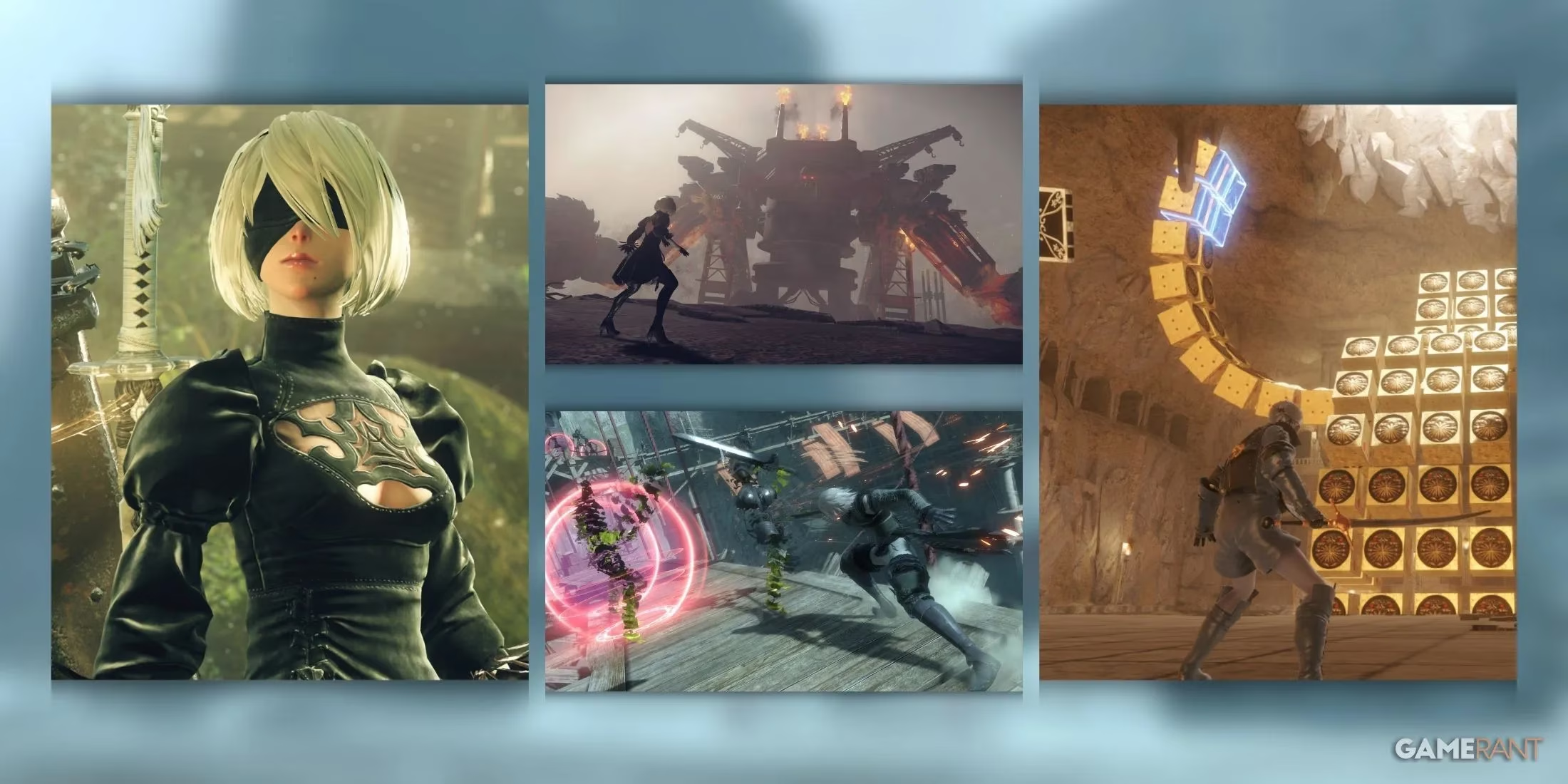
But the embers of that flame have a long history, and the garden of hints is old and well-tended. Long before the tweet, in the waning autumn of 2023, a Square Enix producer spoke of the franchise as a living creature, one that could birth new life so long as its heart, Yoko Taro, still beat. The phrasing was poetic, almost a prayer. Then, in the spring of 2024, producer Yosuke Saito let slip a quieter secret: he was collaborating with Taro on something. The word hung in the air like a half-formed melody, refusing to resolve. What were they building in the shadows? A new stage? A new sorrow? Silence answered.
That same year, the maestro himself took the stage. Yoko Taro, the man whose mind is a labyrinth of existential whimsy, stood before a sea of fans celebrating eight million units of Automata sold. With the crowd already alive with adoration, he teased the future with a playfulness that bordered on mischief. “If you want a sequel,” he said, as if testing a hypothesis, “let tonight bring the loudest applause.” The roar that followed could have shaken the moon itself—the very moon that, in his story, cradles the last hope of humanity. It was a moment of pure, shared longing, the noise of a community saying yes, please, more. And yet, the curtain never rose on an official announcement.
Time, that indifferent narrator, pushed forward. Saito’s voice returned in a late-2024 interview, calling 2025 a “milestone” year, a natural moment for Square Enix to honor the NieR saga. The word milestone glowed like a beacon in the fog: perhaps a remaster, a concert, a crossover… or the long-awaited sequel. The year 2025 arrived with the weight of a prophecy, and the community held its breath. Months walked by, each conference watched with hungry eyes, each Nintendo Direct or State of Play met with a silent prayer. And still, the air remained empty of a formal, concrete revelation.
Now we stand in the aftermath, in the gentle stillness of 2026. The tweet that sparked the latest fever has aged into a curious artifact—some call it false hope, others a premature echo of truth. The silence from Square Enix has become a character in its own right, a cryptic, smiling figure that dances just out of reach. And yet, the faithful know how to read the quiet. Yoko Taro’s universe has always been a place where logic loosens, where timelines splinter, and where endings are never truly final. The puzzle box of his narrative demands patience. The game itself taught us to look again, to replay, to find meaning in the spaces between destruction. So why should its future be any different?
The heart of it all lies in the story that Automata left behind—a desolate Earth reclaimed by androids, a cycle of meaninglessness punctured by moments of heartbreaking beauty. To hear that a sequel may wander those same scarred landscapes is to feel both dread and delight. What new tragedy will bloom? What philosophy will wear a machine’s face? No one knows, but the speculation itself is a form of worship. The absence of a formal reveal in 2025 has only deepened the mystery, making the eventual truth more intoxicating. After all, “a story that never ends” is the franchise’s own blood type.
Some whisper that the silence is itself a message, a meta-theatrical nod from a director who enjoys breaking walls. Others point to Saito’s recent but quiet presence, suggesting that the work continues behind an iron curtain, unperturbed by leaked calendars. And what of Camilo’s claim? It sits in the corner of every discussion, a token of possibility. Was he wrong? Or was the timeline simply nudged by the capricious gods of game development? In this garden, nothing is discarded; every dropped petal becomes mulch for tomorrow’s hopes.
So the vigil endures. Fans still gather in online forums, still analyze every Square Enix music playlist for hidden codes, still watch Taro’s rare public appearances with the intensity of prophets reading tea leaves. The applause from 2024 has not faded—it has become a sustained note, a drone beneath the world’s noise, waiting for the moment it can crescendo into a standing ovation. The wind carries a metallic scent, as if something ancient is stirring beneath the rubble of Shinjuku. A sleep that has lasted since 2017 is restless now. “C’mon, just give us a sign,” the world seems to say, tapping the glass of its own reality. And somewhere in a dimly lit studio, a man in a strange mask might be smiling.
COMMENTS