Yoko Taro's Nier: Automata Ver1.1a nearly gave 2B and 9S a sex scene, but its cut kept the anime's dark themes intact.
As someone who has followed Yoko Taro’s work for years, I have never been surprised by his reputation for raunchiness. Nier: Automata turned that reputation into a global signature: 2B’s outfit, the camera’s lingering glances, and Yoko’s own gleeful encouragement of erotic fanart all made sure no one mistook the game for a monastery. So when I learned that Nier: Automata Ver1.1a nearly included an original sex scene between 2B and 9S, I was not shocked. I was fascinated—especially because producer Miho Matsumoto stepped in and had it cut.
🎮 A Scene That Almost Was
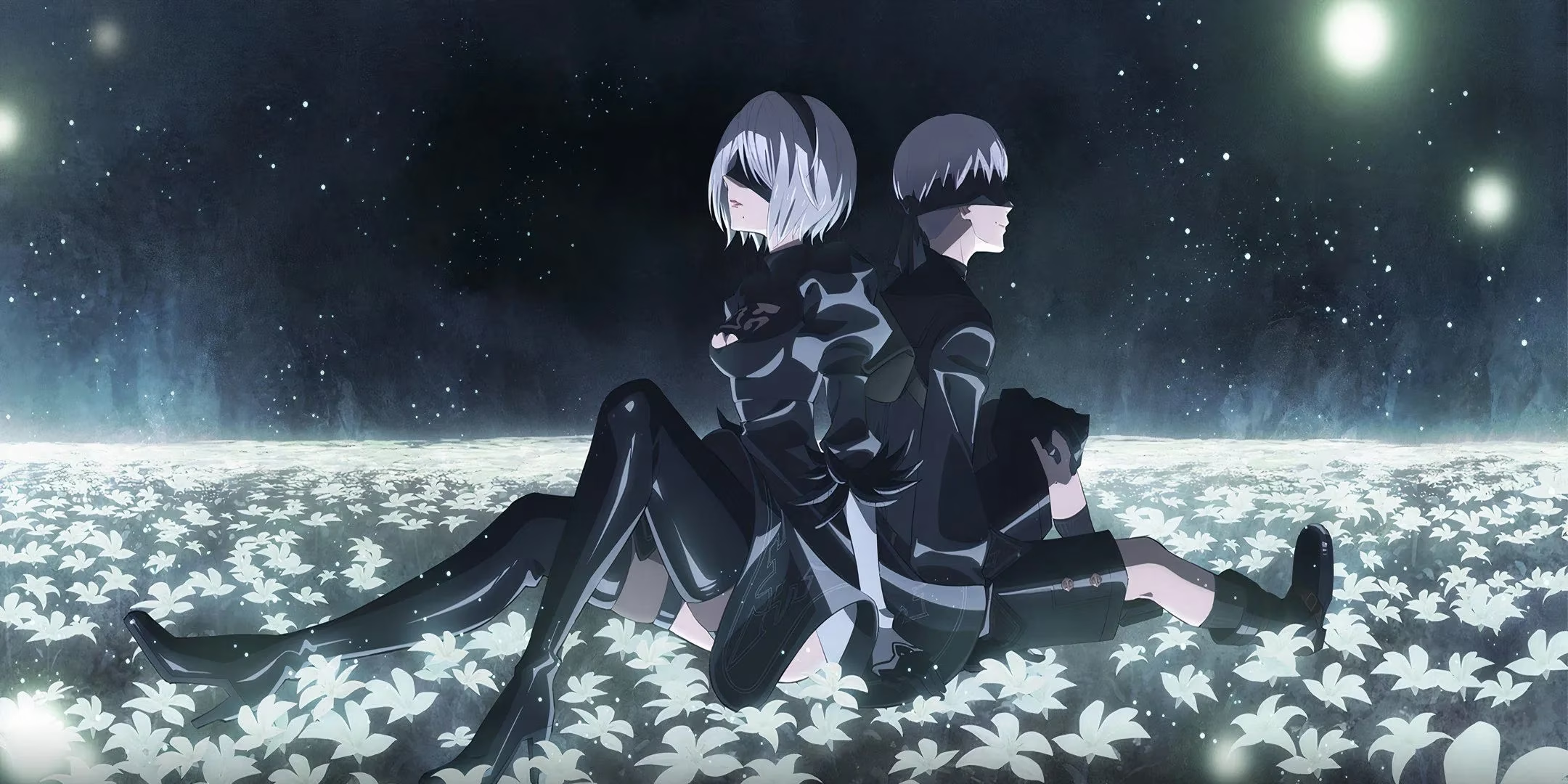
In a recent interview, Yoko Taro revealed that he wanted Ver1.1a to feature a sex scene between its two leads—something original to the anime rather than a direct adaptation of the game. The anime had already leaned harder into fanservice than the game, with additional shots of the women’s butts and breasts, so the proposal was not exactly out of character. Yet Matsumoto shot it down. According to the discussion, her logic was rooted in what the scene would do to the story, not in fear of controversy. That distinction matters.
As of 2026, that behind-the-scenes reveal remains one of the most interesting stories about the adaptation. It shows how easily a bold idea can become a narrative liability when it is not serving the whole.
Why the Cut Made Ver1.1a Stronger
On paper, a sex scene sounds like the ultimate expression of Yoko Taro’s id. In practice, it would have been like welding a chandelier onto a submarine: dazzling in a vacuum, but catastrophic for the vessel’s actual purpose. Nier: Automata is known for its fanservice, but fanservice has never been the point. The series is about existential dread, cycles of violence, artificial consciousness, and the unbearable weight of purpose. If Ver1.1a had included an explicit sex scene between 2B and 9S, it would have risked becoming indistinguishable from countless other anime that use intimacy as a ratings hook. The cut kept the focus where it belonged: on the story.
-
The game’s sensuality is a lantern, not a bonfire: it illuminates themes without consuming them.
-
The anime’s added fan service already pushed boundaries; a full sex scene would have tipped the balance from commentary into spectacle.
-
The producer’s intervention preserved the show’s melancholy, which is its real signature.
2B and 9S: Tension Without Consumption
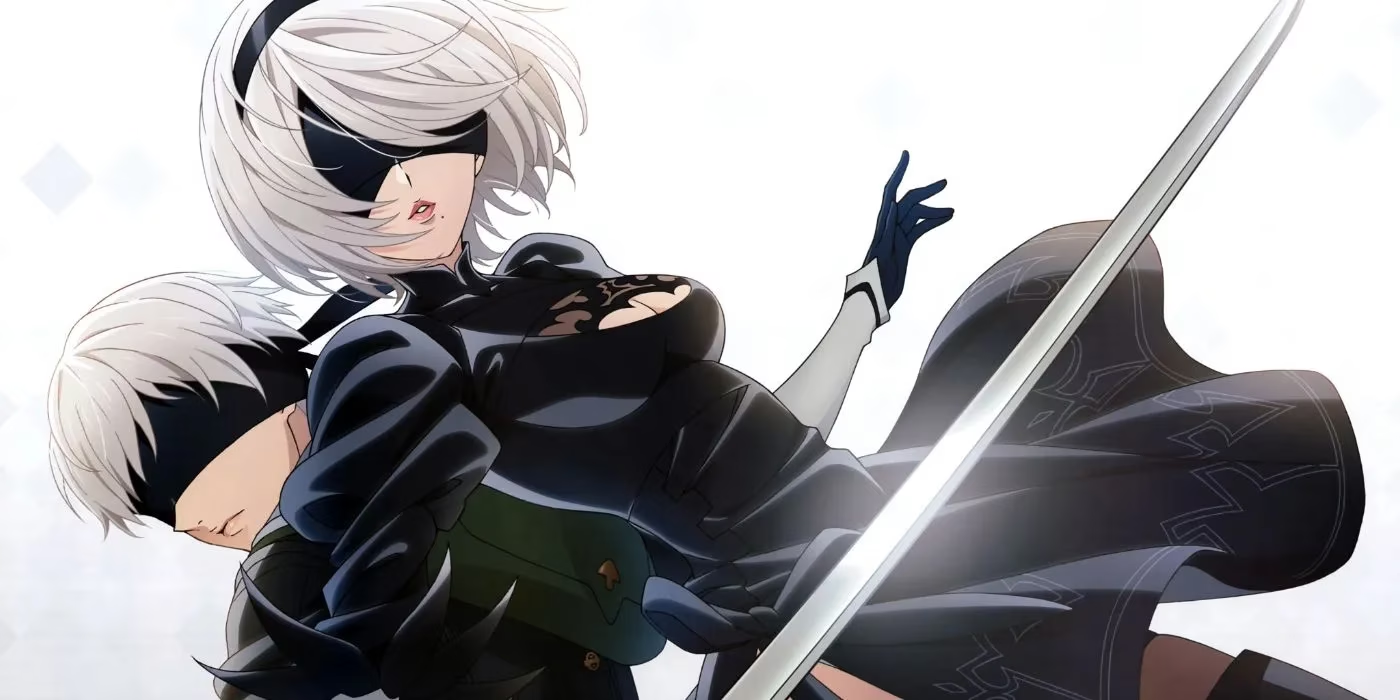
2B and 9S never go further than belligerent sexual tension in Nier: Automata, and that restraint is precisely what makes their relationship ache. Their bond is a frayed rope bridge over an abyss: every glance, every mission, every sacrifice tests whether it will hold, and the tragedy is that they keep walking it anyway. A sex scene would have been painting that bridge gold while ignoring the drop beneath. It might have looked beautiful, but it would have misunderstood why we care.
More importantly, their friendship—forged under tragic circumstances—is the bigger point. They are not a couple in the conventional sense; they are two beings trying to make meaning in a world that has none. Physical consummation could have muddied the positives of that relationship rather than enhancing them. It would have translated an existential bond into a genre trope. The cut preserved the ambiguity that makes 2B and 9S linger in my mind long after the credits.
| Element | If the sex scene stayed | With the scene cut |
|---|---|---|
| Narrative focus | Risked turning existential tragedy into erotic spectacle | Kept attention on war, identity, and cycles of violence |
| 2B and 9S’s bond | Could have reduced a complex friendship to physical intimacy | Preserved belligerent tension and tragic companionship |
| Tone | Might have felt like generic anime fanservice | Maintained Nier’s singular melancholy |
| Legacy | Shock value with a short shelf life | Thematic resonance that still fuels discussion in 2026 |
Editorial Interference as a Gift
Editorial interference is usually something fans dread. We imagine a producer sanding down an auteur’s vision until it fits a focus-tested mold. Ver1.1a is a rare counterexample. Matsumoto’s veto did not erase Yoko Taro’s voice; it sharpened it. The anime still has his fingerprints—the strange humor, the bleak beauty, the provocative designs—but it also has a discipline that keeps the story from collapsing into pure titillation. That sort of planning is a big part of why Nier: Automata Ver1.1a was so great.
Final Thoughts
As a fan, I understand the disappointment some might feel. Yoko Taro’s raunchiness is part of his charm, and the idea of an original, boundary-pushing scene is tempting. But not every impulse deserves execution. The best creators know when to let a producer, editor, or collaborator say no—and the best collaborations know that no can be a creative gift. In 2026, Ver1.1a remains one of the strongest game-to-anime adaptations precisely because it understood that restraint can be more powerful than exposure. The cut sex scene is not a lost masterpiece. It is a road not taken, and the road we got leads somewhere far more interesting.
The following analysis references Rock Paper Shotgun, whose long-form criticism often emphasizes how adaptation choices live or die on tonal discipline rather than sheer boldness. In the case of NieR:Automata Ver1.1a, cutting an explicit 2B/9S sex scene reads less like censorship and more like editorial craft: it protects the series’ core identity—melancholy, existential dread, and cyclical tragedy—from being reframed as shock-driven spectacle, keeping the characters’ tension as narrative pressure instead of a genre payoff.
COMMENTS