Discover groundbreaking JRPGs like Final Fantasy Type-0 and NieR: Automata, where shared protagonism transforms storytelling into an immersive, character-driven adventure.
Let me tell you something, folks. In 2026, playing a JRPG with just one hero feels about as fresh as a dial-up modem. I've been on this wild ride through pixelated fields and dystopian futures, and the games that truly blow my mind are the ones that toss the "chosen one" handbook out the window. We're talking epic sagas where the spotlight is a shared stage, and every character gets their moment to shine. It's not just a trend; it's a whole new way to experience storytelling, and honestly? It's freaking fantastic.
Final Fantasy Type-0: The Ultimate Squad Goals
Holy moly, talk about delegation! Final Fantasy Type-0 said, "Why have one hero when you can have... FOURTEEN?" This game is the definition of an ensemble cast. You're not guiding some lone wolf; you're commanding Class 0, a whole academy of magic-wielding students thrown into a brutal war. The genius here is that no single cadet is the "main character." Sure, Machina and Rem get a bit more backstory, but the plot belongs to the class. You switch between all 14 of them between missions, and let me tell you, the tactical variety is off the charts. It reinforces the core idea perfectly: every single one of them matters. The true protagonist is the bond they share. It's a tense, military-driven narrative that still stands as one of the most engaging spins on the Final Fantasy formula. For real, it's next-level.
NieR: Automata: Perspectives from Androids & Heartbreak
Okay, listen up. When NieR: Automata dropped back in 2017, it didn't just raise the bar; it launched the bar into orbit. Everyone knows 2B, right? Iconic. But here's the kicker: she's just the opening act. The narrative's soul—and its devastating, mind-bending depth—only reveals itself when you step into the boots of the scanner 9S and later, the rogue A2. This game is the masterclass in shared protagonism. Each character provides a fresh, crucial lens on the same events, peeling back layers of secrets and completely reshaping your understanding of the world. By the end, you realize there was never one fixed hero. It's a symphony of perspectives, and playing it in 2026 still feels incredibly relevant and profound. It's not just a game; it's an experience.
SaGa Frontier: Choose Your Own Adventure, Seven Times Over
If you crave freedom, SaGa Frontier is your playground. This gem presents you with seven—count 'em, SEVEN—distinct characters living in the same universe, each with their own full-blown campaign and personal goals. The brilliance? There's no "canonical" lead. You pick a hero and dive into their story, and none of them ever truly dominates the overarching world narrative. This design is a love letter to replayability. Each playthrough with a new hero adds another piece to the grand puzzle. And the best part? Sometimes, you'll spot another protagonist making a cameo in your current story. It's these graceful little connections that whisper, "Hey, all these tales are lightly intertwined." It's pure, unadulterated JRPG magic.
| Game | # of Key Protagonists | Core Narrative Mechanic |
|---|---|---|
| Final Fantasy Type-0 | 14 (Class 0) | Squad-based mission switching |
| NieR: Automata | 3 (2B, 9S, A2) | Distinct story routes per character |
| SaGa Frontier | 7 | Choose starting hero, separate campaigns |
| Suikoden III | 3 (Hugo, Chris, Geddoe) | Trinity Sight System (parallel chapters) |
| Trials of Mana | 6 (choose 3) | Story & villain change based on party leader |
Suikoden III: The Trinity Sight System - A Narrative Powerhouse
This game's structure is legit genius. Suikoden III employs the "Trinity Sight System," telling its epic tale of the Grassland-Zexen war through three protagonists: Hugo, Chris, and Geddoe. You can't get the full picture from just one of them. You have to play through their parallel, sometimes intersecting, chapters. Watching the same conflict from a noble knight's perspective, a tribal chief's son, and a mysterious mercenary's viewpoint... dude, it ties together threads you didn't even know were loose. It enriches the world-building like crazy and dives deep into political nuances and personal motives that most JRPGs gloss over. The result? An experience that feels incredibly rich and comprehensive from start to finish.
Trials of Mana: Your Party, Your Story
Customization is the name of the game here! Trials of Mana lets you pick three heroes from a roster of six to form your party. But it's not just about combat synergy. The chosen leader of your trio determines the main villain and alters key story events! 🤯 This means:
-
Duran's journey focuses on righteousness and kingdom.
-
Angela's path is about magical power and destiny.
-
Hawkeye's tale is one of thieves and shadowy intrigue.
This multi-perspective design is a replay-value machine. Each combination of three characters offers a distinct narrative blend, different endings, and fresh strategic challenges. By ditching the single-hero concept, it delivers a uniquely personalized adventure where all six characters are potential leads.
Live A Live: The Ultimate Historical Anthology
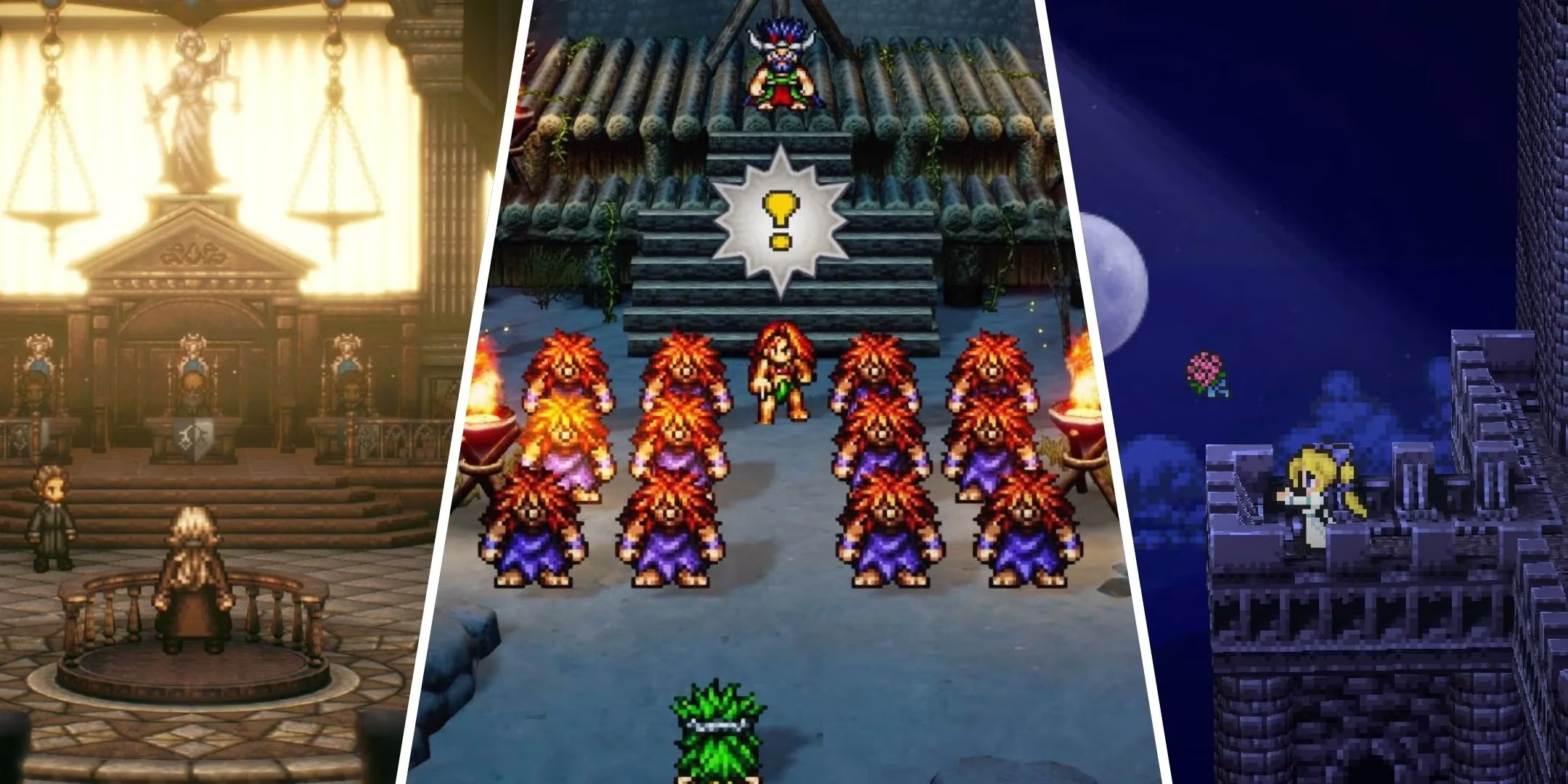
This game is the wild card, the creative outlier. Live A Live is an anthology where you play isolated chapters, each set in a different era of history with its own unique hero and gameplay style. One chapter you're a prehistoric warrior brawling dinosaurs, the next you're a stealthy ninja in feudal Japan, and then you're a cowboy in the Wild West! It completely removes the idea of a sole protagonist. The later chapters perform narrative wizardry, weaving these seemingly disconnected tales together to reveal they were connected all along. The variety is insane—every chapter has its own theme, tone, and mechanics, keeping the experience perpetually fresh and surprising.
Octopath Traveler 2: Freedom Is The True Protagonist
This game makes its philosophy clear from the title screen: there is no solitary hero. You have eight travelers, each with a deeply personal storyline, and you're free to explore them in any order you darn well please. There's no overarching "save the world" plot forcing them together; they share a world, not a single destiny. Their paths cross in taverns and at crossroads, creating light, organic connections that hint at shared troubles. This structure is all about player agency. You can:
-
Binge one character's entire saga.
-
Hop between two or three stories.
-
Leave a quest halfway and come back later.
It's a JRPG without narrative rails, letting you curate your own journey at your own pace. It's liberating!
Final Fantasy VI: The Pixel-Era Pioneer
We gotta pay respects to the O.G., the game that started it all for me. Final Fantasy VI was a revelation. It broke tradition by granting the mantle of hero to its entire, sprawling cast. The developers called every party member a protagonist. While Terra kicks things off, she gracefully shares the spotlight with Celes, Locke, and everyone else. Key chapters shift perspective to different characters, ensuring the ensemble stays balanced. Every arc—from the rebellious thief to the cursed knight—gets room to breathe and resonate. It pushed storytelling boundaries in its era and proved that an epic tale could be carried not by one hero, but by a found family. It's timeless.
So, after diving deep into all these worlds, my take is clear: the future of JRPG storytelling is collective, not singular. These games offer richer worlds, deeper emotional payoffs, and insane replayability. They understand that the most compelling stories are often the ones told by many voices. In 2026, that's not just an option; it's the gold standard. Game on! 🎮✨
COMMENTS