Yoko Taro's innovative DRM-infused autographs spark intrigue and debate in the gaming world, combating counterfeit memorabilia with unique authenticity.
I recently uncovered a fascinating development in the gaming world that has sent shockwaves through fan communities. Yoko Taro, the enigmatic creator behind the hit game Nier: Automata, has implemented a unique form of digital rights management (DRM) directly into his autographs, enabling him to identify nearly half of all signatures claiming to be his as counterfeits. This revelation came to light in a viral post on X earlier this year, where Taro boldly denounced a specific fake signature, explaining that he embeds subtle, unknown features into his genuine autographs to deter resellers. As a journalist covering this story, I find it remarkable how Taro's innovative approach has sparked widespread intrigue and debate, highlighting the ongoing battle against piracy in the memorabilia market. His actions not only protect loyal fans but also challenge the ethics of autograph collecting in our digital age, making this a pivotal moment for authenticity in 2025.
The Revelation and Fan Frenzy
Yoko Taro's announcement on X was a bombshell that immediately captivated audiences. In his post, he stated unequivocally, "This autograph is a fake," referring to a signature someone else had shared online. He elaborated, "I include small unknown features in my real autographs to prevent reselling, so I can tell when one isn’t genuine." This admission wasn't just a casual remark; it was a strategic move to combat the rampant counterfeit market. Taro's method, which he calls a form of DRM, draws parallels to anti-piracy techniques in software, where hidden elements verify authenticity. For instance, in games like Nier: Automata, a single .exe file can be copied, but an autograph's value lies in its unique, personal story—something fakes can't replicate.
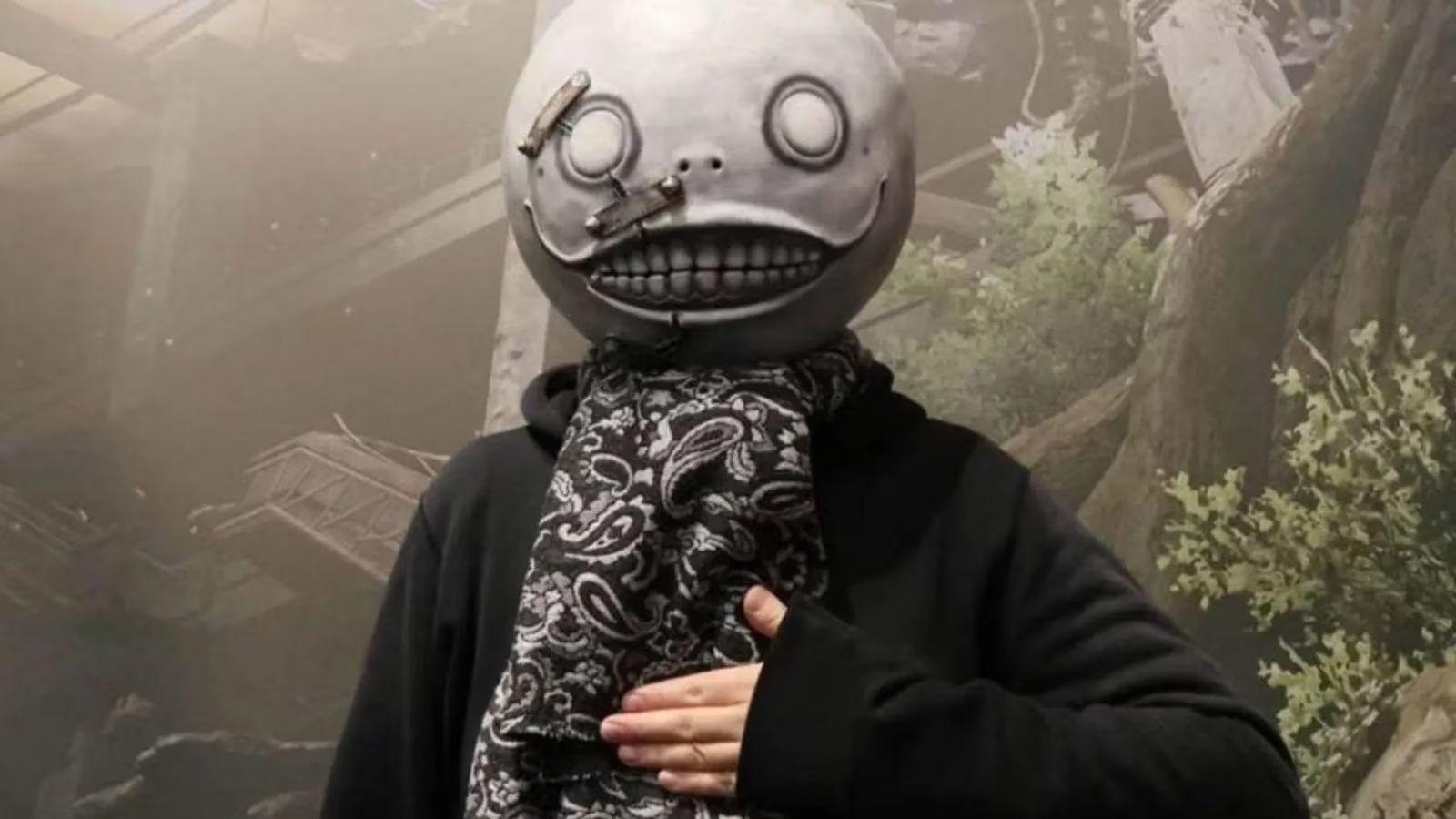
The fallout from Taro's post was immediate and intense. Fans flooded social media with their own autographs, hoping to decode the mystery. 😲 Common reactions included:
-
Curiosity and speculation: Many users shared close-up images of their signatures, analyzing every stroke for hidden clues. For example, one fan wrote, "I've had this for years—could this dot be the DRM?" but Taro remained tight-lipped.
-
Frustration and confusion: Despite numerous attempts, no one could pinpoint a consistent feature. Variations in posted signatures made it impossible to identify a single telltale sign, as Taro cleverly designed the features to be imperceptible to all but himself.
-
Support for Taro's cause: A wave of appreciation emerged, with fans praising his effort to safeguard genuine interactions. As one enthusiast put it, "This is genius—it stops scalpers from profiting off our passion!"
This fan-driven investigation underscored the emotional investment in autographs. Unlike digital copies, each signature carries a narrative of personal encounter, making fakes feel like a betrayal. Taro's DRM tactic effectively weaponizes this sentiment, turning paranoia into a shield against fraud.
How DRM in Autographs Works and Why It's Effective
Delving deeper, Taro's approach mirrors classic anti-piracy strategies, where secrecy is paramount. By embedding undetectable elements—perhaps microscopic details or stylistic quirks—into his signatures, he ensures that only he can authenticate them. This method is highly effective because:
-
It exploits human psychology: The uncertainty around the hidden features creates a deterrent. Scalpers can't replicate what they don't know, reducing the incentive to forge signatures.
-
It prioritizes secrecy: As with digital DRM, the less known about the technique, the better it works. Taro's refusal to disclose details amplifies its potency.
-
It addresses modern challenges: In 2025, with advanced scanning and copying tech, autographs are easier to fake than ever. Taro's innovation levels the playing field, protecting fans from deceit.
However, this raises an intriguing question: Could Taro be bluffing? Some skeptics wonder if he invented this whole scenario to instill fear and crash the resale market. 🤔 After all, if fake signatures lose value due to doubt, scalpers suffer. But as I analyzed this angle, I realized it's unlikely to backfire. Fans generally view Taro as a quirky, trustworthy figure, and his target—resellers of copied signatures—is widely disliked. In fact, a blow to these "scummy" operators feels like a win for justice, aligning with broader anti-piracy sentiments in gaming.
Impact on the Memorabilia Market and Fan Culture
The implications of Taro's DRM extend far beyond individual signatures. It's reshaping how we value autographs in the collector's ecosystem. Unlike digital assets, which derive worth from functionality, autographs thrive on emotional resonance. Taro's move emphasizes that authenticity is about the cool factor and personal connection, not monetary gain. Here’s a quick comparison of key aspects:
| Aspect | Before Taro's DRM | After Taro's DRM in 2025 |
|---|---|---|
| Authenticity Rate | High risk of fakes (estimated 40-50% counterfeit) | Increased scrutiny, with Taro verifying nearly half as fake |
| Fan Confidence | Often low due to rampant forgeries | Boosted, as genuine items feel more secure |
| Resale Market | Thriving for scalpers seeking profit | Diminished, discouraging unethical resellers |
As PC Gamer echoed in their coverage, selling a truly autographed item for financial need is acceptable, but attending events solely for profit—especially as a scalper—is frowned upon. Taro's strategy reinforces that autographs should be cherished for their inherent coolness and story, not as investment vehicles. This shift has already led to positive outcomes:
-
Reduced scalping activity: Reports indicate a drop in fake listings on auction sites.
-
Enhanced fan experiences: Collectors now focus on the joy of ownership, not potential resale value.
-
Broader industry influence: Other creators might adopt similar tactics, fostering a culture of authenticity.
The Broader Message and Future Outlook
Yoko Taro's ingenious DRM isn't just about signatures; it's a commentary on integrity in the digital era. By introducing this "hearty dose of paranoia," he ensures that autographs remain special for true enthusiasts. Reflecting on this, I see it as a win-win: fans get genuine mementos, while fraudsters face consequences. Looking ahead to the rest of 2025, I predict this will inspire more innovations in anti-counterfeiting across industries. After all, in a world where digital and physical realms blur, protecting personal connections is paramount.
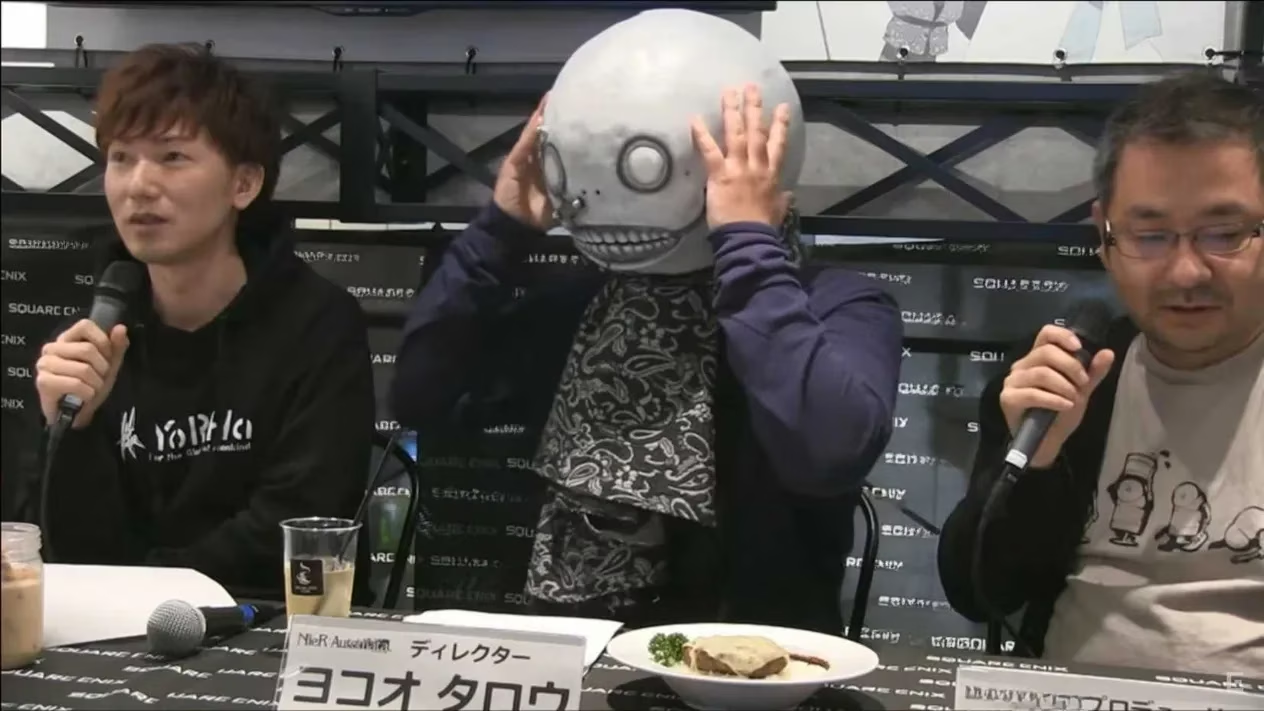
In conclusion, Taro's approach beautifully balances creativity with ethics. As he stated, the goal is for fans to acquire autographs out of genuine desire—nothing more. 👍 This story has taught me that authenticity, like in Nier: Automata's themes, is about the human element, not the price tag. Let's hope this trend continues, making 2025 a year where fakes fade and real connections thrive.
COMMENTS